Editorial: Warsh and the Fed need clarity more than certainty
Published in Op Eds
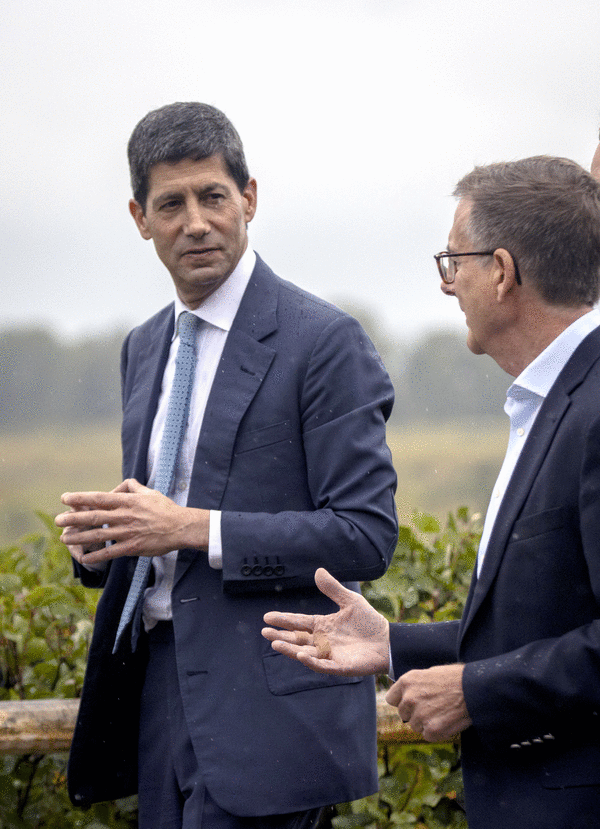
Kevin Warsh has rightly called into question the effectiveness of the Federal Reserve’s communications — but his arrival as chairman only seems to have made the problem worse. To put this right after the next Fed meeting this week, he’ll need to rethink his approach to explaining where things stand.
Friday’s release of inflation data for August hasn’t helped. Consumer prices rose 3.4% year over year; excluding food and energy, 2.4%. This was worse than forecasters had expected, and it gave little reason to think inflation is still on track toward the central bank’s 2% target. Investors promptly priced in a 90% chance that the Fed will raise its policy rate on Wednesday.
This shift in sentiment, together with the disappointing inflation numbers, might be enough to force the Fed’s hand. On balance, a quarter-point rise in the federal funds rate would be wise. The fact remains, the right decision is by no means clear-cut.
For a start, policy changes should never turn on one month’s noisy data. More important, the outlook is still extremely uncertain.
Recent events have delivered an extraordinary series of shocks to the U.S. economy. Energy prices have surged because of the conflicts in Ukraine and the Middle East, and Washington’s unprecedented use of threatened and actual tariffs has helped raise prices across the board. At the same time, a remarkable surge of investment in AI data centers has generated additional aggregate demand. With all this in play, it’s hardly surprising that above-target inflation has proved so persistent.
Yet what this implies for monetary policy is debatable. The supply shocks could prove to be short-lived; if so, tighter policy (which takes time to reduce demand) would be a mistake. And in due course the AI revolution should boost productivity, in which case inflation will subside without higher rates. At the moment, wages aren’t rising immoderately, and longer-term inflation expectations remain well-anchored, which is reassuring. But inflation has been well above target for five years, which isn’t.
What’s the Fed to do? Hike because the balance of risks is shifting toward entrenched excess inflation, or wait a while longer for more data? Reasonable people can — and should — disagree.
At the July policy meeting, officials voted 9-3 to hold the federal funds rate at 3.5% to 3.75% — an eminently defensible decision. To some observers, though, this division was a bad sign: If the Fed’s policymakers disagree, something is wrong. In truth, when the outlook is highly uncertain, honest disagreement is desirable.
Clarity about how officials are reading the data is essential. Failing to explain his own thinking was where Warsh went wrong in July — a mistake he mustn’t repeat. But clarity can’t dispel the uncertainty. Many investors, analysts and commentators seek certainty in monetary policy when none is possible. Failing to acknowledge what’s unknown delivers less clarity and more confusion. When policymakers blur their true positions to project greater unity, they exaggerate the Fed’s collective confidence that it’s getting the policy right. Better to agree to differ, vote according to their best judgment and let the majority decide.
This week’s interest rate decision is another close call, and it helps nobody to pretend otherwise. As more data arrives, views will continue to shift. In the meantime, what counts is that the Fed’s officials keep an open mind and are honest with themselves and the public about their reasoning.
____
The Editorial Board publishes the views of the editors across a range of national and global affairs.
©2026 Bloomberg L.P. Visit bloomberg.com/opinion. Distributed by Tribune Content Agency, LLC.












































Comments