Evidence sought by government spanned decades in Omar probe, new records show
Published in Political News
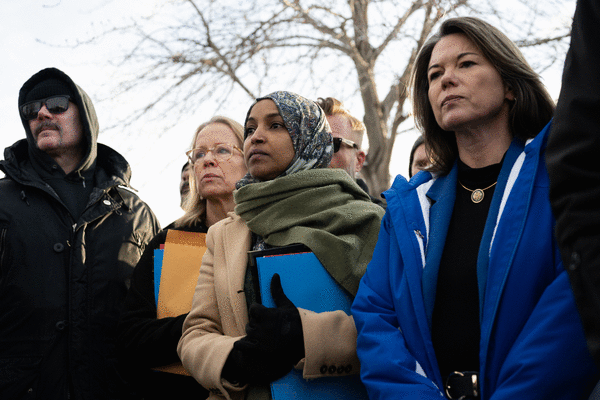
WASHINGTON — A federal judge Monday released more than 160 pages related to the search of Rep. Ilhan Omar’s home last month, detailing a week-long court effort from the federal government to secure the documents.
Judge James Boasberg for the U.S. District Court for the District of Columbia ordered the documents unsealed Monday as part of a lawsuit brought by news organizations and an advocacy group seeking to unseal the records related to the search.
The records unsealed Monday show the government first sought a search warrant in the case on Oct. 2, 10 days before the Trump administration eventually secured the warrant. Dozens of the 169 pages released Monday were redacted entirely. Others contained significant redactions which made much of them unreadable.
The records show that the presiding judge in the case, U.S. Magistrate Judge Matthew J. Sharbaugh, questioned the government about how it would handle the “Speech or Debate implications” of the search.
The Speech or Debate Clause is a provision of the Constitution which gives sitting members of Congress immunity from being charged or even having to testify about anything dealing with “speech or debate” in Congress.
The unsealed document says the government does not think the investigation touches on Omar’s work as a member of Congress at all, and engaged in a weeklong back-and-forth with Sharbaugh about what, if any, alterations to make to the search warrant.
“The United States believes that ILHAN has committed [REDACTED] crimes over decades — beginning long before she was ever in Congress,” one government motion included in the documents says.
Eventually, Sharbaugh granted the search warrant on Oct. 9, seeking records, electronics and a cell phone related to the undisclosed charges. But the warrant also contained an order allowing Omar to assert her speech or debate immunity before the government could search what it seized in the warrant, according to the documents disclosed Monday.
“But the issue that remains and the issue this Court independently raised with the government after its initial review of the warrant application is whether the search of a sitting Member of Congress’ residence implicates the Speech or Debate Clause. The government says no. This Court sees it differently,” Sharbaugh says in an Oct. 9 order.
The documents also noted that the government notified the office of the House Counsel, which said there could be no Speech or Debate protection for a member’s private residence.
The government’s filings in the case suggested that they are looking for evidence of crimes that may have occurred as early as 1980, around the time Omar was born. The documents unsealed Monday do not include the nature of the crimes the government is investigating.
Separately Monday, the DOJ opposed releasing information from a second suit filed by Omar seeking return of items taken by agents during the search without further briefing.
“Ultimately, if the Press Applicants want access to the Separate Docket, the Court should require them to file papers showing why they’re entitled to it,” the filing says.
The administration executed the search warrant last month ahead of the elections, drawing criticism from Democrats and outside experts that the decision was made for political reasons. Since the search, administration officials have said there is a criminal investigation into Omar, tied to her immigration into the United States as a child.
After ruling last week that some records could be unsealed, Boasberg said the press organizations and advocacy group could still seek to unseal more records.
_____
©2026 CQ-Roll Call, Inc. Visit at rollcall.com. Distributed by Tribune Content Agency, LLC.















































Comments