Some TV campaign ads are misleading. Why are they still allowed to air?
Published in Political News
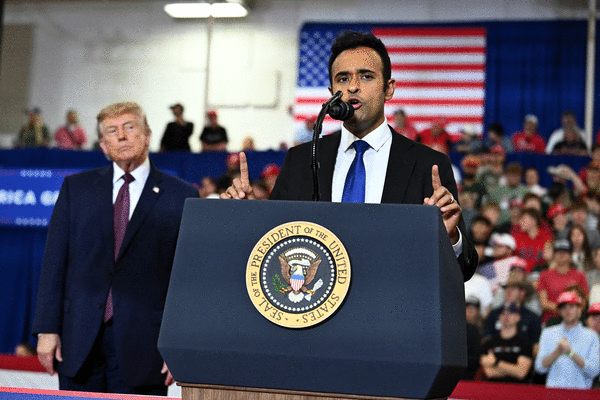
Every two years heading into November, as state and federal elections draw nearer, voters are inundated with campaign advertisements on TV, websites and social media — some of which deliver misleading messages about candidates.
If an ad is misleading, why are television stations still allowed to run them?
For a station to censor a TV campaign ad, it would matter who paid for it, said an expert from the University of Minnesota. Federal law governs when and if stations can censor advertisements.
Viewers occasionally submit complaints, including about false or misleading ads, according to the Federal Communications Commission. The agency said broadcasters “are responsible for selecting the broadcast material that airs on their stations, including advertisements.”
The agency also said, “The FCC expects broadcasters to be responsible to the community they serve and act with reasonable care to ensure that advertisements aired on their stations are not false or misleading.”
Campaign ads versus issue ads
Chris Terry, a professor at the University of Minnesota’s Hubbard School of Journalism and Mass Communication, has had his research cited by the FCC and in filings with the U.S. Supreme Court, according to the university. One of his research areas is political advertising.
Terry said there are two types of election season ads: campaign ads and issue ads.
Campaign ads are paid for by the legal campaign organization of a qualified candidate for office, Terry said. Any other political ads, including ones paid for by political action committees and other groups, are called “noncandidate political advertising,” or, more commonly, issue ads, he said.
“Now, it’s important that you understand there is a Grand Canyon size difference between the two of them,” he said.
If a licensed broadcast station is running a campaign ad paid for by a candidate’s campaign organization, “they cannot censor the ad for any reason, no matter what the content of the ad is,” Terry said.
That’s because a section of the Communications Act of 1934 states that such stations must “afford equal opportunities to all other candidates for that office to use such facilities.”
Terry emphasized that licensed broadcast stations cannot refuse to run campaign ads. He referred to an advertisement that ran during the 2024 election, when third-party candidate Randall Terry ran a graphic, nationwide anti-abortion ad targeting then-presidential candidate Kamala Harris. The ad featured images of aborted fetuses.
“This ad is so graphic that stations in places where he was buying the ad were forced to run it, and some of them were even running a disclaimer before the ad ran,” Chris Terry said.
However, issue ads paid for by PACs are “not bound by any of the same rules,” Terry, the University of Minnesota professor, said. This means that “the stations can selectively choose which groups to do business with. There’s no requirement for equal time or any other provisions there.”
“If a station runs an issue ad, it absorbs the legal liability for any defamation, invasions of privacy, statements of false facts, any of those types of things,” he said. “The station is responsible for the content of the ads it runs. It can charge those people any amount of money it wants to run. Like any amount of money that they’ll pay, it can charge them for that ad.”
Terry said that because stations are legally responsible for issue ads’ content, the risk falls on those stations if the ads contain deceptive or false claims.
“It then boils down to the context of the statement that’s made and whether or not it’s defamatory or just an opinion.” he said. “If I’m a candidate, and you’re running a super PAC, and you’re against me, and you say some things about me in the form of false statements of fact, I can try to sue the station for defamation.”
One major difference between the two types of ads is cost. Terry said issue ads “typically are five to eight times the same price as a campaign ad.”
“You see a 30-second ad run by one of your candidates for the Senate, and you see a 30-second ad run by a super PAC opposing that candidate next,” he said. “They paid radically different pricing for those two ads.”
This is because stations can charge only the “lowest unit charges” for candidates, per FCC rules. The lowest unit charges are only applied in a “45-day period preceding a primary, caucus or runoff election” and the “60-day period preceding a general or special election,” according to the FCC.
Shades of gray
A number of states have tried to regulate misleading TV advertisements, and most attempts have been struck down, including one in North Carolina, said Tori Ekstrand, a professor at UNC-Chapel Hill’s Hussman School of Journalism and Media.
When Gov. Josh Stein was running for attorney general in 2020 against Republican Jim O’Neill, an ad blamed O’Neill for the state’s backlog of untested evidence taken from alleged sexual assaults, The News & Observer previously reported. The data was frequently used as a talking point and was the subject of ads targeting candidates on both sides of the aisle.
O’Neill said then that Stein’s ad went too far. O’Neill filed a complaint and cited a 1930s-era law in North Carolina that makes it a misdemeanor “to publish or cause to be circulated derogatory reports” about a politician that could be or are found to be false, The N&O previously reported.
The case went all the way up to the U.S. 4th Circuit Court of Appeals, Ekstrand said.
“The 4th Circuit struck down the (1930s-era) law as unconstitutional, basically saying the law was content based, which is kind of a key term in First Amendment law to the extent that the government attempts to regulate the content of the speech,” she said. “That’s going to offend the First Amendment, and the court said this particular law did that.”
Ekstrand said the marketplace of ideas relies on counterspeech “to suss out falsehoods and disinformation” rather than the government creating regulations. The doctrine of counterspeech is “the idea that more speech is better than less speech, and more speech in the marketplace will eventually call out the falsehoods,” she said.
Ekstrand said First Amendment precedent leans toward counterspeech rather than government involvement.
“Today, depending on your political affiliation, you might be fine with the government making a law regarding false political advertising of the party you don’t like,” she said. “But then tomorrow, when the party in power changes, and then they have the upper hand in terms of what they think is false and misleading ... you may not like that rule, right?”
Ekstrand said the increased wave of artificial intelligence and an extraordinary amount of money flowing into campaigns is creating counterspeech where the “scale of this is unlike anything we’ve ever seen before.”
“If we don’t rely on counterspeech, then we’re relying on the government to tell us what is false,” she said. “And sometimes, that’s very clear. But sometimes there are shades of gray in what people consider to be true and false. It’s going to depend on the context.”
_____
©2026 Raleigh News & Observer. Visit newsobserver.com. Distributed by Tribune Content Agency, LLC.











































Comments