Thomas Black: We need to learn to love the local data center
Published in Op Eds
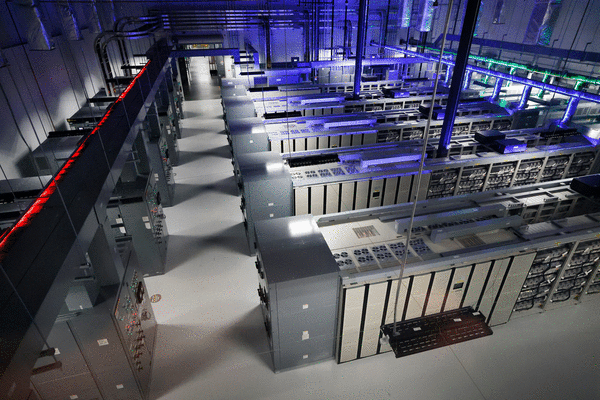
The cost and time for building data centers just increased after a blue tsunami swept Democrats into positions that had been Republican strongholds for decades, such as the governor’s offices in Texas and Kansas. The pushback against data centers was definitely on the ballot, and the message was loud and clear: “We don’t want these noisy behemoths in our backyard.”
This signal was most prominent in Texas, where Gina Hinojosa, a relatively unknown state legislator, campaigned heavily in opposition to these projects and toppled Greg Abbott, a three-term incumbent governor. Abbott had embraced the data-center boom and only called a pause in August amid alarming poll numbers.
The problem is the U.S. needs to keep building data centers, which house thousands of computer servers, to process the clicks and taps that underpin modern life and to harness the productivity gains of an artificial-intelligence revolution that is already taking hold in the economy. Productivity gains are what drive wage increases without spurring inflation and are the basis for the high U.S. living standards compared with the rest of the world. The consequence of the election should not be the demonization of data centers but the opportunity to build them with community concerns in mind.
What shouldn’t be lost amid all the noise is that data-center construction is booming despite the mounting opposition that morphed into a bipartisan issue and left few politicians to defend these crucial projects — not even the governor of business-friendly Texas. Two suppliers closely tied to data centers, Vertiv Holdings Co. and Amphenol Corp., both reported that third-quarter orders doubled from a year ago, with no visible cracks in demand. The value of U.S. data-center construction jumped 90% in September from a year earlier, according to the U.S. Census Bureau.
Data-center construction won’t stop, but the results of the midterm election give communities the upper hand in negotiating where and how they will be built, tempering the mad dash to put up these projects and halting some of the community-unfriendly solutions, such as deploying loud jet-aircraft engines as a quick way to generate off-grid electricity.
The builders of data centers will be wise to heed the message that they must be more transparent on how these projects will use energy, consume water and create noise. More scrutiny of large projects is welcome to head off abuses that could take place if developers had free rein to build these facilities.
Unfortunately, politicians latched on to the public’s concern and then amplified it into irrational fear that now has people discussing these projects as if they were nuclear waste dumps. The opposition has been fueled by the simplistic sound bites, and even disinformation, that flood the social media where many people obtain their news.
The biggest obstacle for data centers is access to vast amounts of uninterrupted power supply, which has sparked fear that residential electricity bills will skyrocket. The answer is straightforward: Generate more electricity and shield households from cost increases. More than 200 companies, including the largest power producers and hyperscalers, signed a Ratepayer Protection Pledge at the White House in March, which, among other things, promised that data-center power needs wouldn’t push up residential rates. These promises aren’t mandatory, but the backlash should be fierce if they’re broken.
Early signs are encouraging. In a deal to expand Google’s data-center campus in West Memphis, Arkansas, Entergy Corp. plans to add capacity to the grid that it says will result in $500 million of savings for customers beginning in 2028. In addition, Google pledged $25 million over five years for the local community, including workforce training. Similarly, Duke Energy Corp. last month reached a deal with several of the largest tech companies that will protect customers in North Carolina from some data-center costs, including infrastructure such as substations and transmission lines.
Water use is often cited by opponents of data centers as a serious drawback, but this has been blown out of proportion. Data centers don’t use nearly as much water as traditional industries including agriculture, chemicals or food and beverages. Besides, recycling technology can reduce data-center water use to negligible amounts. This is where good governance can locate a project away from residential neighborhoods and insist on robust water recycling. Oracle Corp. is using closed-loop cooling technology that doesn’t require continuous water supply for data centers it’s building in New Mexico, Michigan, Texas and Wisconsin. Acoustic panels could help mitigate the low humming noise that opponents cite.
The benefits of data centers have been lost in the overheated rhetoric of the midterms. These facilities generate local tax revenue and have a relatively light environmental footprint and social impact. They don’t pollute as much as traditional heavy industries, such as steel, glass or chemicals. They don’t generate heavy truck traffic like typical industrial plants and warehouses do.
Most people and politicians support manufacturing more goods in the U.S. Those plants use electricity, consume water, make noise and create more traffic — all of which create local challenges that can be overcome. Should we just throw up our hands and quit making goods altogether? That would be irrational and unwise.
The data-center boom will continue because AI has unleashed unprecedented demand that needs to be met. These facilities form the infrastructure backbone of our modern lives and, just as the water faucet and light switch are expected to work, it’s easy to take that for granted. Done right, these facilities will drive the digital revolution while most communities won’t even know they’re there, humming along 24/7 and processing every tap and click.
_____
This column reflects the personal views of the author and does not necessarily reflect the opinion of the editorial board or Bloomberg LP and its owners.
Thomas Black is a Bloomberg Opinion columnist writing about the industrial and transportation sectors. He was previously a Bloomberg News reporter covering logistics, manufacturing and private aviation.
_____
©2026 Bloomberg L.P. Visit bloomberg.com/opinion. Distributed by Tribune Content Agency, LLC.

















































Comments