Commentary: Skepticism isn't cynicism. The diet wars show the difference
Published in Op Eds
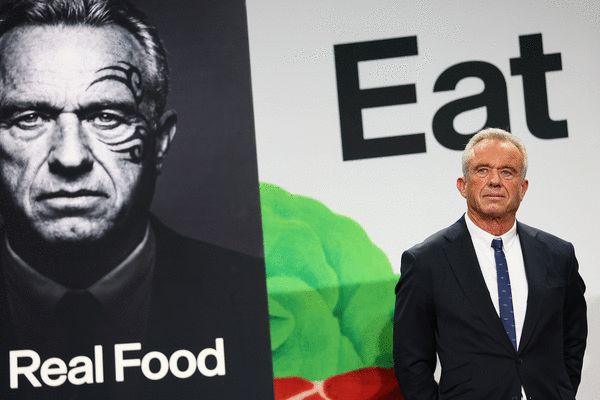
This year Americans got two opposite sets of instructions for the same dinner plate. Many of us responded the way we now respond to almost everything: we picked a team.
In January, the Department of Health and Human Services released new federal dietary guidelines built around red meat and full-fat dairy. Less than three months later, the American Heart Association issued guidance pointing close to the opposite way: build meals around plants and plant protein, choose unsaturated fats over saturated ones, and cut back on red meat and full-fat dairy.
Two credentialed bodies, opposite advice. The obvious question is which one to believe. The more common answer, from left and right alike, is neither. That answer feels like skepticism. It is something else, and the difference matters well beyond nutrition.
A disclosure first. I direct clinical research at the Physicians Committee for Responsible Medicine, a nonprofit that advocates plant-based nutrition. In January, we petitioned HHS to withdraw the guidelines, arguing that many of the outside scientists who shaped them had financial ties to the beef, dairy, and pork industries. I am not neutral, and you should weigh my argument with that in mind.
But the funding question, important as it is, does not settle the scientific one.
Two questions, not one
Whether an institution’s process was compromised and whether its conclusion is correct are separate questions. Financial disclosures answer the first. Primary data answer the second. A conflicted panel can still cite findings that hold up. An independent one can still get things wrong.
Treating who paid as the answer to what is true is the most common mistake thoughtful people make when two authorities collide. I hear it from readers who distrust the AHA as an establishment body and from readers who distrust anything connected to HHS Secretary Robert F. Kennedy Jr. Both instincts are understandable. Both skip the step that would actually settle the question. And because each side skips it in mirror image, the dispute stops being about food and becomes one more marker of political identity.
A three-step test
There is a better approach, and the order matters.
First, narrow the claim. The statement that red meat is bad cannot be tested. It has no comparison, no dose, no outcome, and no time frame, which is exactly why it travels so well in press releases and on social media. Research asks something smaller. A 2024 analysis of 31 cohort studies, for example, linked each daily 50-gram serving of processed meat, about two slices of ham, to roughly 15% higher risk of Type 2 diabetes. That is a claim you can check.
Second, check the narrow claim against the primary studies. Not against either institution’s summary, and not against the commentator or podcaster vouching for one side. This is the step almost everyone skips, because deciding in advance whom to trust is far easier.
Third, notice what actually changed. Run this test on the guidelines dispute and the narrow findings mostly agree, even though the institutions do not. Diets built around vegetables, legumes, whole grains, and minimally processed foods have been consistently linked to lower rates of heart disease, Type 2 diabetes, and early death for well over a decade. What changed this year was not the data. It was which parts of it were emphasized, and with how much confidence.
That is a fact about influence and access. It is not proof that nutrition science is unknowable.
How to tell them apart
Apply the test to a few disputes and two postures that look alike from the outside come apart. A skeptic runs the test and is willing to land somewhere unexpected. A cynic reaches the same verdict every time: nothing can be trusted.
Cynicism passes for rigor because it is triggered by the same event that should prompt a real update, an authority visibly serving someone other than the public. But it lacks the one property that makes rigor worth anything, a willingness to be proven wrong. The simplest way to tell the two apart is to ask what would change the person’s mind. A cynic usually has no answer. A skeptic does: a well-powered trial, a replication, a finding that holds up after adjusting for the factors they already suspected.
None of this argues for trusting institutions by default. Industry funding measurably shapes which questions get asked and which conclusions get drawn. That is the basis of my organization’s complaint about the January guidelines, and it rests on specific evidence: a particular disclosure, a particular financial tie, a particular recommendation, checked against the record. A documented problem with specific relationships is not a license to stop checking claims about food and health altogether. That is a far bigger claim than the evidence supports, and one no evidence could ever correct.
A habit worth more than a side
Federal agencies and professional societies will keep issuing advice that conflicts. That is what happens when contested science runs through politics, industry money, and genuine scientific disagreement at once, and no election in either direction will end it.
That makes the habit more important than any single verdict. Self-government depends on citizens who can hold an institution accountable without writing off the possibility of knowing anything. Reflexive trust hands that job to whoever holds power. Reflexive dismissal abandons it. Checking the claim keeps it with us.
The next time two authorities collide, picking a side will feel like the sophisticated response, and withholding judgment will feel naive. It is the reverse. Running the test is slower and less satisfying, and it does not come with a team. But it is the only response that keeps the pressure where it belongs: on whoever is writing the guidance.
____
Hana Kahleova, MD, PhD, is a physician board-certified in internal medicine, endocrinology, and lifestyle medicine, and director of clinical research at the Physicians Committee for Responsible Medicine, a nonprofit that advocates plant-based nutrition and petitioned HHS to withdraw its January 2026 dietary guidelines.
_____
©2026 The Fulcrum. Visit at thefulcrum.us. Distributed by Tribune Content Agency, LLC.














































Comments