From the Right
/Politics

Trump is turning Iran into an anti-globalist superpower
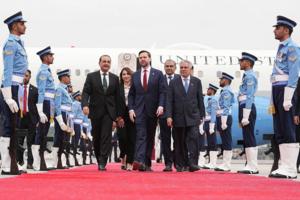
PARIS — If Team Trump has dragged itself to the negotiating table with Iran, it’s not because the U.S. is winning this war. One side of these talks features top Iranian brass. The other, two real estate agents (Steve Witkoff and Jared “Gaza Riviera” Kushner), Vice President JD Vance who’s fresh off complaining about meddling in ...Read more
Neocon Don’s exit ramp in Iran is a cliff
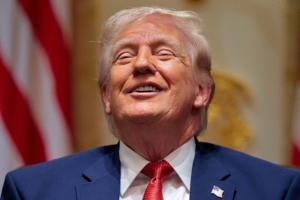
PARIS — When President Donald Trump vowed to neutralize the warmongering neocon establishment in Washington, hardly anyone imagined his master plan would involve hugging it so tightly that he couldn’t tell where it ended and he began — and then politically self-immolating like he was chasing 72 virgins.
“We’re fighting wars. We can’...Read more
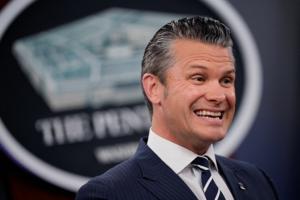
Where’s the Pentagon to Save America — and the World — From Trump?
PARIS — Let’s face it, the United States has regime changed other countries for far less than Trump is now doing. Where’s the pushback against sending troops to Iran in Operation Epic FUBAR — er, Fury? Did all the sensible Pentagon brass get fired for wearing dresses or something?
“This administration has done a great deal from day ...Read more
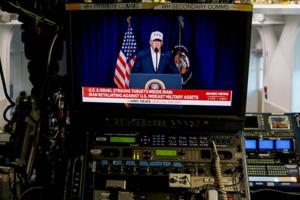
How to talk to Trump diehards treating his Iran war like the Super Bowl
PARIS — Do you have a pro-Trump friend or family member who’s gung-ho about him bombing Iran? Polls suggest that you might.
If so, that person likely feels that this is some kind of football match and that Trump is the star quarterback who deserves fan loyalty at all costs — even if he keeps throwing the ball to the other team. Here’s ...Read more
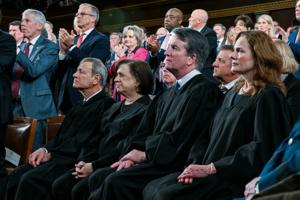
Where are the women inside the Trump frat house to reel it in?
PARIS — Trump kicked off Women’s History Month by dropping a missile on roughly 160 schoolgirls in Iran. Then he put out a statement bragging that his administration’s pro-women policies “uplift our children.”
How so? By bouncing rubble around in Iran like it's a giant trampoline? He also says that he “emboldens women.” Great, so ...Read more
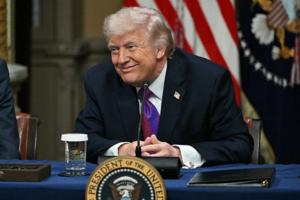
Is Donald Trump under foreign occupation?
PARIS — There’s no sensible reason for the U.S. to bomb Iran. At least not exclusively in American interests. So who’s really calling the shots?
If you thought this was about Iranian freedom and democracy, President Donald Trump would like to disabuse you of that notion himself. “No,” was his answer when asked by CNN whether Iran had ...Read more
Trump’s Iran invasion, killer robots and the death of democracy
PARIS — Here we go again. Another “Israel First” neocon regime- change war under the pretext of a bogus “national security” risk or “freedom.” This time in Iran. Exactly what Trump’s Israeli mega-donors and benefactors have long pushed for. What a total disgrace for the FIFA Peace Prize that the world soccer association ...Read more
Trump's manospheric defense policy is giving Europe a glow-up
PARIS — U.S. President Donald Trump and his administration routinely treat Europe like it’s a golddigger who always forgets her purse at home. Being the self-appointed alpha, he’s only too keen to remind her how much of a drag she is on his wallet. He sighs and lets the whole restaurant know that he’s “protecting” her.
Well, guess ...Read more
Is This the Least Self-Aware Piece of Propaganda to Ever Come Out of Washington?
PARIS — Quick, someone please take the official stationery away from the Republican House Judiciary Committee staffers. In an attempt to fight what they describe as Europe’s effort to distort reality, they’ve just done exactly that themselves.
It turns out that a bunch of folks immediately mistook this partisan screed for an official ...Read more
Uteruses are being shoved to the frontline by inept governments
PARIS — “Bonjour! It’s the French government. Did you know that you can freeze your eggs?” This is literally the message that’s now being mailed out to 29-year-old French citizens by the state, which has apparently become indistinguishable from your pushy mother-in-law who keeps asking when you’re going to give her grandkids.
What ...Read more
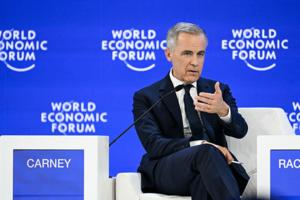
American dark money influence peddling is targeting an allied country
PARIS — The American president has been behaving toward allies like the guy who walked away from the relationship but still wants to keep tabs on their dating life.
Canada’s Prime Minister Mark Carney, in particular, overtly announced the need for the rest of America’s allies to move on to building other trade relationships — and, ...Read more
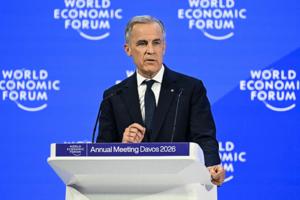
Trump’s antics force Davos elites to admit that the hated populists were right
PARIS — Trump shows up at the Davos World Economic Forum like a guy crashing his ex’s wedding, completely baffled about why he’s so disliked.
“I’m helping NATO, and until the last few days when I told them about Iceland, they loved me. They called me ‘daddy’ last time… ‘He’s our daddy,'” Trump said in his public address to...Read more
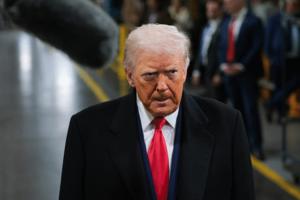
This Country Has Just Cracked Trump’s Code
PARIS — Canadian Prime Minister Mark Carney went to China, met with President Xi Jinping, opened up roughly $7 billion in potential new revenues for Canada through trade deals — and immediately sent the America First commentariat into a full-blown meltdown. Which is odd, because this is exactly the kind of national self-interest that the ...Read more
Related Channels

Armstrong Williams
By Armstrong Williams

Austin Bay
By Austin Bay

Ben Shapiro
By Ben Shapiro

Betsy McCaughey
By Betsy McCaughey

Cal Thomas
By Cal Thomas

David Harsanyi
By David Harsanyi

Debra Saunders
By Debra Saunders

Dennis Prager
By Dennis Prager

Erick Erickson
By Erick Erickson

John Stossel
By John Stossel

Josh Hammer
By Josh Hammer

Judge Andrew Napolitano
By Judge Andrew P. Napolitano

Laura Hollis
By Laura Hollis

Michael Barone
By Michael Barone

Rich Lowry
By Rich Lowry

S.E. Cupp
By S.E. Cupp

Salena Zito
By Salena Zito

Star Parker
By Star Parker

Stephen Moore
By Stephen Moore

Terence P. Jeffrey
By Terence P. Jeffrey

Tim Graham
By Tim Graham

Veronique de Rugy
By Veronique de Rugy

Victor Joecks
By Victor Joecks

Wayne Allyn Root
By Wayne Allyn Root
Comics