
Ask the Builder: Having fun with brick
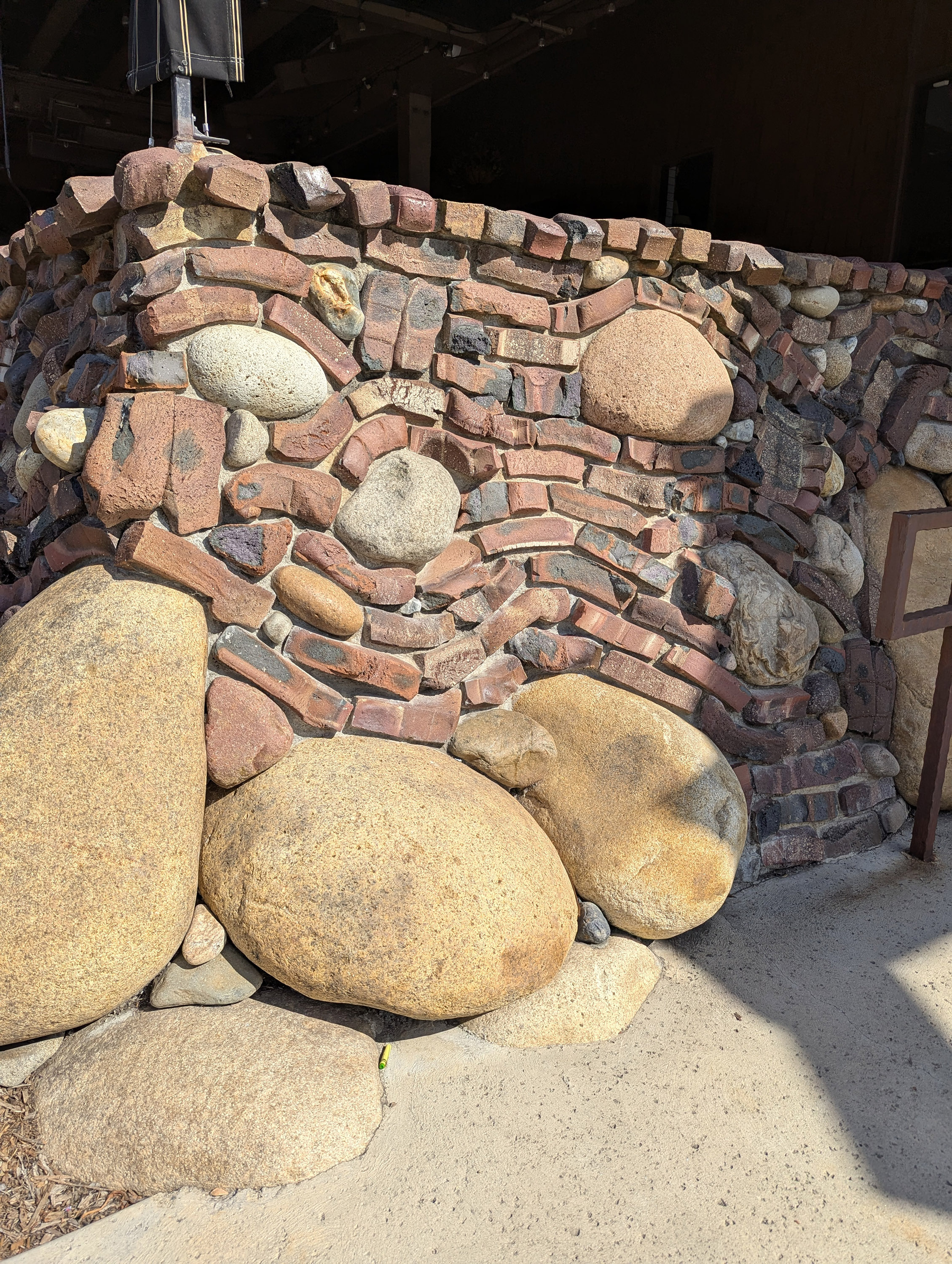
My guess is that most of the bricks you’ve seen in your lifetime have been very uniform in shape. Each brick is rectangular. This is by design in almost all cases. The length of a brick plus one mortar joint in the USA is supposed to equal 8 inches. The depth of a standard brick plus a mortar joint is intended to measure 4 inches. The height of three bricks plus three mortar joints equals 8 inches. This is why many common bricks are referred to as modular.
That said, funny things can happen at a brick factory that might have an older kiln or one that’s not designed to heat the contents evenly. A brick might develop a nasty blister and swell up once it’s fired in the kiln. Some can twist and deform. Some develop severe discoloration. This deformation and discoloration are attributed to the excessive heat some bricks experience in the firing process. Brick manufacturers call these clinker bricks, as they make a distinctive sound when they tumble against one another.
Visit the historic Gamble House in Pasadena, California, and you’ll see how the architects made use of thousands of clinker bricks that might have ended up as construction fill. This magnificent house was constructed in 1908 as a winter home for David Gamble and his wife. David was the son of one of the founders of the enormously prosperous Procter & Gamble company.
The exterior gardens of this National Landmark feature walls made with thousands of these unique twisted, burnt, and deformed bricks. They add a distinctive flair to the curved walls in the gardens.
Modern brick kilns are designed to minimize or eliminate clinkers. That said, there is a demand for them, and I urge you to seek these out if you want to create something unique, such as a retaining wall or a fire pit enclosure, or you might even use them in a chimney.
The best part about clay is it can be formed into any shape. Potters do this all the time. But imagine getting creative with clay as it relates to building a home or using it in any sort of architectural sense. Some brick manufacturers specialize in twisted, burnt, deformed and misshapen clinker brick. I just want you to open your mind to the possibilities of using them in certain situations.
You can create bricks that have different radii. These can be used to create a border around medium or large, rounded river rocks or boulders.
Imagine twisting a brick to make it look a bit like a piece of licorice. These twisted brick can be used as a decorative cap to garden wall.
The shapes don’t have to be uniform. Think about stone retaining walls made with rock ranging in shape and size. Miles of stone walls in New England are made this way. You can do the same thing with hunks of clay that have an irregular shape and look more like colored blobs instead of the normal rectangular bricks you see on most buildings.
You can take this design to the next level by colorizing the mortar used to set the clinkers. Tinted mortar is a tool in the architect’s workshop. The church I attend each Sunday has reddish mortar. It’s by no means the standard gray you see in almost all other brick walls.
The colors are created by adding dry pigments to the mortar mix. There is a wide range of colors of dry pigments. Nothing is stopping you from mixing two or three pigments to arrive at your own mortar color. Nothing is stopping you from having the mortar change color throughout the brick structure. Think of the mortar as an artist would consider the different tubes of acrylic paint or watercolors they might use in a painting.
Many clinkers, or fake ones, have extreme durability. Keep in mind that bricks can be made that are intended for use on a roadway. I have a salvaged brick from the historic Dixie Highway brick road constructed in Florida decades ago. You can visit Athens, Ohio, and see bricks in its streets that still have cars and trucks drive on them daily.
I urge you to do an online search for inspiration as to how to use clinkers in a fun project at your home. Google Images and Pinterest are great places to start. You can vary your search terms. Search for clinkers, bent brick, twisted brick, burnt brick, blistered brick, etc.
While doing this, also look for photographs of tinted mortar. Look to see how creative people have incorporated it into their projects.
Don’t underestimate the sand in the mortar! Realize you can get sand that contains a wide variety of tiny pieces of rock, many of them different colors. Most sand is just rock. Rocks come in a wide variety of colors, so it makes sense that some sand and gravel pits have multi-colored sand. I’m lucky to have an abundance of it here in central New Hampshire.
Subscribe to Tim’s FREE newsletter at AsktheBuilder.com. Tim offers phone coaching calls if you get stuck during a DIY job. Go here: go.askthebuilder.com/coaching
©2026 Tim Carter. Distributed by Tribune Content Agency, LLC.


























Comments