
Here's How: Regrout Walls in Tile Shower
Dear James: The grout in our master bathroom shower stall is looking pretty bad and some pieces are crumbling. Do I have to remove some tiles, or can I just fix the bad spots and regrout? -- Angie M.
Dear Angie: In most cases, you probably won't have to remove any tiles. As long as they are still in good condition and only the grout is falling apart, you only have to fix the grout, not all the tiles. Old, worn-out grout can allow moisture to get through the tiles and ruin the walls. If your shower walls are already at this point, you probably will have to remove the tiles to rectify the backer board.
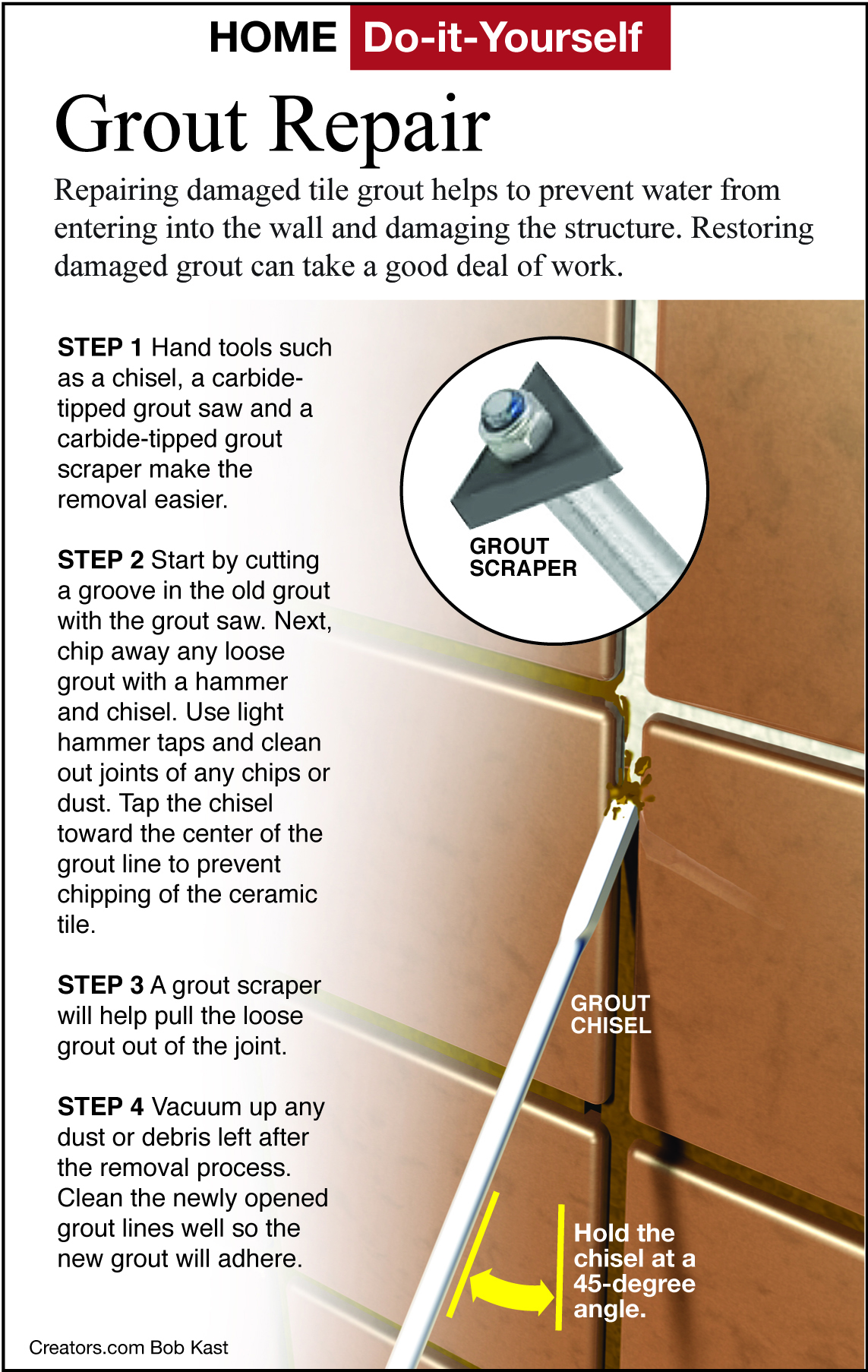
If you have only one or two loose tiles, they should be fixed to the wall again. Just grouting them will hold the tiles together, but it will not keep them in place. After you have taken care of any unruly tiles, you must remove all of the old grout. This is the most difficult job in the whole project. Unfortunately, you cannot just add more new grout over the old bad spots.
Today there are many tools available at home center stores to help make this part a little easier. There are even electric tools that can speed the process along, but if you use one, be careful. These can sometimes be difficult to hold on to and cause damage to your tiles.
If you are nervous about handling a power tool, you can also just use a utility knife, chisel and hammer, or an awl for narrow areas. Make sure you also remove all of the caulk out of the tub's corners.
Some people's skin can become irritated from the grout, and often pieces will fly once you have loosened them. To protect yourself, wear rubber gloves and safety goggles. To protect your bathtub, lay down a drop cloth to keep it from getting scratches.
Start removing the grout at the most unattractive point. The section that is already falling apart will be your best option. Try to be very careful until about a 1-inch section has been removed. Once this spot is open, you can be a little more aggressive when removing the grout.
To remove the next spot, chisel in the direction of the last removed area. Continue to work away from the cleared area so the old grout will crumble out.
Once this hard part is completed, you can mix and apply the new grout. Smear the grout in small areas (a few square feet) using a sponge-faced float or a squeegee. You will want to use a circular motion when applying the grout and take care not to spread it into the corners at the tile/tub seam.
Wipe off the freshly grouted area with a damp rag or sponge until the tiles are clean. Finally, apply caulk to seal the seam at the tub, joint corners and wherever the tile meets a different material. If you don't want watch all of your hard work go down the drain, make sure you allow the new grout and caulk enough drying time.
========
Send your questions to Here's How, 6906 Royalgreen Dr., Cincinnati, Ohio, 45244 or visit www.dulley.com. To find out more about James Dulley and read features by other Creators Syndicate writers and cartoonists, visit the Creators Syndicate website at www.creators.com.
Copyright 2026 Creators Syndicate Inc.


























Comments