Open for business: Chicago's first self-cleaning public toilet launched
Published in Lifestyles


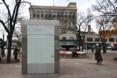
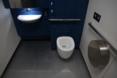
CHICAGO -- When Christian Malatesta took a midday bathroom break Wednesday, whatever he did made history.
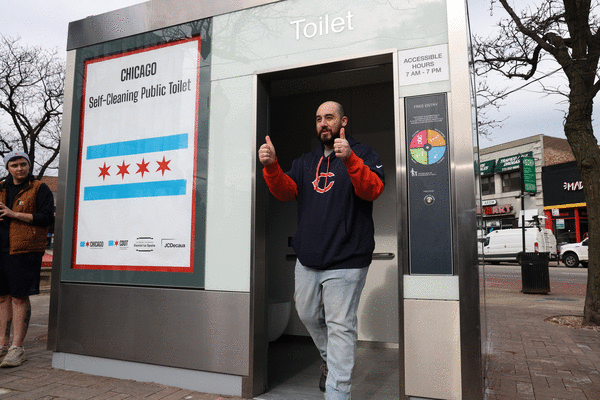
The Wicker Park man shook hands with Ald. Daniel La Spata before an automatic door slid shut behind him, making Malatesta the inaugural user of Chicago’s first self-cleaning public toilet. He had emailed La Spata weeks in advance to secure the honor.
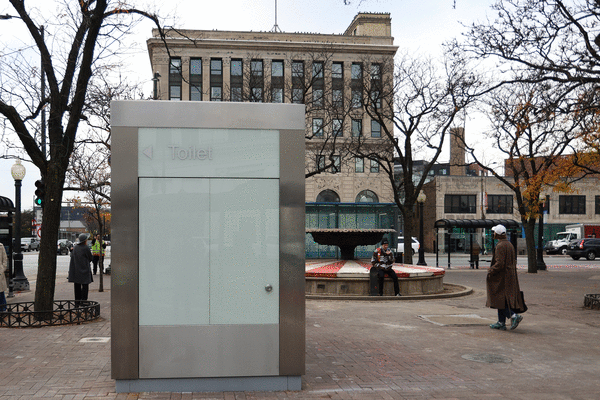
Several minutes passed, then a muffled flush sounded through the walls of the stainless steel structure standing in the Polish Triangle. The door opened and the powder-room pioneer strutted out, two thumbs up in an initial review for a new piece of public infrastructure that could soon come to neighborhoods across the city.
“Great craftsmanship,” he told a line of television cameras and a crowd filled with city bureaucrats.
It was a trip to the toilet years in the making.
La Spata, whose 1st Ward is home to the novel lavatory, led a City Council call for more public toilets in 2021 after a Tribune investigation found large swaths of Chicago have few or no publicly operated bathrooms.
In 2024 La Spata announced to constituents that JCDecaux was ready to install several “high quality” public toilets as part of the French company’s broader contract with the city.
The Northwest Side alderman then allocated around $315,000 in ward money to pay for installing the bathroom at the busy intersection of Milwaukee Avenue and Division Street. The structure itself was donated to the city by the company to launch a pilot program.
By Wednesday, construction had finished, and there was only one of two things left to do.
“This is the greatest day of my life,” La Spata said as he watched Malatesta enter the toilet.
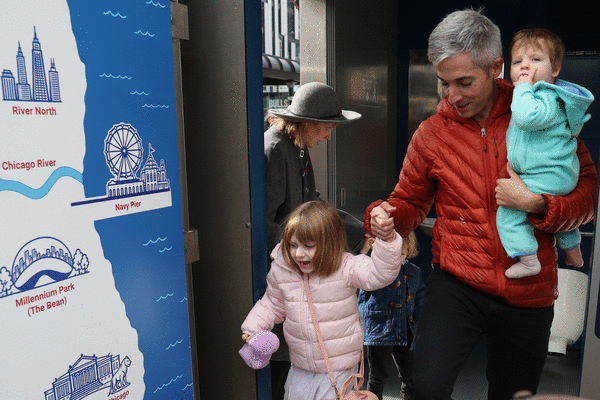
“I love you too, you get to be number two,” he then whispered to the toddler he was holding.
The toilet marks Chicago’s first step toward building something every global city has, La Spata said: a network of public bathrooms.
“Any other city that I have visited understands that this is a need for its visitors, for its residents,” he said. “Somebody had to be the first.”
The bathroom benefits everyone, but might be especially useful for the youngest, oldest and outsiders, he said. For those who need to go, there sometimes just aren’t options, he argued.
“It has been baffling me when people overstate the notion that you can walk into any business or restaurant and use their bathroom at any time. That’s just not reality,” he said. “I really do believe we’re bringing a necessary and safe amenity to the community here.”
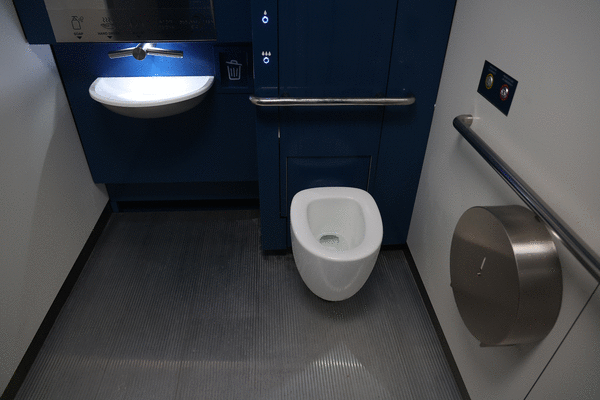
JCDecaux technicians showed off the toilet’s technology, pointing to its countdown clock and outside water fountain. They unlatched the metal shack’s service door to exhibit the motorized sanitation process that starts as soon as a user steps out — all part of an effort to prove the new washroom is no standard port-a-potty.
When the cleaning started, the toilet tipped back. A sheet of soapy water doused it, and it tipped forward, back into position. A straight jet of water then shot across the stall’s metallic floor, left side first, then right side.
After around a minute, the bathroom was ready again.
Bathroom trips are limited to 15 minutes, said Alan Sullivan, co-CEO of JCDecaux North America. As that time limit approaches, an announcement informs users their clock is running out. When time expires, the doors open, and using motion detectors, stay open until the user leaves.
The company operates more than 2,500 such toilets across the world, he said. There are 400 in Paris, and New York is getting 40 more soon.
What they offer, Sullivan said, is “dignity.”
“You don’t have to be self-conscious about using these. You don’t have to worry about going and knocking on the door of a local Starbucks or any other facility,” he said. “Having this as a basic public amenity is a fantastic step forward for the city.”
But more than dignity is at stake for the company, which also supplies bus shelters, expressway billboards and digital information signs throughout Chicago.
The bathroom units typically sell for around $250,000, and installment often costs around $200,000 Sullivan said. The company has offered the city five automated public bathrooms free of charge and is discussing where the next pilot pots could go with city officials, he added.
Curious reporters stepped inside the shack one at a time Wednesday, many seemingly careful to exit quickly as a crowd of around 40 watched.
Despite the fanfare, not everyone lauded the loo. Alexis and Nic Peart diverted their dog walk to listen to speeches commending the commode that will now sit across the street from their home.
“I will see every person that enters this bathroom,” said Nic Peart, whose desk overlooks the Polish Triangle.
The sight will be unwelcome.
The couple questioned why city officials hadn’t worked to re-open toilets closed at the Chicago Transit Authority’s Division Blue Line station or used the over $300,000 spent on installation to nudge nearby business owners to expand bathroom access. They argued foot traffic is not high enough to make the toilet worthwhile and said they oppose the new amenity alongside many neighbors.
“This feels much more like we’re trying to give this business … more money to be able to have this grand shiny mark, and it cares less about the actual logistics of how it works in the Chicago community where it is,” Alexis Peart said.
The new toilet may not serve many people while open from 7 a.m. to 7 p.m., and the opening has made skeptical neighbors feel unheard, she said.
“We live here, we walk our dog here. There’s especially a large unhoused population that has a lot of mental illness, like someone that was carrying a whole crowbar, and it brings into concern issues of safety,” she added.
Besides politicians, technicians and journalists, few people passed through the plaza early Wednesday afternoon. As television reporters conducted live shots inside the toilet, the bathroom at Philz Coffee was empty a block away, and no one required a Tribune reporter to make a purchase before entering it.
But by the time the media spectacle had left, some curious passersby stopped in front of the new sight.
One man asked how the new toilet works and was excited when he found out it’s free to use, but left before giving it a go. Mickey Christensen walked in, took his time, and stepped out. He did it “for the novelty,” and he wants more to pop up in Chicago, he said.
“I don’t know if I’ll use it that often,” he said. “But I mean, it’s a great amenity.”
©2026 Chicago Tribune. Visit at chicagotribune.com. Distributed by Tribune Content Agency, LLC.


















Comments