Home & Leisure
/ArcaMax

Ask the Builder: Avoid social media shortcuts
I perform media scanning on a routine basis. I’m constantly on the lookout in publications and the Internet for new products, techniques and hokum. I do this, in part, to keep my ear to the ground, but I also do it to help you save time and money.
I’ve been noticing a disturbing trend with some home improvement websites and social media. ...Read more

Ask the Builder: Planning an expensive vanity top
I’ve shared in past columns how I’m helping my son finish off about 1,200 square feet of his basement. I’m saving him more than $100,000 in labor and profit costs he would have had to pay a contractor.
I’m also confident he and I are doing a much better job. After all, I’m investing time, my skills, and a wheelbarrow full of love into...Read more

Ask the Builder: What you can learn from a septic tank disaster
I’m about to share an incredible story about Jennifer’s new $20,000 septic tank that failed in the first year. You may not care about septic tanks, but this column may save you tens of thousands of dollars if you plan to build a new home, add a room to your home, install a new roof or sign a contract for any other major project.
Jennifer ...Read more
Ask the Builder: The ugly truth about your heating and cooling system
Tell the truth. Are there days in the winter when your heating system can’t provide the heat you need to keep you comfortable? What about your AC system? Are there blistering hot summer days when you feel like a simmering sausage in a skillet?
You may not want to hear this, but it’s normal for this to happen. Your heating and cooling ...Read more
Ask the Builder: Please stop hoping your contractor is doing the job right
This column is all about misplaced hope. You can lose thousands of dollars, or even tens of thousands of dollars, if you make this mistake.
I do at least five short telephone consultations with homeowners each week. The common denominator in almost all of the calls is that the homeowner trusted that the contractor was going to do the job the ...Read more
Ask the Builder: How to get better a spackling and caulking
I’ve been sharing with you the wonderful saga of my son’s basement remodeling project in past columns. Together, he and I have transformed 1,100 square feet of bare basement into five large rooms and a full bathroom. We’ve done all the work ourselves, and only work on Saturdays.
It’s now time to paint the baseboards, door trim, and the ...Read more
Ask the Builder: A drone may save you big money
Thirteen months ago, my very good friends Steve and Karin were going about their daily lives in their wonderful home in Altadena, California. Several years before, I had visited for a week. Steve and I plowed through a long honey-do list. I donated my time to Steve to help pay back all the work he does to maintain my Ask the Builder website.
...Read more

Ask the Builder: DIY wood preservatives
There’s a very good chance you own something made of wood that’s exposed to the weather. It might be a fence, a deck, a dock, patio furniture, wood siding or a shed. Wood is a marvelous material. It’s favored by many because it’s easy to cut, shape and install. Wood can also be quite affordable because it’s nothing more than a crop, ...Read more
Ask the Builder: Bring back vocational schools
I need your help. You’ll be helping your children, grandchildren, friends and neighbors, too. You may not realize it, but there is a severe shortage of workers in just about every residential construction trade. Here’s another reality: Over 70% of the U.S. population hires people in the trades to perform construction and maintenance tasks on...Read more

Ask the Builder: Artificial intelligence and contractor quotes
I talked with Irene on the phone a few days ago. She lives in Connecticut and used my affordable phone coaching service. She needed to make sure the bid she received to repair wood rot next to her front door was reasonable. Irene was about to have a new front door installed. At the end of the call, Irene said: “Oh my, investing in this phone ...Read more

Ask the Builder: Looking to make your last big relocation? Do your research first
Brian lives with his wife, Kelly, on the East Coast. He’s been a subscriber to my free newsletter for years. Brian is in a select group of virtual friends I’ve made over the years. It’s a delight to have email exchanges with these high-tech pen pals using electrons instead of ink.
You may be like Brian. He’s about to retire. He and his ...Read more
Ask the Builder: Interior lights that wow
It’s very hard to keep up with all of the improvements in building materials and products. Thousands of new things hit the marketplace each year. You need to focus on just one or two verticals to stay abreast of all that’s new.
Lighting is a category that might keep you busy 12 hours a day. Designers and architects who specialize in ...Read more
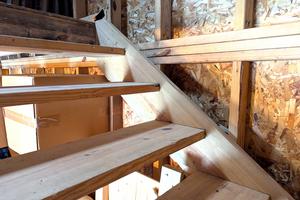
Ask the Builder: Building strong, simple stairs
You may be like most folks. I’m guessing you give very little thought to the stairs you go up and down on a regular basis. They might be constructed from wood, steel, or concrete. The vast majority of stairs in residential homes are made from wood.
Wood is very easy to work with, and it can create very strong stairs. I stood just 10 feet away...Read more
Related Channels

America's Test Kitchen
By America's Test Kitchen

ArcaMax Chef
By ArcaMax Chef

Ask The Vet
By Dr. Lee Pickett

Celebrity Travel
By Jae-Ha Kim

Dear Monty
By Richard Montgomery

Do It Yourself Or Not
By Gene and Katie Hamilton

Eric's Autos
By Eric Peters

Everyday Cheapskate
By Mary Hunt

Focus on the Family
By Jim Daly

Georgia Garvey
By Georgia Garvey

Here's How
By

Jeff Rugg
By Jeff Rugg

Lenore Skenazy
By Lenore Skenazy

Living Space
By Kathryn Weber

My Pet World
By Cathy M. Rosenthal

Real Estate Matters
By Ilyce R. Glink and Samuel J. Tamkin

Recipes by Zola
By Zola Gorgon

Rick Steves' Europe
By Rick Steves' Europe

Taking The Kids
By Eileen Ogintz

Travel & Adventure
By Various authors

Travel Troubleshooter
By Christopher Elliott
Comics