PlayStation is giving up on discs. Here's what it means for video game stores
Published in Lifestyles
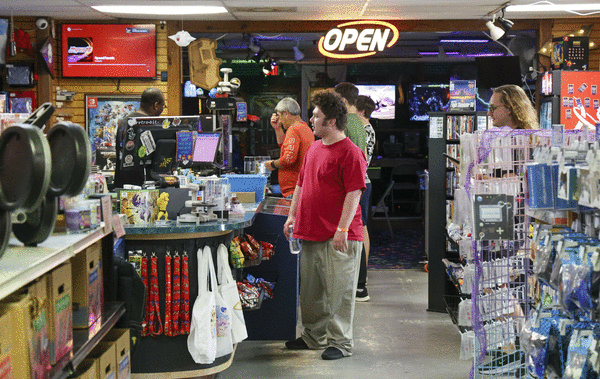
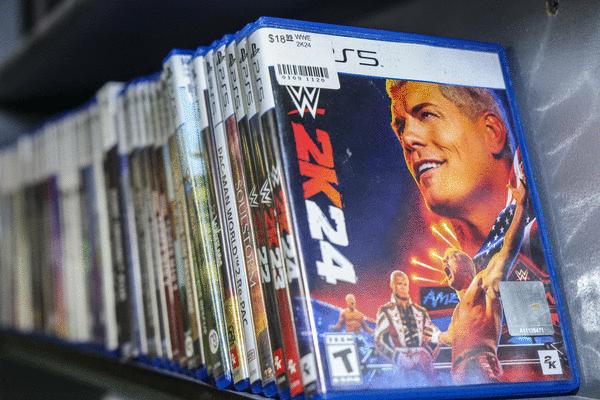





TAMPA, Fla. -- Walking into a video game store is something Isaiah Chavez hopes he’ll always be able to do.
In a world where buying and installing new games are mere clicks away from the comfort of his couch, Chavez, 37, prefers to drive about 15 miles from his Largo, Florida, home to a local games retailer every time he makes a purchase. Holding the discs or cartridges in his hands and browsing the shelves while chatting about his favorite hobby, he said, is irreplaceable.
“It’s like Christmas morning,” Chavez said. “I just get giddy about it. You like to see the cover art, just because that gets you even more excited to play.”
But the days of heading to the store to find a new video game are going the way of Blockbuster and video tape rentals. Sony announced July 1 that PlayStation, one of the largest video game platforms, will no longer produce physical discs for games released after January 2028. Players largely buy and download games directly from their video game consoles. But Tampa Bay is still home to more than a dozen stores, which owners and players say are a big part of keeping the local gaming community active.
“It’s without question that any kind of video game store, small business, is going to be impacted by this,” said Thomas Hafer, owner of Bonfire Games in Tampa.
Those in the industry have been bracing for this switch. But PlayStation’s announcement means that day is coming sooner rather than later. The company said in a blog post this month that it was a natural move as “digital media significantly outpaces physical discs.”
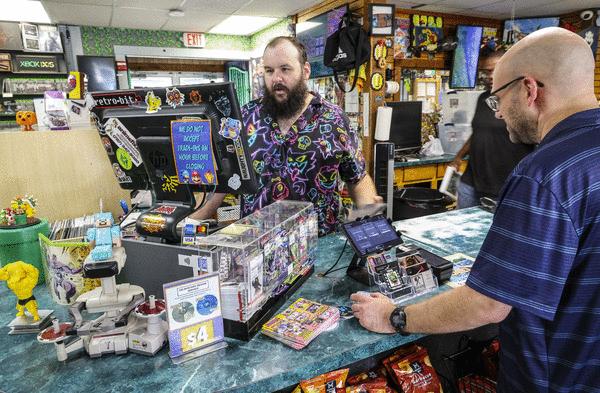
Video game stores in Tampa Bay are usually independently owned, outside of national mall staples like GameStop. They often sell pre-owned games and allow customers to trade-in and sell old games for new ones or cash.
The main appeal of a video game on a CD is the buyer will always own the game as long as they have the physical disc, said Grant Garvin, a Clearwater media preservationist and former game store owner. Digital downloads offered in online storefronts through video game consoles act as a license to play a game. A single title can be removed from the digital store or a server disruption could cause a player to lose access to a game they purchased.
“Being able to trade it, sell it, lend it to a friend, put it on a shelf,” Garvin said. “You can do a million different things with it, and it’s yours.”
It’s also easier to find deals on games when you shop in-person, said Chavez, who boasts a collection of over 4,200 video games at his home.
Hafer, who opened Bonfire Games in 2022, said that since the writing’s been on the wall for this change, stores have had time to adapt.
To stay ahead of the curve, Hafer began selling trading card games like Pokémon and Magic: The Gathering, two years ago. If they aren’t already, he said, stores should offer products like tabletop games.
Evan Lauteria, an assistant professor of sociology at the University of Florida, said most mom-and-pop shops have begun selling other analog products to some degree, but PlayStation’s decision will accelerate the shift.
“I think it’s difficult to keep a pre-owned game shop open nowadays, given how easily accessible digital games are,” said Lauteria, whose dissertation focused on video game localization.
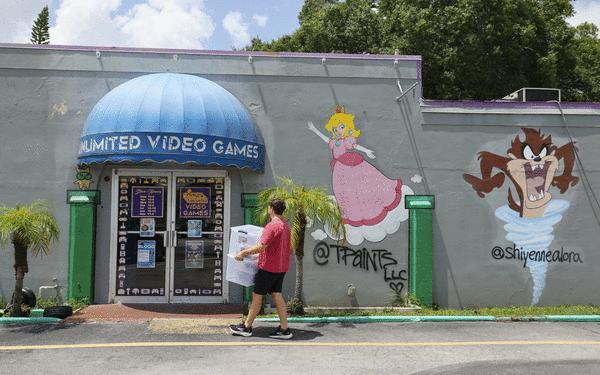
Gregg Lonkey, co-owner of Unlimited Video Games in Pinellas Park, said he’s not worried about his business because his store is built on people who love physical media and will continue to support it.
“Our customers really enjoy shopping at our store because that was our goal,” Lonkey said. “It’s not really rocket science, but other game stores don’t always operate the same way, or they have legs in other markets.”
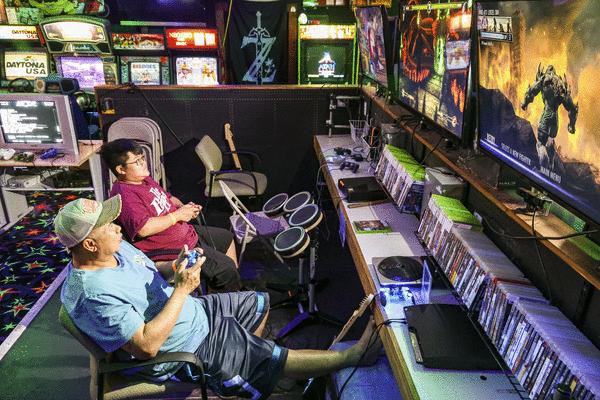
Local stores often host competitive tournaments and overnight arcade sessions, bringing gamers together.
“You establish a personal connection with the local shop owners,” Chavez said. “And I love that.”
Unlike other stores, Lonkey said he has no interest in shifting from video games to avenues like trading cards, but understands why others would.
“We’re going to keep doing video games, and we’re just going to respond to the market changes as they come,” he said.
New video games released for modern consoles have low margins, and selling them is a difficult business, Garvin said. Local shops mostly sell vintage games and consoles.
“I think more people are going to be interested in buying older games, older consoles, getting into classic hardware, learning how to repair it, collecting for it,” Garvin said. “Because of that, you might actually see some of these stores do better.”
Recent reports show that more people are buying games through online storefronts than ever.
Nearly 80% of PlayStation game sales are digital as of last year, up 13% from 2022, according to Sony financial reports.
Capcom, a major Japanese video game firm known for titles like Resident Evil and Street Fighter, reported that 93% of its game sales so far this year were digital — a big leap from 75.5% in 2022.
Nintendo sells more physical games than its competitors, but this year, 54.6% of the company’s total software sold as digital downloads.
Higher digital sales aren’t only due to consumer choice. It can be harder to find physical games for sale, as opposed to online storefronts which sell infinite copies. Many titles from smaller studios are only available digitally.
“Is it in fact that we’re downloading more games because we’re only given the option to download more games, or is it actually a cultural shift in desire to download more games?” asked Lauteria. “I’m not sure we can really answer that with a single statistic alone.”
Physical games take a more expensive toll on companies due to production and distribution costs. Lauteria said artificial intelligence and data centers have driven up pricing for computer parts and consoles, and could have contributed to Sony’s decision to end physical game production.
Chavez said Sony’s decision was a way to wring out more money from consumers by taking out the middleman - other game sellers.
Sony faced backlash on social media after the announcement, racking up 180 million views and 107,000 comments on a single X post in under one month. Since then, more Sony and PlayStation posts have been flooded with comments like “no disc, no buy,” demanding the company reverse the decision.
On the same day as the Sony announcement, the company also said it would begin closing the digital storefronts for the PlayStation 3 and PlayStation Vita, which were released in 2006 and 2011. Games on those storefronts will no longer be available to buy, but they can still be installed for users who have already purchased them.
“That is very bold to announce those two things at the same time,” Lonkey said. “They’re giving the example of why the other is a bad idea.”
Removing physical copies also gives Sony a monopoly on the market, since the only buying option will be the company’s online store, Garvin said. That leaves no incentives for sales or competition that benefits consumers.
Despite this change, the video game industry is booming. There are more titles available to play than ever, and even more platforms to play them on.
Lonkey said he thinks people will never stop playing games.
“My friends, they all still come over to my house and game with me,” Chavez said. “We still have a pick of the choosing with all these video games, and it’s tangible. It’s physical. You pop it, you play it, no issues.”
“That’s what video games are supposed to be — fun.”
©2026 Tampa Bay Times. Visit at tampabay.com. Distributed by Tribune Content Agency, LLC.























Comments