Can witches fly? A historian unpacks the medieval invention − and skepticism − of the witch on a broomstick
Published in Women
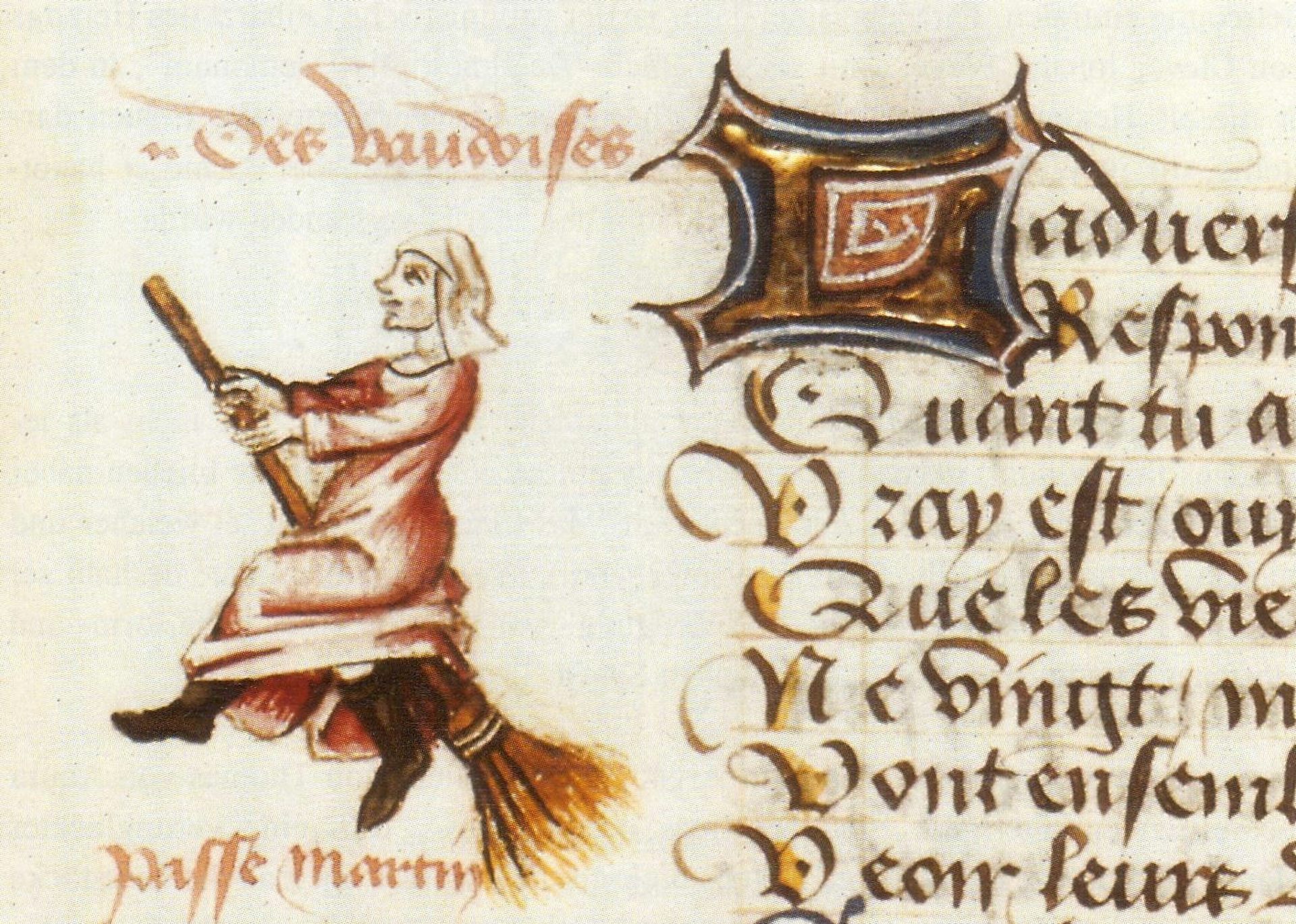

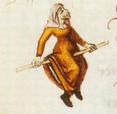
The image of a witch flying on a broomstick is iconic, but it is not nearly as old as the idea of witchcraft itself, which dates to the earliest days of humankind.
Several theologians, church inquisitors, secular magistrates and other authorities first wrote about such flight in the early 1400s. The earliest known visual depiction of flying witches appears in a 1451 manuscript copy of one such text, “Le champion des dames” (“The Defender of Ladies”), by the French poet Martin Le Franc.
Witchcraft accusations at this time were increasingly focused on women. The clothing of the figures in Le Franc’s text depicts them as coming from non-elite ranks of medieval society. So do the implements on which they fly. Staffs and brooms were tools for ordinary housework.
The notion that witches could fly served to support the idea that they gathered in large groups called sabbaths. These gatherings, in turn, heightened the supposed threat witches posed to Christian society.
Even after the idea of witches flying on brooms was introduced to European society, it was not readily accepted. Many who wrote about witchcraft at this time, including Le Franc, were quite skeptical about the reality of flying witches.
As it turned out, however, authorities could still perceive a threat even if they believed witches’ flight was imaginary.
In my work as a scholar of medieval European history, I have researched texts describing witchcraft in the early 1400s.
Some texts fully accepted the idea that witches flew, often on brooms or staffs. One described witches traveling to sabbaths on staffs anointed with a magical ointment and flying into the mountains to gather ice to cause hailstorms.
Other texts, however, were not sure that such flight was real. One noted that accused witches claimed to fly from mountaintop to mountaintop on chairs, but it also hinted that demons might have tricked them into thinking they did. Another text stated that accused witches who claimed to fly were “deluded” by the devil.
Skepticism about flying witches drew on an early 10th-century church law about women who claimed to ride at night on “certain beasts” in the train of the pagan goddess Diana, whom Christian authorities understood to be a demon in disguise. The law declared that such flight was not real, and anyone who thought so had been “seduced by illusions and phantasms of demons.” It prescribed no direct punishment but mandated priests preach against such “infidels.”
Skeptics of magical flight were quite specific in their doubts. Le Franc, for example, declared that anyone who thought that witches could fly lacked “common sense.” On the other hand, he fully accepted that magicians, who were generally male, could conjure demons and that “magic arts” had been practiced as far back as ancient Persia.
The story, however, is not so simple as male authorities accepting the reality of magic practiced by men but doubting that women flew on brooms. These same authorities were, in general, taking other aspects of witchcraft more seriously.
Did women accused of witchcraft really insist that they flew on brooms?
Scholars have speculated that the ointments often mentioned in accounts of such flight might have functioned as hallucinogens, producing sensations of flying. The most thorough study of these accounts, however, finds that such references rarely appear in voluntary testimony. They come instead from authorities recording, and often reshaping, what accused witches said.
In the end, allegations of flight and dismissal of its reality may have sprung entirely from the minds of legal and religious authorities who codified and condemned the idea of witchcraft.
Their skepticism hardly mattered. Courts could execute convicted witches regardless of whether they believed they could fly.
Although witch-hunting ended – at least in Europe and North America – in the 18th century, the image of witches flying on brooms endures.
This article is republished from The Conversation, a nonprofit, independent news organization bringing you facts and analysis to help you make sense of our complex world.
Read more:
The invention of satanic witchcraft by medieval authorities was initially met with skepticism
How do you spot a witch? This notorious 15th-century book gave instructions – and helped execute thousands of women
Michael D. Bailey does not work for, consult, own shares in or receive funding from any company or organization that would benefit from this article, and has disclosed no relevant affiliations beyond their academic appointment.






















Comments