Ex-etiquette: It starts with respect
Published in Lifestyles
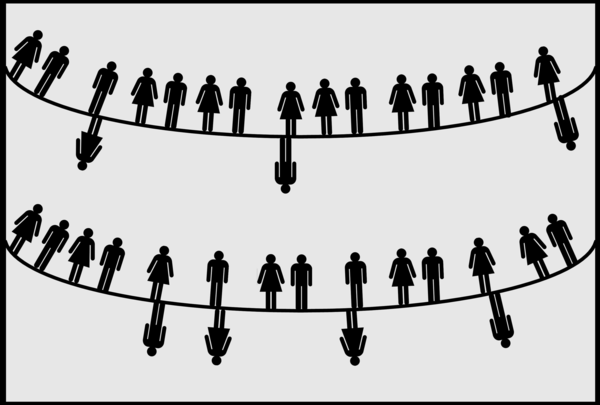
One night, very late, I happened upon an Instagram video of a woman questioning whether “bonus” was an appropriate alternative to “step.” She acknowledged how difficult stepmothering can be and felt the term “bonus” added to the guilt and anxiety of trying to be a successful stepmother.
The debate continued through hundreds of posts, with many weighing in: “I don’t use step or bonus. I just call them 'my kids.' That’s the way it is at our house.”
I’ve worked with families for more than 30 years and found that most parents don’t appreciate someone else referring to their children as “my kids,” particularly when struggling with guilt associated with a breakup.
Although the comment was meant to demonstrate acceptance, if you want to make life easier for children moving between two homes, start by respecting their mother as mom and their father as dad. Granted, some parents are unreliable, and a bonus parent may want that acknowledged, but most parents are doing their best. Both biological and bonus parents need help getting this right, not more fights and jockeying for position.
For the record, there’s more to the bonus story. My life required an alternative to “step.”
After staying up all night nursing my stepdaughter through a 103-degree fever as she threw up all over my slippers we formed a bond, and “step” simply didn’t fit anymore. A few days later, I introduced her as my stepdaughter at a party. She looked at me as if I had wounded her. But calling her “my daughter” didn’t work for her mother, who hated when her children called me mommy. We needed a word that respected us both.
That’s when her mother and I put our heads together and came up with “bonus.”
I’m a great proponent of reframing negative thoughts into positive ones. Thanks in part to fairy tales, stepparents were often portrayed as wicked and evil, while stepchildren were regarded as less than. That was the premise behind adopting “bonus.” Reframing a negative into a positive. It was never intended to spark debate. It was simply our family’s preference.
But as I used the term in my personal life and my work as an author, child custody mediator, and coach, it caught on. Thirty years later, hundreds of people are debating its appropriateness on Instagram.
What gets lost in these discussions are the real challenges of sharing a child’s time between two homes. Parents who break up sometimes forget that their child’s life doesn’t stop when they walk out the door. That child is also a full-fledged member of another family. That’s why we reach across the line in the sand, to help children find continuity when their parents break up and everyone's life changes.
And that’s the key to successful co-parenting and bonus family life. We are not at the mercy of our past or how we once treated each other. We live in the present and can create the life we want for ourselves and our children.
Over the years, I’ve answered thousands of questions about breaking up, starting over, and co-parenting. Now I’m speaking to a new generation facing new challenges. So, I invite your questions. I’ll answer them with a combination of professional knowledge and "been there, done that" experience.
We’ll take this walk together. That's good ex-etiquette.
©2026 Tribune Content Agency, LLC























Comments