Heidi Stevens: Human decency was on the midterm ballot, and it won big. Now show us what it looks like in action
Published in Lifestyles
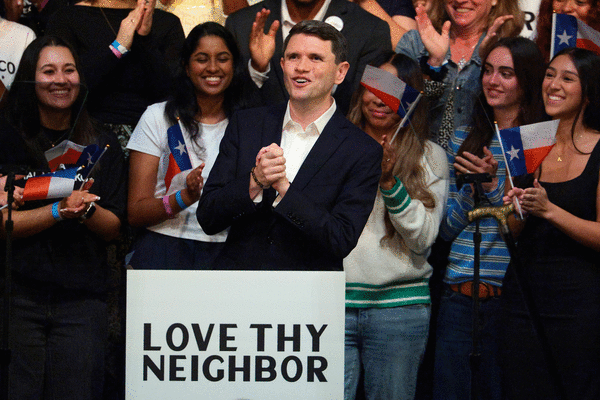
A week before Americans went to the polls and flipped a historic number of U.S. House seats, U.S. Senate seats and governor seats to the Democrats, Amy Acton said human decency was on the ballot.
"Kindness is a fierce commitment to justice and seeing the humanity and the God in one another," Acton told a crowd of supporters gathered at Liberty High School in Youngstown, Ohio, in late October. "That and human decency are absolutely on the ballot."
She was responding to the now-infamous attack ad from Vivek Ramaswamy, her failed Republican opponent for Ohio governor, featuring Acton’s estranged 82-year-old mother calling Acton a liar. As children, Acton and her brother were removed from their mother’s custody when she chose to remain with her husband, their stepfather, after he was indicted for repeatedly raping Acton over the course of two years.
Vice President J.D. Vance told critics to “stop whining” when they repudiated the ad. President Donald Trump said the ad was like “hitting pay dirt.”
Ohioans felt otherwise.
Acton’s victory was part of a stunning sweep to power for Democrats across America. Texas, North Carolina, South Carolina, Ohio and Georgia turned blue. Republican Sen. Susan Collins was ousted from the Maine seat she’s held for three decades. Kansas sent a Democrat to the U.S. Senate for the first time in almost a century. This particular blue wave will be analyzed for decades.
For the GOP, it was a staggering loss of power and face.
Vance blamed the war in Iran. Trump blamed lackluster candidates. Plenty of people blamed Trump.
“When President Trump said, ‘Act like I’m on the ballot,’” Texas Republican Rep. Dade Phelan told CNN, “that’s what voters did.”
But back to human decency for a moment.
New Hampshire just elected the nation’s first openly gay male senator. Georgia just elected the first Black female governor in American history. Texas just elected a Latino female governor for the first time in the state’s history. Illinois just became the first state to be represented by two women of color in the U.S. Senate at the same time. Michigan just elected the first Muslim U.S. senator in American history.
Those wins matter because representation matters. Because our best ideas and policies and solutions happen when a variety of perspectives are shaping them. Because the people making decisions about healthcare, safety, security, the economy, immigration, civil rights, education, innovation, the environment — decisions that pave the way for human flourishing or turn a blind eye to human suffering — should look and live and love and worship like the people affected by those decisions.
But those wins also matter because they took place against a backdrop of cruelty. They rose out of a maelstrom of mendacity. They happened despite a president whose policies and rhetoric reek of bigotry, misogyny, Islamophobia, intolerance and indifference.
Or maybe they happened in response to all that.
Democrats largely ran on a pain-points platform, hammering home that gas, groceries, healthcare and housing have skyrocketed and show no signs of slowing down. They blamed the president’s war, his tariffs and his unprecedented corruption. And it worked.
Exit polling showed the cost of living compelled voters to lean Democrat, as did the administration’s extreme immigration efforts and the decision to go to war against Iran.
Now is their chance to do better. Running on pain points is only sound practice if you work to alleviate the pain once you’re elected.
The blue wave was a rebuke and a mandate. But it was also a plea for change. A resounding, ringing, reverberating call for something better.
And now the folks in charge have the chance to show that better looks like a stronger economy and more affordable groceries and fully funded schools and fewer wars and sensible immigration policies and accessible healthcare and stable housing.
But it also looks like human decency.
It’s not an either-or. We don’t have to choose between politics that honor people’s dignity and politics that keep the economy humming. We don’t have to trade civility for security. We don’t have to cede our moral authority in order to cement our global authority.
Our power to improve people’s lives, improve people’s futures, improve this world we’ve inherited is not in conflict with our decency. In fact, it relies on it.
The newly elected leaders — and the incumbents they’re joining — have a really beautiful opportunity here. Human decency was on the ballot. And it won big.
Now show us what it looks like in policy, in practice, in action. Indefinitely.
©2026 Tribune News Service. Distributed by Tribune Content Agency, LLC.





















Comments