The Arts and High Line Park Are the Pride of Chelsea in New York City
----
By Athena Lucero
If you are a fan of art galleries, history, architecture and gastronomy alongside innovation and gritty charm, Chelsea on Manhattan's West Side in New York City is a feast for the senses. On the banks of the Hudson River with sweeping views of northern New Jersey on the other side, it was only a matter of time that by 2021 it would receive honors from Time Out magazine as one of the top 10 coolest neighborhoods in the world and home to more than 200 contemporary art galleries.
With just two days in the city before spending time with family in New Jersey, it was impossible to leave this international hub of art and culture without walking the famous High Line -- America's first public park built on an unused elevated rail track.
But hip Chelsea could not be what it is today were it not for its gritty past. From the mid-1800s to the mid-1900s, the industrial neighborhood's massive manufacturing and maritime trade turned Chelsea into the economic backbone of New York City. The adjacent Meatpacking District included 250 slaughterhouses and meatpacking plants. That's when freight trains moved dangerously along the street, sharing the road with pedestrians until too many people met their destiny crossing the tracks. That earned it a grim moniker, "Death Avenue."
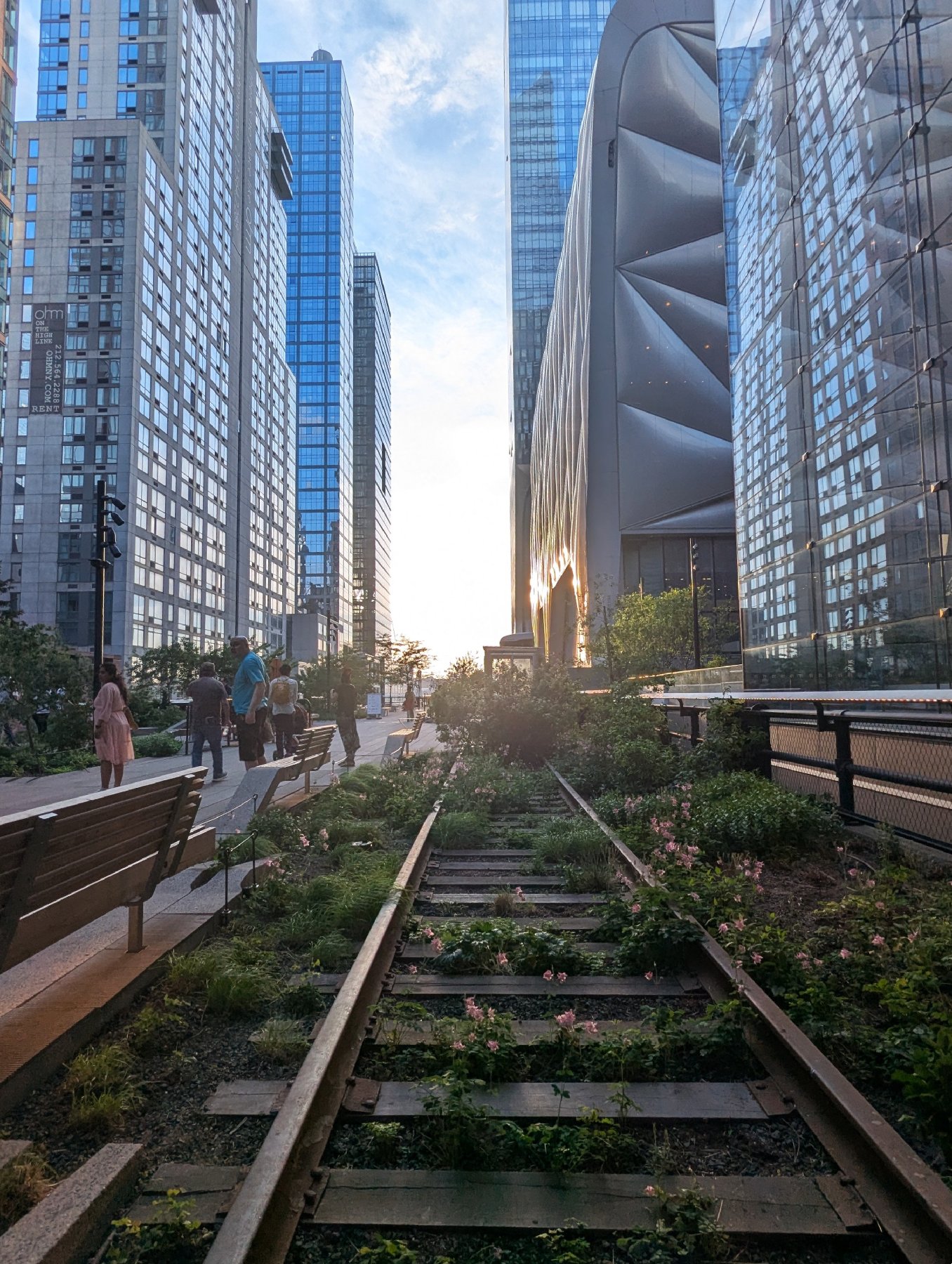
The solution for saving lives was to elevate the track some 30 feet above ground level. Completed in 1934, it was named the High Line. The train delivered livestock, carcasses, produce, flour and dairy products to the second and third floors of warehouses and factories. It even rolled through buildings, including the massive National Biscuit Co. complex (birthplace of the Oreo cookie in 1912), delivering butchers' lard that was used to make Nabisco's beloved treat.
Modernization -- refrigeration and interstate highways -- began moving the meatpacking industry outside Chelsea, leaving behind a complex of imposing red-brick warehouses designed in the Romanesque Revival Industrial Loft style. Art Deco skybridges of the time connected the warehouses to offices.
In the decades that followed, however, the mostly empty warehouses fell into decay. And the consequential abandonment of the High Line with decades' worth of overgrown weeds deemed it a candidate for demolition that began in 1960 and was slated for complete demise in 2001.
But grassroots efforts by Chelsea residents Joshua David and Robert Hammond prevailed in their David and Goliath efforts against powerful city officials to save what has become a world-class sustainable linear park stretching 22 city blocks. Their advocacy group, Friends of the High Line, achieved its claim to fame when their vision became a New York City landmark, winning awards for urban public park design and landscape architecture.
"Agri-tecture" was the guiding philosophy for the High Line: The wild urban meadow that had been thriving for decades along the iron tracks but not visible from the street was rich with pollinizing vegetation -- setting the groundwork for a sustainable urban park.
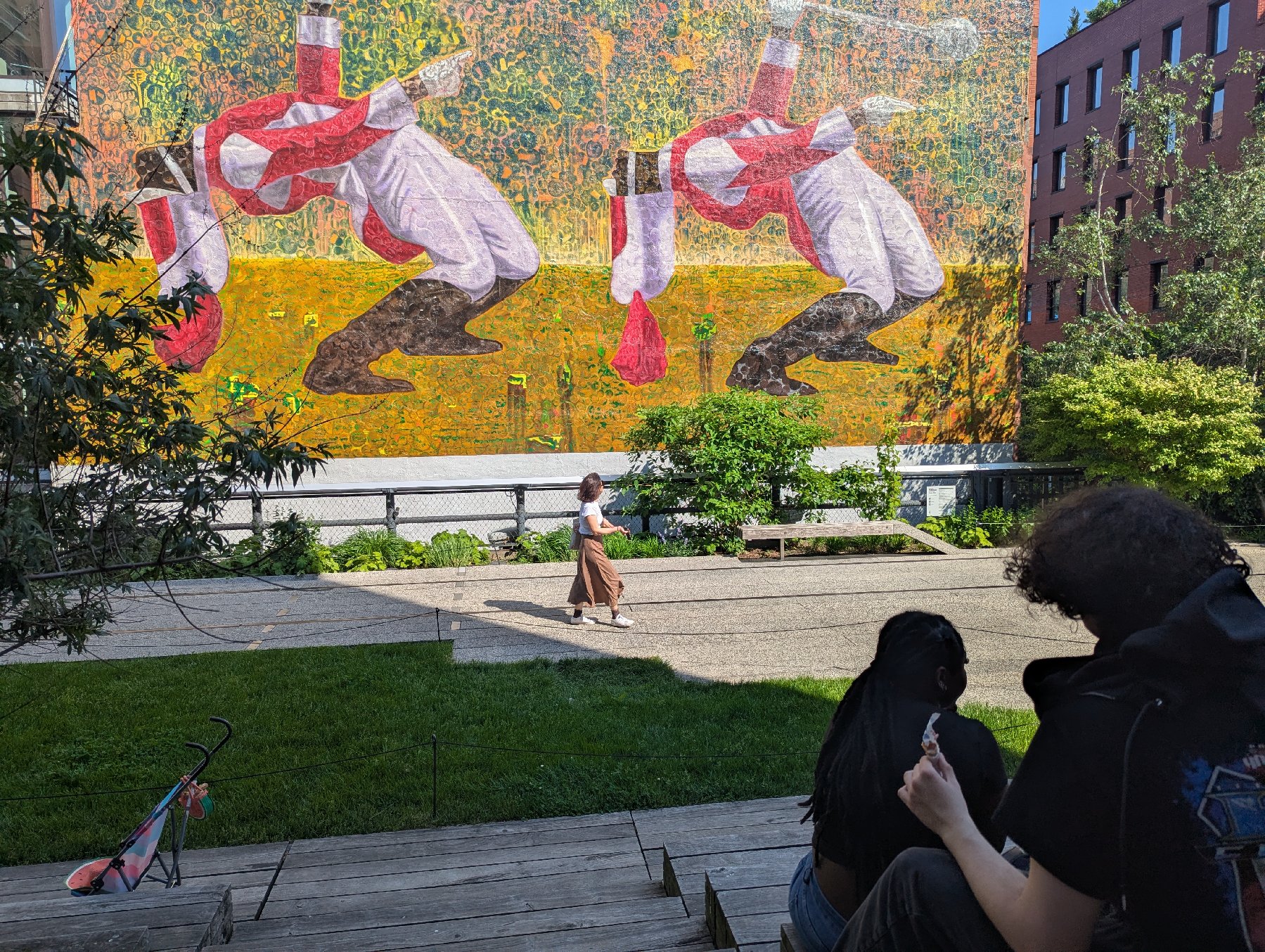
Art on the High Line was a major component as architectural landscape designer Piet Oudolf planned the High Line to include the streets, buildings, and the creative community and culture of Chelsea as a "living backdrop."
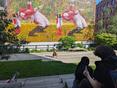
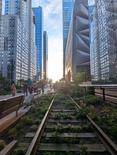
Seeing is believing. Walking the High Line felt delightfully otherworldly because I had never witnessed anything like it before. Imagine a peaceful landscaped "park in the sky" the width of a one-lane road juxtaposed with noisy traffic on the streets below. Some residents and visitors stroll silently or have quiet conversations while others admire art installations along the way, relax on benches to watch the world go by or eat ice cream from the nearby vendor. No one is in a rush.
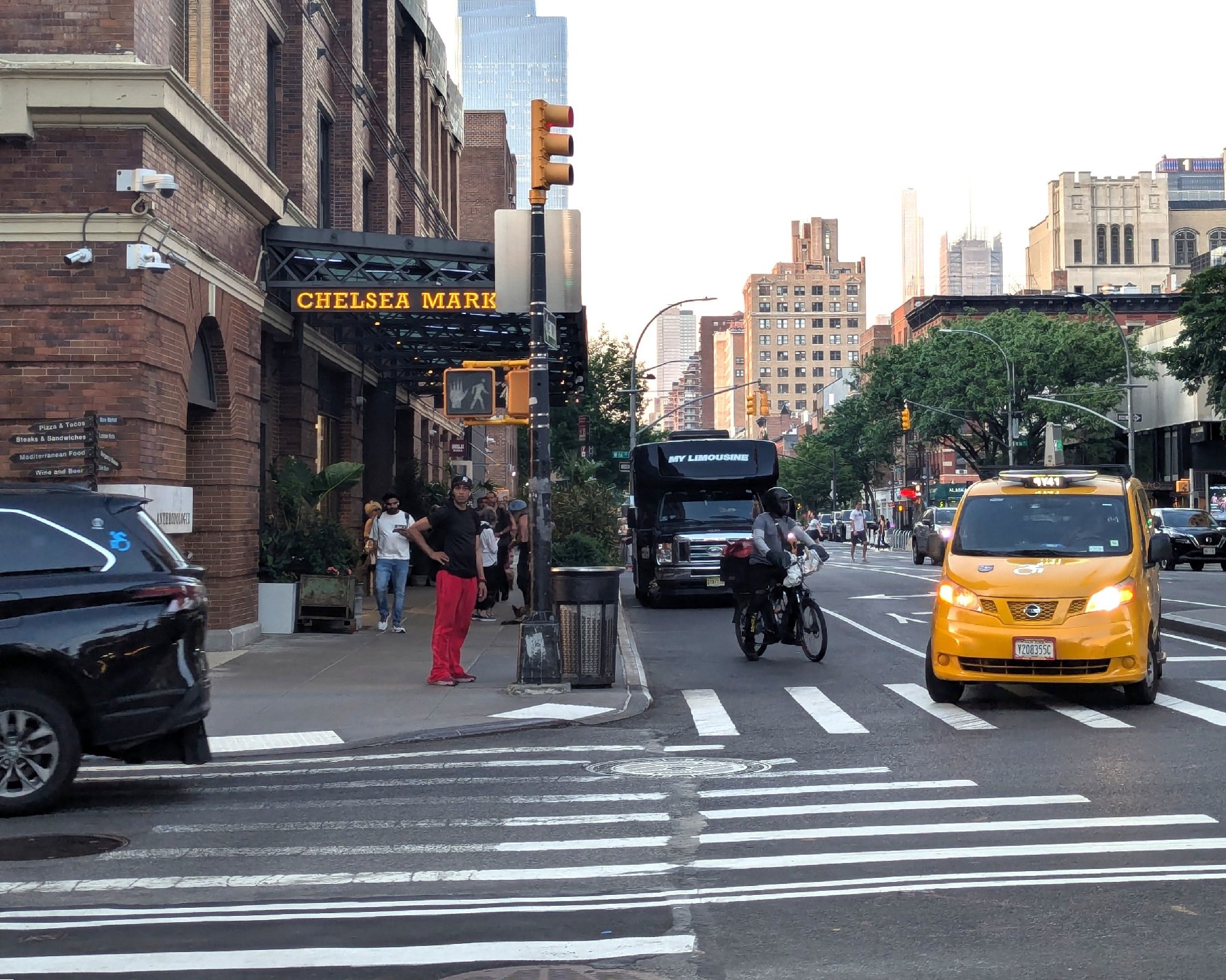
If you're wondering what became of Nabisco's block-long complex of warehouses, simply look around. The individual buildings are independently owned. Many are now art galleries. The ground floor of Nabisco's main building is home to Chelsea Market, a culinary hub of restaurants, food vendors and shops that we explored after walking the High Line. In the best way, it brings residents and visitors from all corners of the globe together under one roof to break bread. The floors above are offices occupied by Google and other tech companies that are not open to the public.
At the northern end of the High Line in Hudson Yards next door, a bronze honeycomb-like structure 16 stories high might catch you off-guard. "The Vessel," inspired by Native American stepwells, was created by British designer Thomas Heatherwick. The permanent interactive public art installation welcomes visitors to climb its 154 interconnecting flights of stairs -- or take the elevator -- to the top.
The High Line is the first elevated park in the United States but not the first in the world. That honor belongs to 3-mile-long Promenade Plantee in Paris -- the inspiration behind the High Line.
It's hard to believe that Chelsea occupies just a square mile, considering its fantastic industrial history, the High Line, and its present-day status as one of the world's most important and dense centers for contemporary art.
At the end of the week, from the shores of Hoboken, New Jersey, we gazed across the Hudson River at New York City's massive skyline -- and Chelsea's twinkling lights.
----
WHEN YOU GO
Chelsea is north of Greenwich Village and south of Midtown West. It is east of the Hudson River and west of NoMad and Flatiron.
The High Line is free of charge. The park opens at 7 a.m. year-round. Closing time depends on the season. Access at the south or north ends or various access points in between is via stairs, elevators and ramps: thehighline.org/about.
Friends of the High Line, a nonprofit conservancy with the mission to reimagine public spaces in the spirit of creating "connected, healthy neighborhoods and cities," can be found at the same site.
Art galleries can be accessed from various points along the High Line, and many are free of charge.
Athena Lucero is a freelance writer. To read features by other Creators Syndicate writers and cartoonists, visit the Creators Syndicate website at www.creators.com.
----
Copyright 2026 Creators Syndicate, Inc.























Comments