
New (and Very Different) Galleries at the Los Angeles County Museum of Art


The Los Angeles County Museum of Art's roots run deep. Founded in 1913 as part of the newly created Exposition Park, it shared a home with the Museum of Natural History. You could start at one end, overshadowed by the fossilized remains of a brontosaurus, pass by dioramas of stuffed lions and elephants on the Serengeti, and end up admiring paintings by Cezanne and Picasso.
In 1965 LACMA was finally able to move into a home of its own on Wilshire Boulevard alongside the La Brea Tar Pits at the end of a portion of the boulevard optimistically dubbed, "The Miracle Mile." The new complex of galleries designed in the mid-century modern tradition by architect William Pereria was acclaimed. But over time, as an assortment of new gallery buildings were added, the consensus was that LACMA had turned into an architectural hodge-podge.
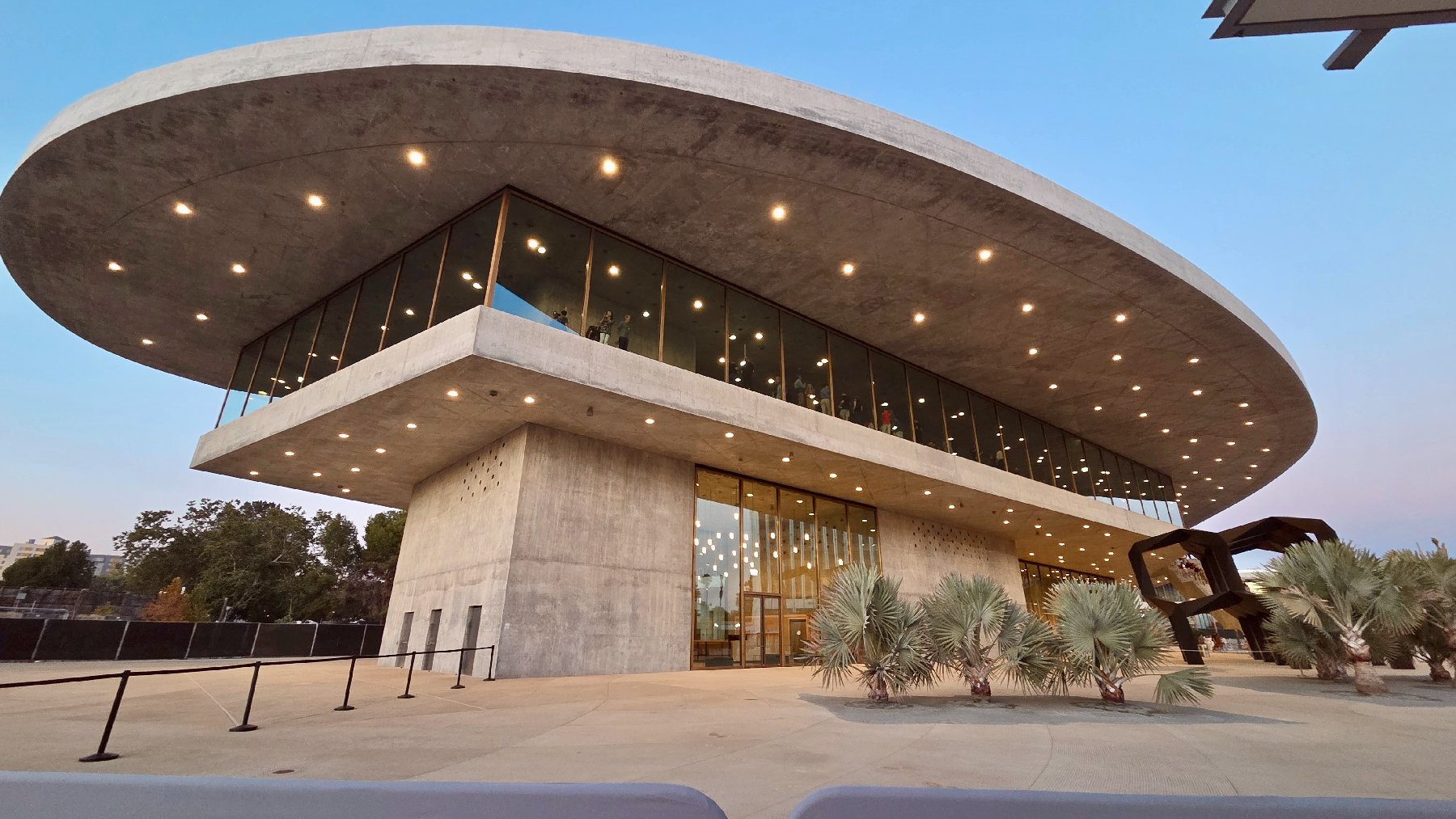
In February 2006, LACMA's trustees brought on Michael Govan to guide the museum into the 21st century. And after 20 years at the helm, the project Govan will be remembered for is the creation of an entirely new building to display the museum's encyclopedic core collections.
The result is the newly opened David Geffen Galleries, designed by Swiss architect Peter Zumthor. But almost from the moment the design was approved and construction began in 2017, its concept provoked a firestorm of competing praise and criticism.
Govan and Zumthor's concept was described as "a giant raffle bowl of some 130,000 objects," said Los Angeles Times art critic Christopher Knight. Even though he has left the paper, he remains an adamant opponent.
This war of words centered around Govan's and Zumthor's goal to create a two-story "brutalist style" concrete structure large enough to straddle Wilshire Boulevard. It would contain a labyrinth of various size gallery spaces, from spacious to intimate.
With a final price tag estimated at over $875 million, the goal was to re-create the museum-going experience based on a brand-new vocabulary of exhibition design. In May of this year the doors opened to the general public. The building features 347,500 square feet of glass walls and concrete mass displaying 6,000 years of art as a single, massive open-floor gallery level elevated 30 feet in the air.
To put this into context, almost every museum that includes mixed collections separates them into categories -- this way to the Impressionists, this way to relics of Mezzo-America, this way to the mummies and so on.
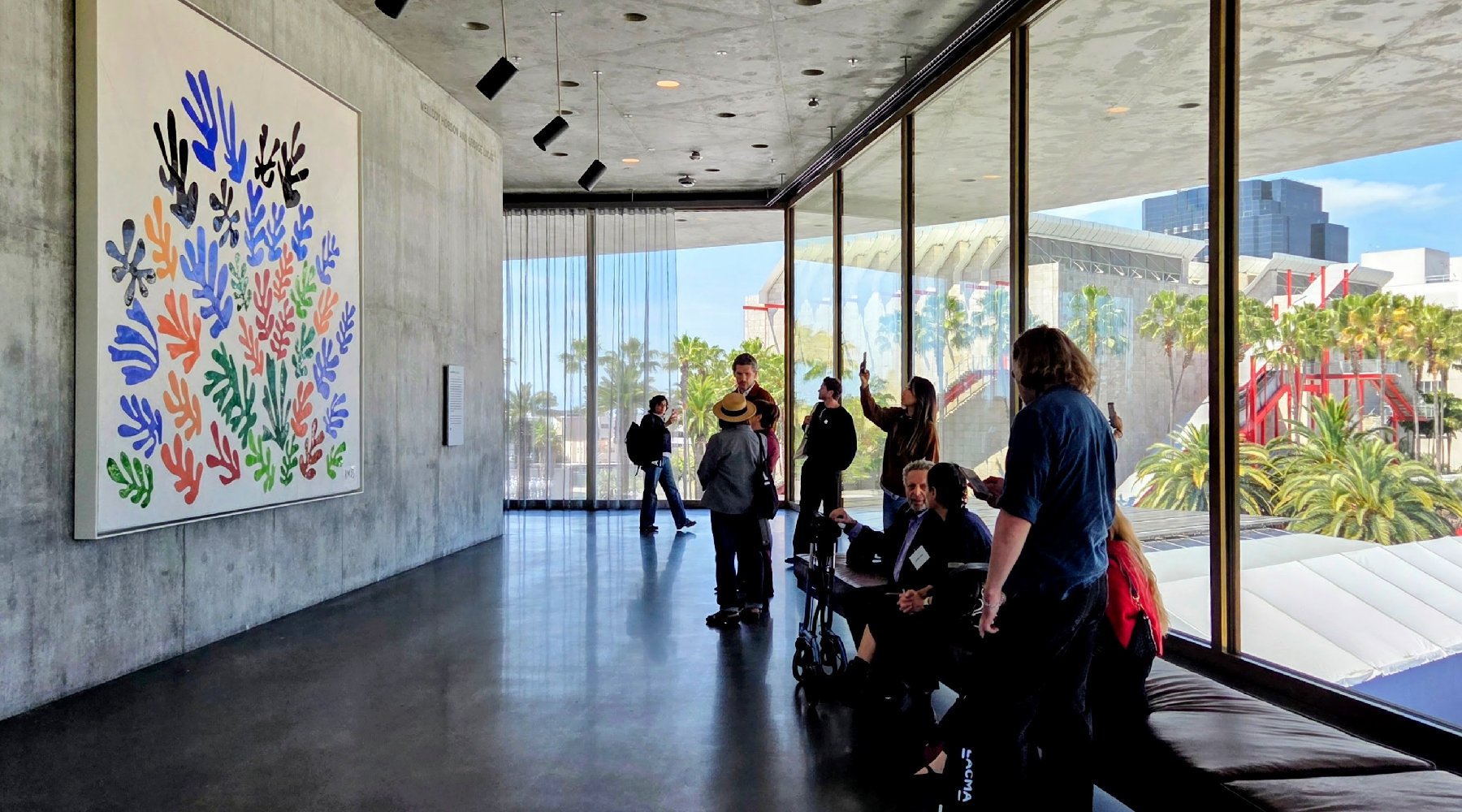
The David Geffen Galleries essentially throw that concept, quite literally, out the window. Instead of a genre-by-genre guided tour, Zumthor's design, along with the remarkable curatorial collaboration of the LACMA staff, has created a down-the-rabbit-hole series of unpredictable encounters and thought-provoking juxtapositions. Time periods from ancient to modern bang up against each other; textiles, paintings, photography, sculpture and decorative arts are placed side by side. And contrary to every rule of "stand-back" museum design, many displays are not obstructed by any impenetrable barriers of glass or distance.
As a result, the element of chance becomes so important. Essentially, no two visitors will necessarily experience the exhibitions the same way, and getting "lost" is part of the fun. After enjoying a French post-Impressionist landscape by Cezanne, you might find yourself in a gallery displaying Duke Kahanamoku's massive wooden surfboard. It's happily disconcerting and unpredictable. A gallery displaying the most intricately woven Persian rug might be steps away from a gallery devoted to "LA Car Culture" highlighted by a meticulously restored Studebaker Avanti.
Having experienced the galleries prior to the installation of the art, I must admit I had my doubts. But now, having meandered from gallery to gallery with their mix-and-match of periods and mediums accentuated by background tones of burnt umber and midnight blue over concrete, I am a believer.
Clearly there will be a period of adjustment during which preinstallation goals will be balanced against visitor reactions and practicalities such as light reflection, restroom availability and the like. But once you experience this combination of art and urban vistas the David Geffen Galleries afford, you will be able to decide for yourself.
It should be pointed out that LACMA still maintains an abundance of superb display space within its Broad and Resnick galleries for a number of newly curated exhibitions.
----
WHEN YOU GO
Los Angeles County Museum of Art/David Geffen Galleries: lacma.org
========
Jim Farber is a freelance writer. To read features by other Creators Syndicate writers and cartoonists, visit the Creators Syndicate website at www.creators.com.
----
Copyright 2026 Creators Syndicate, Inc.























Comments