Minnesota schools put screens at the center of learning. Parents say kids are paying the price
Published in Lifestyles
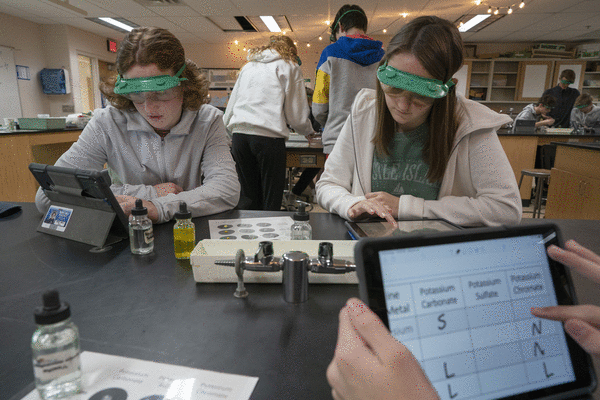
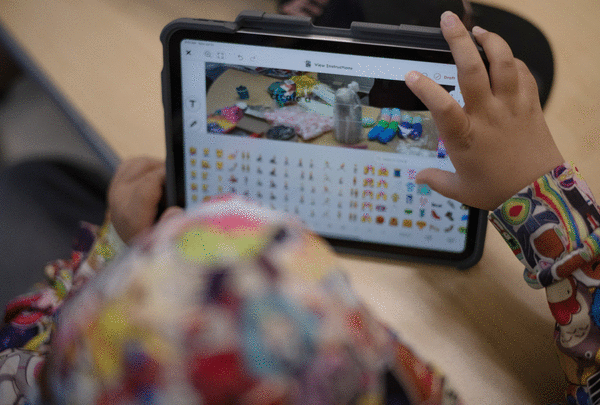
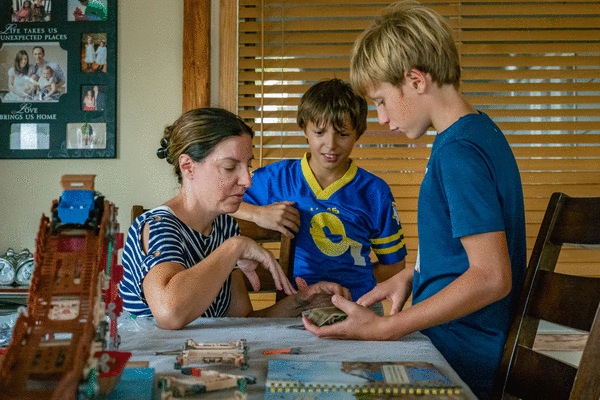
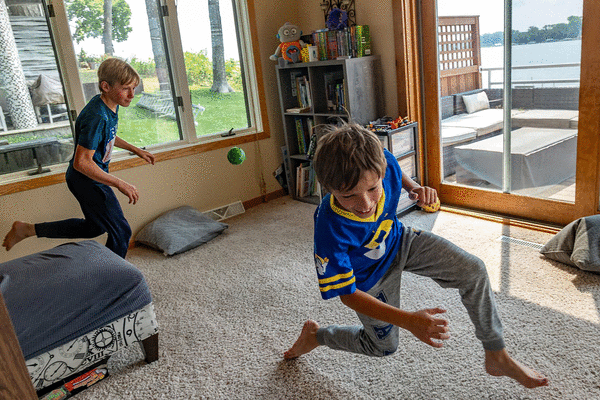
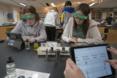
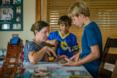

MINNEAPOLIS -- In classrooms across the state, backpacks once weighed down with binders and textbooks have been replaced by a single device that is now facing growing scrutiny.
As concerns grow over screen time, mental health and online safety, parents across the Twin Cities are pushing schools to rethink the role of technology in classrooms.
From St. Paul to Minnetonka, new parent-led groups advocating for limited technology use have formed to urge changes. Their demands come after noticing worrying behaviors in their children, reports of technology distractions in the classroom and state test scores struggling to recover after the COVID-19 pandemic.
The pushback comes after years of “one-to-one” technology programs that placed a device in the hands of nearly every student in a district. The launch of one-to-one programs was an innovative step in public education when they first rolled out in Minnesota schools from 2011 to 2013. Devices like iPads and Chromebooks were issued to each student throughout every grade level and were intended to prepare students for the workforce, higher education, coding and other creative outlets provided by technology.
Now, communities are confronting both the pitfalls of technology in classrooms and the fact so much curriculum relies on coming from a screen or software.
Some parents said their children have developed addictive behaviors, slouchy posture from looking at screens all day, poor social skills or increased anxiety and sleeping problems. Younger students said they struggle to focus in school due to distracting images and sounds from their screens.
“They have [iPads] down really quiet so the teacher doesn’t catch them and it just annoys other students because they’re doing something else than what they’re supposed to,” said Niko Jaunich, who is going into fourth grade at St. Paul Public Schools.
In previous years, students at Minnetonka Public Schools as young as kindergarten were allowed to take their iPads home in order to complete assignments or interact with educational apps outside of school. At other school districts like St. Paul, Osseo, Eagan and Minneapolis, elementary students are not allowed to take home their devices, but utilize them heavily for subjects such as math, reading and science.
“For our older child who brings the iPad home, we have it blocked from the internet,” said Niko’s mother, Megan Kramer Jaunich, co-founder of Tech Intentional St. Paul, a community group that started more than a year ago aiming to prioritize human interaction and use technology in research-based ways.
Like many families, Kramer Jaunich’s children were sent home with iPads during the pandemic and years after. She said she understood why schools adopted touchscreen devices but questioned whether they were the most effective learning tools for young children.
“Touchscreen devices are primarily intended to be a time suck intended to capture our attention, entertain us and [are] not necessarily the best avenue for learning, especially at the youngest ages,” Kramer Jaunich said.
Limiting screen time
The pushback against classroom technology is part of a larger national conversation about the effects of screens on children. In April, Los Angeles became the first major school district in the country to limit screen time in classrooms following pressure from organized parent groups rallying for schools to reflect on their technology policies and reliance on digital education.
Districts across the metro, including Minnetonka, Osseo, Apple Valley, Eagan and St. Paul, have relied on student devices for classroom instruction and homework. But as test scores lag after the pandemic, families and experts are asking whether schools should scale back screen use or establish new limits.
“When we were responding to COVID, there wasn’t a playbook,” said Matthew Hillmann, the director of the Minnesota Association of School Administrators. “You really saw that real expansion of school districts using personalized devices, and I think that that is probably part of the genesis for the reconsideration that we see so many communities doing right now.”
Screen Smart Tonka formed in April after parents in Minnetonka and surrounding communities began discussing their concerns about classroom iPad use. What started as conversations on Facebook and WhatsApp has grown into a network of more than 400 parents and family members from districts statewide advocating for more intentional technology use in schools.
“It wasn’t until we all started talking to each other and realizing that we’re all fighting the same fight and that we could be more effective as a unified group,” said Rebekah Cohen Israel, one of the founders of Screen Smart Tonka.
Tech Intentional St. Paul was organized following the school district’s ban of cell phones in classrooms.
“We’re seeing an increase in mental health concerns among young people with suicidal ideation, anxiety, depression, and there’s no question that so much of the kind of social anxieties that we see [stems from the fact] so much of students’ lives are now lived in this online world,” said Jonathan Oppenheimer, co-founder of Tech Intentional St. Paul. “They prompt and promote and kind of exacerbate these problems among teenagers that have the power, at least in the schools.”
Some teachers have enacted their own technology policies. Maureen Mulvaney has worked at Washburn High School in Minneapolis as an English teacher for about 12 years. Last school year she chose to eliminate technology entirely, making assignments completely handwritten on paper after seeing a rise in plagiarism and AI-written assignments.
“Let’s pick up a pen and write and build our stamina ... to work through those blocks, those mental blocks, without turning to a computer to do the work for us,” Mulvaney said. “It made them smarter.”
Mulvaney cited a survey taken by students in the beginning of the school year that showed 46% of her students felt confident in their reading skills. By the end of the year, 90% of students said they felt confident.
Changes this school year
Overall, many districts do not intend to ban technology in classrooms, but rather limit screen time and when students use their devices.
Minnetonka Public Schools did not provide a comment before publication, but announced in a statement to families new technology policies, including ending take-home iPads for elementary students and introducing a parent online portal that allows families to view the websites their children access on school-issued devices.
Osseo Public Schools Assistant Superintendent Bryan Bass said the district has worked closely with families who have voiced concerns about technology use and are reflecting on their policies for the upcoming school year.
“Part of what we recognize in this broader conversation across our state and country around concerns with screen time is that it’s not a new conversation, but it’s certainly elevated and escalated,” Bass said. “We’re looking at that guidance and ... updating that guidance to make sure that what our vision is for the role of technology as a tool in the learning process is in fact being implemented that way.”
Parents said they understand the obstacles standing in the way for a full elimination of technology in the classroom, with a majority expressing that they are not against technology and want their children to use it in more structured, limited capacities.
“No iPads until high school would mean a lot more work but I would love it and in the meantime I think we need to start to develop technology around kids and how they learn,” said DeLonn Crosby, a parent and member of Screen Smart Tonka. “Rather than start with technology and let’s figure out how to have kids use it.”
©2026 The Minnesota Star Tribune. Visit at startribune.com. Distributed by Tribune Content Agency, LLC.





















Comments