Programs across Chicago's higher education scene help students bridge ideological, political differences
Published in Lifestyles
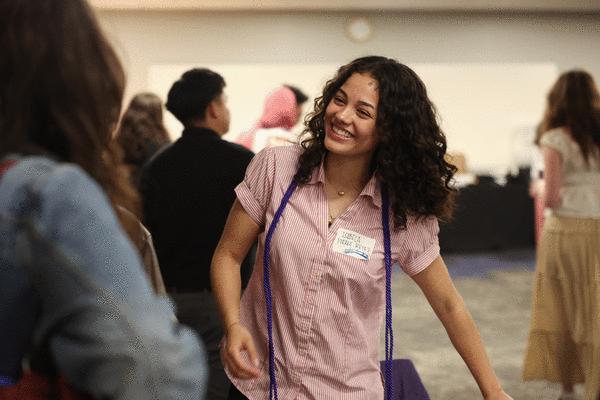


CHICAGO — Isabela Torres Reyes often finds herself waiting thoughtfully before she speaks — something she didn’t always do six months ago. At the start of the school year, the recent DePaul University graduate was so eager to share her thoughts that she sometimes jumped into conversations early. Now, after completing a 10-week dialogue course, she’s leaving college with a better sense of how to listen and respond to people to create meaningful conversations.
Torres Reyes gained that understanding through DePaul’s Bridgebuilding Fellowship, which aims to help students develop dialogue skills across different ideologies. Being in the program helped her understand how background and experiences shape people’s views. She found herself asking, “What do you care about that I’m not seeing?” instead of focusing on a person’s differing opinion, she said.
Beyond that, there aren’t enough chances for people to think and respond during conversations before being cut off “because you want to say what you want to say,” Torres Reyes said. “We just all find it really difficult to open up, and so any opportunity to learn how to do so, to practice doing so, I think is important, especially living in our bubble of college,” she said.
Programs designed to use dialogue to bridge division among college students are increasingly common on campuses, a vehicle to combat an issue some say is prevalent in higher education — the lack of conversations, and the opportunities to have them.
In an era when divisive politics and social media have emboldened people to voice their thoughts in a vacuum, campuses — once hallmarks for the exchange of ideas and opinions — are becoming increasingly polarized in the eyes of some Americans.
A little less than half of colleges and universities are doing a fair or poor job of exposing students to a wide range of opinions and viewpoints, according to an October 2025 Pew Research Center survey.
A similar amount, 46%, also said colleges and universities are doing a fair or poor job of “providing students opportunities to express their own opinions and viewpoints.”
Ten miles away in Hyde Park, recent University of Chicago graduate Tyler Shasteen spent his college years combating this idea and laying the foundation for productive engagement between people of different belief systems through the school’s civic policy institute.
“I’ve had the opportunity to interact with, (build) relationships with people who disagree with you, and the people who participate largely are interested in doing that too,” Shasteen said. “There’s sort of a collective and cohesive approach to building this community, and that’s been the best thing about it for me.”
On college campuses, programming also gives students a space to express differing opinions, according to DePaul’s Torres Reyes. For her, speaking with people who hold different perspectives is meaningful. She wants to know the root of why their viewpoints differ and learn from it while also centering what’s important to her.
“I think that’s really important when you’re trying to have that discussion is … talk about uncomfortable things, because there’s not a lot of willingness to be in that discomfort these days,” Torres Reyes said.
The programs at DePaul and U. of C., however, are part of a wider effort among Chicago’s colleges and universities to combat polarization and bring students of different backgrounds together for effective interactions.
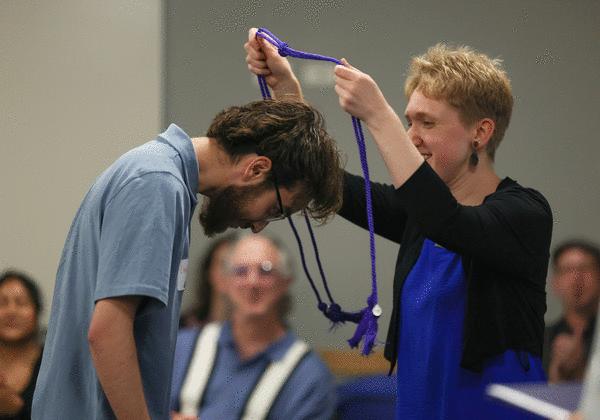
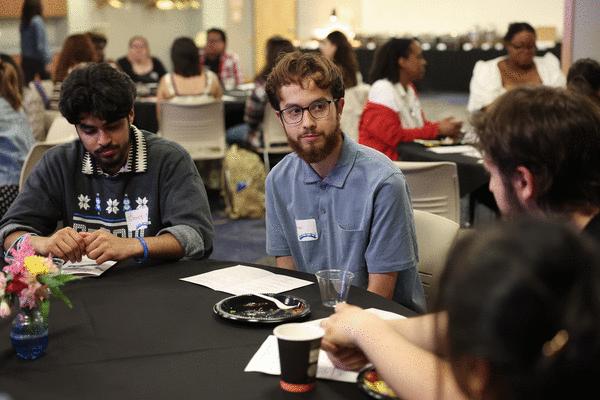
At DePaul, the Bridgebuilding Fellowship, launched in 2025, aims to help students foster dialogue and connection across ideologies and differences. Students take a series of classes to learn to better communicate and understand one another. To build on their skills, they host an on-campus event designed to prompt dialogue.
In class, students learned how tone and delivery can affect the reception of a message, how childhood can shape one’s perspectives, and the importance of stepping back and listening with intent, among other skills. Multiple students said they found themselves actively listening and seeing beyond opinions in conversations, something they hadn’t done before.
Students involved in the U. of C.’s Institute of Politics — a longtime, nonpartisan extracurricular program designed to support student interest in public service and democracy — also say they’ve learned to engage differently amid polarization, particularly with people who hold differing political views.
During her time at the institute, which included co-chairing the Student Advisory Board, recent U. of C. graduate Ava Partridge benefited from meeting and engaging in person rather than online. Those meetings were more productive and helped humanize other students and political figures beyond their beliefs, she said.
While Partridge said she’s always been open to meeting people from different political backgrounds, the dialogue over the last four years — including interviewing students with various views on American politics for the institute’s “Student Spotlight” series — helped her realize relationships between people of different ideologies are possible.
Meeting people and hearing their perspectives in person humanizes them in a way that goes beyond just being “words on a screen,” she said. Now, she consistently approaches conversations with an open mind. She and her peers, she added, aren’t necessarily trying to change each other’s opinions, but instead learn from one another.
“… With understanding, you can go on to build more of a relationship when I didn’t always think that was possible if there were some really fundamental disagreements from the get-go,” Partridge said.
For recent DePaul graduate and 2026 Bridgebuilding Fellow Umar Ryan, the classes helped him break out of his quiet shell. A breakthrough moment came when he found himself — and his peers — being vulnerable in the classroom.
Sharing moments from his childhood and hearing from fellow students about key childhood events helped him realize that “people aren’t just their opinions, they have entire backgrounds and stories that lead them to those opinions,” he said. It helped him humanize every person in the room, a practice he said he keeps up in his everyday life.
“While you might not agree with their opinion, if you just judge them based off that and categorize them in a black and white manner without understanding … what kind of person they are outside of that one opinion, it can lead to further polarization and divide and conflict,” Ryan said.
U. of C.’s Shasteen, who also sat on the institute’s Student Advisory Board, said the chance to regularly interact with people of differing backgrounds and beliefs sparks “intellectual curiosity.” Students can have discussions where they disagree disrespectfully and walk away without animosity, he said.
“(You’re) not approaching ideological differences, the ‘other side’ being this great evil force that’s out to get you, but (understanding) that there’s a reason or something behind why they feel that way,” Shasteen said.
The effort to create effective dialogue between students is not limited to DePaul and U. of C. Similar programs exist at other city institutions, including Loyola University’s Community Circles program, which aims to help students resolve conflict and build community through dialogue, and Northwestern University’s Litowitz Center for Enlightened Disagreement, which launched in September 2025.
The center offers first-year seminars for new students and a yearlong, co-curricular residential program for undergraduates that helps people learn to be open-minded, recognize personal cognitive biases and work collaboratively with others even if there are disagreements, according to its website.
Nearly all of the 205 inaugural participants in the yearlong residential program said they had improved listening skills, gained deeper insight into their own views, and felt more capable of identifying the real sources of disagreement upon completion, senior director Mark Engberg wrote in an email to the Tribune.
“Overall, the impact is both cultural and practical: we’re helping shift norms around disagreement while also equipping students, faculty, and staff with concrete skills they can use on campus, in the workplace, and in their personal relationships,” Engberg wrote.
There aren’t many places where productive dialogue for students can happen outside of higher education, DePaul President Robert Manuel said during the university’s Bridgebuilding Fellowship end-of-year celebration. To the Tribune, he added that the dialogue efforts in other Chicago schools, from Northwestern to Loyola to U. of C., reflect his idea that the “DNA of our community is connection.”
“This should be the norm, but we have to build from within to get to a place where the entire university knows this,” Manuel said. “Ultimately … as we start to figure out what the value of higher ed(ucation) really is, this is it.”
©2026 Chicago Tribune. Visit at chicagotribune.com. Distributed by Tribune Content Agency, LLC.











Comments