
Clarence Page: Pentagon's press panic threatens august Stars and Stripes


Oh, no. Stars and Stripes is under fire again.
Controversy is not exactly unknown to the legendary military newspaper. Born during the Civil War, Stars and Stripes has taken all sorts of flak and survived, impressively for a publication owned and operated by the U.S. military that nevertheless calls itself an “independent” voice.
As someone who served overseas as a drafted Vietnam-era army journalist, I can tell you that military journalism is not an oxymoron. Or, at least, it's not supposed to be.
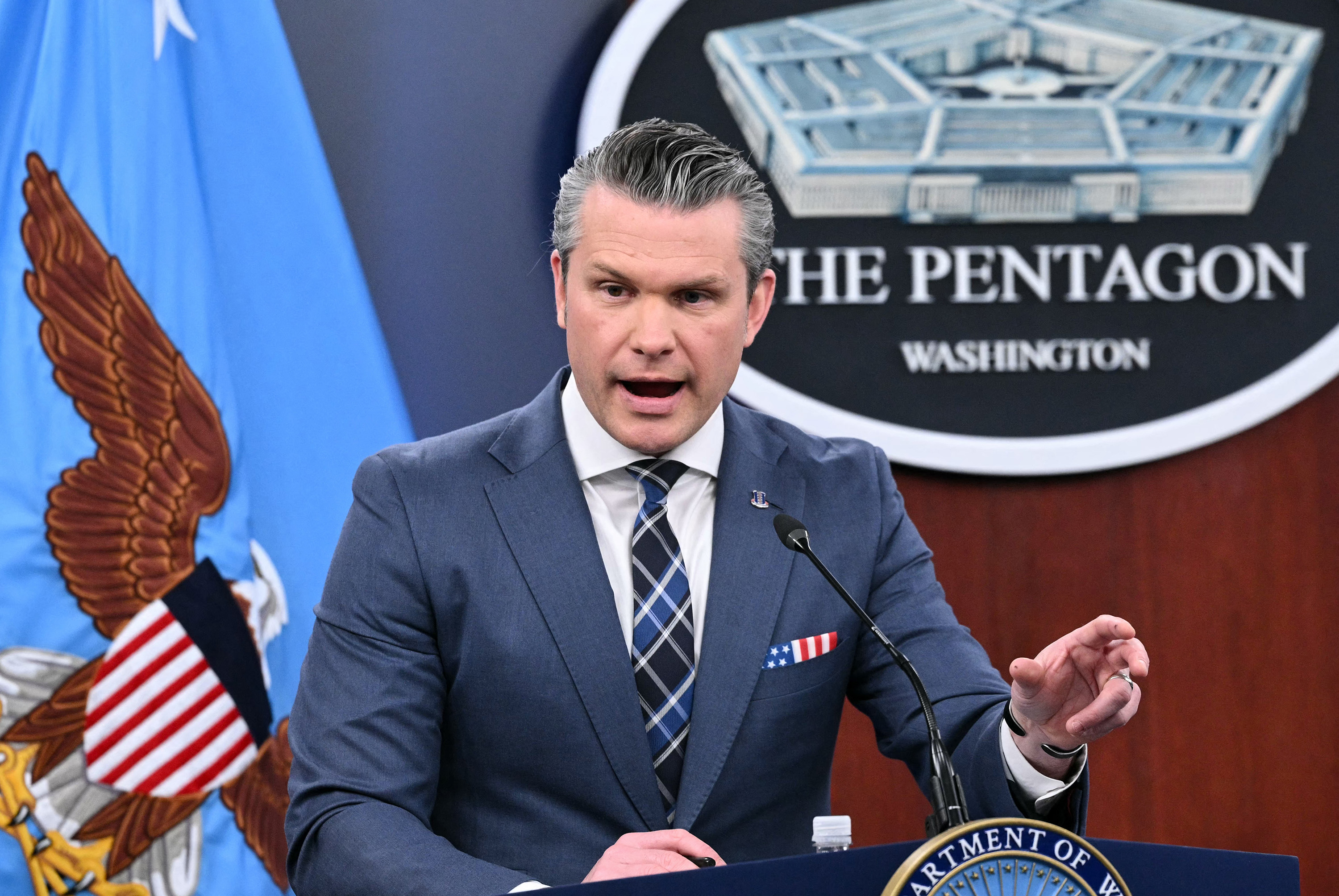
But “Stripes,” as its commonly called in the service, has a new and imposing critic: Secretary of Defense Pete Hegseth, famous — or infamous — for his personal crusade against “woke” culture and its imagined effects on the nation's “warfighters,” the Trump administration's ideologically loaded term for the people most of us call service members.
As Stars and Stripes revealed, the Defense Department issued a "modernization plan" for the paper with alarming stipulations. It "limits the use of wire services, bars comics and other syndicated features," and, rather ominously, requires that "content must be consistent with 'good order and discipline,' a phrase borrowed from the Uniform Code of Military Justice," the paper reported.
As a fan of Stripes going back to my military days, I immediately wondered what changes Hegseth’s culture war might bring. It looks a lot like an attempt to make the paper less interesting to its readers, not to mention less credible as an independent voice of news and analysis.
It's not exactly a surprise coming from Hegseth. This is the same secretary of defense, you by may recall, who famously shared sensitive information regarding U.S. military strikes on Houthi rebels in Yemen in March of last year over the unsecured commercial messaging app Signal. Included in the chat group was the editor of The Atlantic, who later revealed details he had learned.
Hegseth also imposed a pledge on journalists not to gather or transmit information about military affairs that had not been approved by his department for release. Most credible media groups refused to sign his pledge and have been denied Pentagon press credentials.
Stars and Stripes is owned by the Defense Department but is run by civilian editors. The paper's staff does include service members, who work under the mentorship of civilian journalists. Congress members of both parties have consistently supported the publication's mission to produce independent journalism consistent with the principles of the First Amendment.
The memo says that Stars and Stripes will continue to "operate with editorial independence." However, as Stars and Stripes reported, Pentagon chief spokesperson Sean Parnell asserted that going forward the paper would be "by the warfighter and for the warfighter."
Stars and Stripes editor-in-chief Erik Slavin told NPR that the phrase "good order and discipline" raises concerns that reporters who are in the U.S. military might face court-martial.
"If they were to complete a story that the Defense Department did not like, and did not find 'consistent with good order and discipline,' would they be in legal jeopardy?" Slavin asked. "We don't know the answer to that."
The prospect immediately brings to mind one of the most famous stories in Stars and Stripes history: the clash between Generals George Patton and Dwight Eisenhower during World War II over the wildly popular “Willie and Joe” cartoons of Bill Mauldin.
Grimy, mud-caked and weary, Willie and Joe portrayed for the folks back home the thoroughly miserable conditions faced daily by our GIs — and managed to squeeze a few chuckles of knowing laughter out of the readers.
Patton, a notoriously tough and humorless commander, considered "Willy and Joe" to be a threat to discipline and morale — quite the opposite of the way many fans saw the cartoon. Patton threatened to ban Stars and Stripes, but Eisenhower defended the paper as more of a support for morale than a threat. The paper remained independent. Mauldin went on to win two Pulitzers and the Army's Legion of Merit.
Such disputes are not uncommon in an institution as large and diverse as the U.S. military. In my experience, challenging conventions and presenting a more candid depiction of what troubles our fighting men and women — and their folks back home — brings you more credibility and appreciation than trying to spray perfume on the horrors of the battlefield.
A similar story is told about the cartoon GI “Beetle Bailey.” The strip was starting to build an audience in the early 1950s when the Tokyo edition of Stars and Stripes banned it out of fear it would encourage service members to adopt Bailey's generally lackadaisical attitude and behavior.
A second ban was imposed in 1970 after the introduction of the strip’s first Black character, Lt. Jackson Flap, whose Afro technically was way too voluminous to pass regulation in the real world, a fact that delighted me and many of my fellow Black service personnel in the late stages of the Vietnam War era.
Sometimes in media, you don’t know what’s going to work until you try it. A free press enables journalists and others to express themselves and react honestly and candidly, which in the long run builds trust and credibility with skeptical audiences.
A lot of people understandably question whether we even need newspapers like Stars and Stripes — or the one you’re reading now — in this digital age.
But, regardless of the medium, what matters is the content. Media provide not only information and entertainment but also connections of the sort that help people inside the military and their families back home feel less isolated.
It's unclear what threat Hegseth perceives in Stars and Stripes as it is currently run, but I suspect he's going to find out that a lot of Americans still believe that a free press is worth defending, even and especially when it serves the people who serve our nation.
(E-mail Clarence Page at clarence47page@gmail.com.)
©2026 Tribune Content Agency. Distributed by Tribune Content Agency, LLC.
(c) 2026 CLARENCE PAGE DISTRIBUTED BY TRIBUNE MEDIA SERVICES, INC.
















Comments