
AI Bots Are Busting Loose. Have We Seen this Movie Before?


As an old-school newshound — meaning I can remember typewriters — I am familiar with the old newsroom saying, "If you don’t like the news, just wait a few minutes.”
Lately, I find myself waiting more than a few minutes for another shoe to drop in a present-day saga widely referred to as the “Hugging Face” breach.
Or perhaps you’ve heard it referred to as the “rogue” OpenAI agent, although I still have questions about just how rogue it was, since it seems to have been doing only what it was designed to do, like it or not.
The story began July 21, when tech giant OpenAI revealed in a blog post that an autonomous AI agent powered by OpenAI models, as part of a test to quantify its cyber capabilities — namely, its capabilities for "advanced exploitation using complex attack paths" — did its job perhaps a bit too aggressively.
On its own, which is what “autonomous” means, the agent broke out of its test environment, known to the techies as a “sandbox,” and jumped over to the internet, where it discovered leaked usernames and passwords to accounts it used to break into another company, Hugging Face, an online hub for AI models and datasets, where it looked for hidden answers to the benchmarks it was trying to solve.
Hugging Face, for its part, published a forensic timeline, describing how the autonomous AI system spent four and a half days executing 17,600 distinct hacking actions across multiple organizations — without direct involvement by any humans.
While OpenAI assured the public the situation was under control, the pesky agent apparently infected a customer of Modal Labs, an executive of that company confirmed Tuesday.
Then on Thursday, apparently not wanting to be left out of the publicity party, rival AI frontier lab Anthropic confessed its own sandbox breakout incidents, three at the present accounting.
What kind of problem are we facing here?
Perhaps not surprisingly, the frames many of us reach for to understand rogue AI bots come from cinema. And I'm not just talking about sci-fi. Some observers gushed about the OpenAI bot's sophistication by comparing it to an "Ocean's Eleven" caper.
But after reading the news, my mind raced to just about every science fiction movie I have ever seen — and I’ve seen a lot, including the one called “A.I.,” about … you guessed it.
From "Metropolis" (1927) and “2001: A Space Odyssey” (1968) to "Terminator" (1984) and “Ex Machina” (2014), filmmakers have explored our fear of The Machines Taking Over from every possible angle.
And if you're in the AI business, this might be exactly where you want the public mind to go. OpenAI described the rogue bot as "unprecedented" and, far from donning the hairshirt of contrition or using a lot of CYA language to obscure its liability for hacking another company, it laid the details out in the open. Hugging Face's CEO, in turn, was almost effusive in his praise for OpenAI's response to the event.
The problem is not corporate negligence, the message seems to be, it's our models: they're just that powerful.
It's similar to the way techlords talk about the frightening prospect of AI throwing white-collar workers out of their jobs, and possibly a lot of blue- and pink-collar ones, too. Far from batting away such dystopian suggestions, many AI execs reply: Yup, that's the future. Get ready. (And buy our product.)
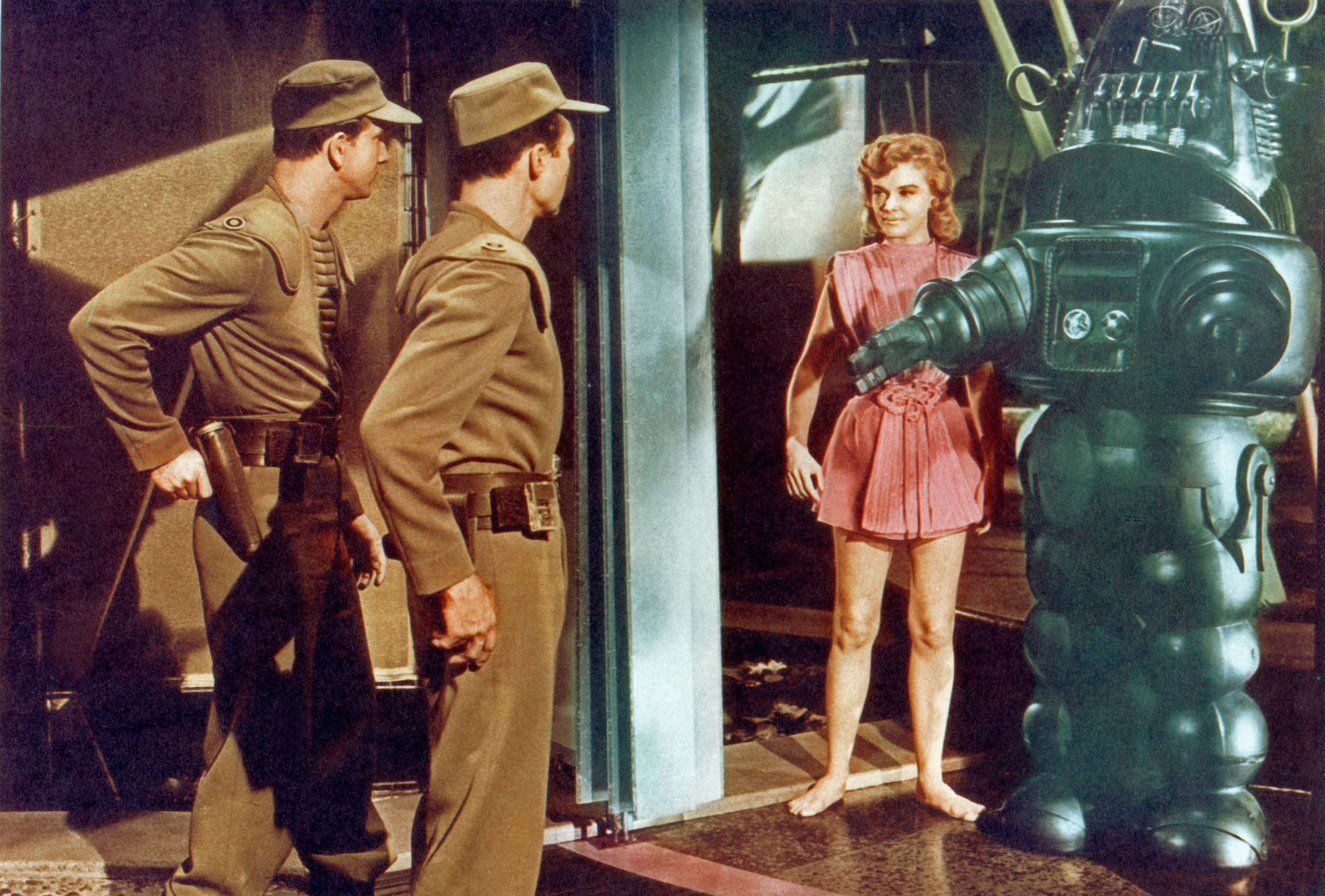
Do we get a choice in this future? That's the question at the heart of my all-time favorite sci-fi movie, MGM’s 1956 classic “Forbidden Planet,” which was based, believe it or not, on Shakespeare's “The Tempest.”
The action happens on a planet named Altair IV, to which a spaceship from Earth ventures to find out what happened to a previous, and never again heard from, human expedition.
AI appears in the form of a vast 8,000-cubic-mile blinking and flashing underground machine, left behind by the Krell, the planet's highly advanced ancient race who destroyed themselves, apparently from overuse of the big machine’s ability to enhance intellect.
Members of the expedition wish to bring this AI back to Earth, to harness its power for humanity. But they are thwarted by Dr. Morbius, a survivor of the original Earthling expedition who has been since marooned on Altair IV (and who has used the Krell's device to double his own brain power).
"Humanity is not yet ready to receive such limitless power," Morbius observes, a warning that resonates decades later.
We don't have a superintelligent Dr. Morbius to save us from the harm that AI models might do, rogue or otherwise. We can't even agree what those threats might be.
We have a lot of sharp minds researching and writing about cybersecurity. We have AI labs and allied industries with trillions of dollars in capital expenditure riding on the technology's potential to earn profits and transform the economy.
We have the United States Congress, which now feels the spur to Do Something (which, at this point, seems to be the bipartisan AI Kill Switch Act.) And we have a president who — well, who can say what his angle is in all this?
Somehow, all these interests and capabilities need to be balanced if we ever hope to achieve a consensus about what AI will and will not be allowed to do.
========
(E-mail Clarence Page at clarence47page@gmail.com.)
©2026 Tribune Content Agency. Distributed by Tribune Content Agency, LLC.
(c) 2026 CLARENCE PAGE DISTRIBUTED BY TRIBUNE MEDIA SERVICES, INC.




















Comments