How Dogs Read Human Faces
Published in Cats & Dogs News
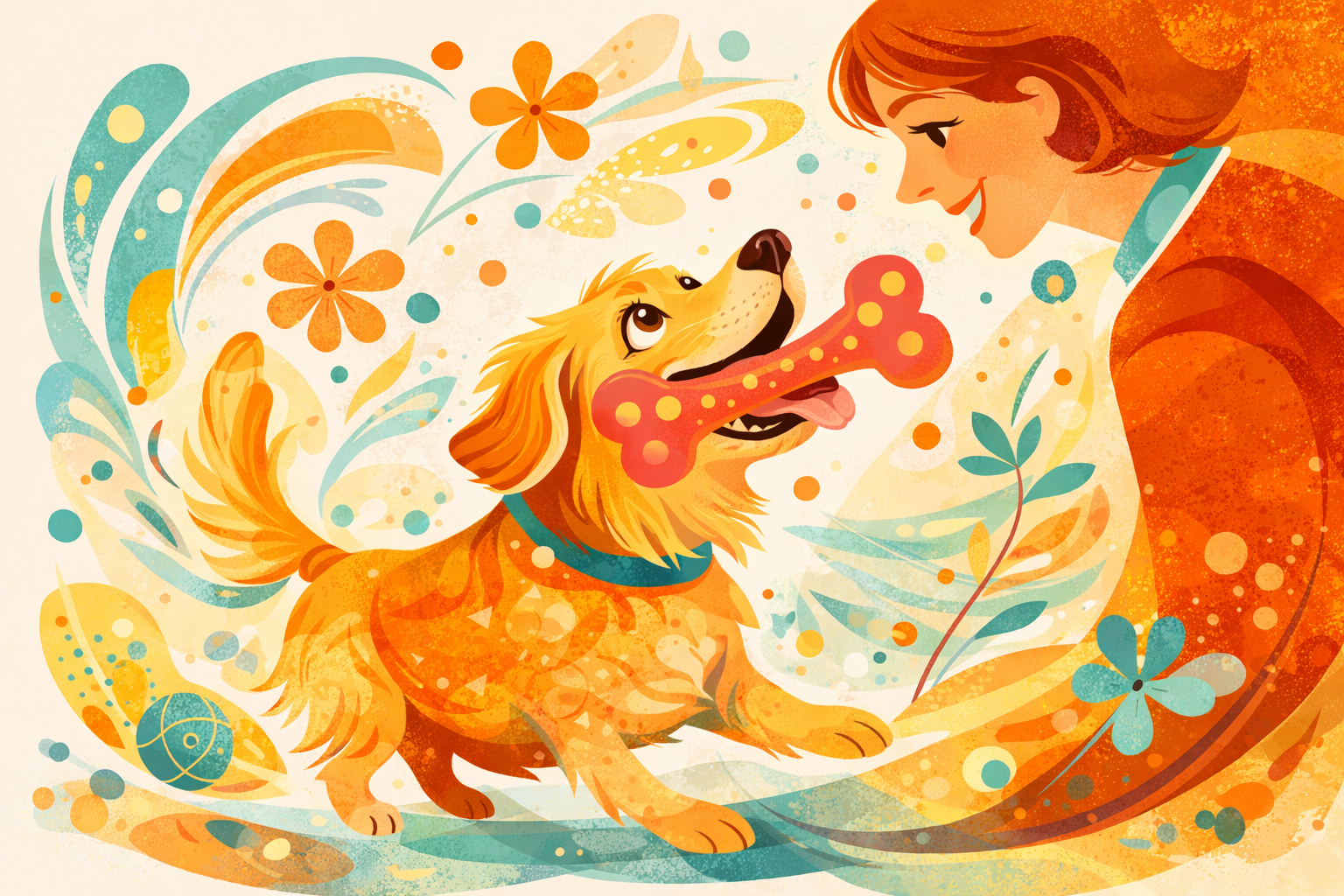
Dogs look at us in ways that feel almost intrusive. They watch as we speak, track our expressions as we move, and sometimes react before we understand what we are feeling ourselves. This attentiveness is often described as intuition or loyalty, but it is rooted in something more concrete.
Dogs read human faces.
Not metaphorically, not sentimentally, but perceptually. Over thousands of years of coevolution, dogs have become specialists in interpreting the human face as a source of information. What they see there shapes their behavior, their expectations, and their sense of safety.
The Evolution of Face-Watching
Dogs did not evolve this skill by accident. Early domesticated dogs that paid close attention to human expressions were more likely to survive. Reading a face meant knowing when food was coming, when danger was near, or when aggression might erupt.
Over time, this attentiveness was reinforced. Dogs who responded appropriately to human emotional cues were tolerated, fed, and protected. Those who misread signals were more likely to be corrected or excluded.
Modern dogs inherit this legacy. The human face has become one of the most information-rich objects in their environment.
What Dogs Actually See
Dogs do not interpret faces the way humans do. They are less focused on fine detail and more attuned to movement, contrast, and pattern. Eyes, eyebrows, mouths, and head orientation are especially important.
Research using eye-tracking technology shows that dogs consistently focus on the upper half of the human face, particularly the eyes. They also track mouth movement, especially when speech or emotional expression is involved.
Dogs are not decoding facial expressions as labels. They are reading change.
Recognizing Emotion Without Language
Studies have demonstrated that dogs can distinguish between happy, angry, sad, and neutral human expressions using facial cues alone. They do this without verbal input and without prior training.
This does not mean dogs understand emotion as humans define it. Instead, they recognize patterns associated with outcomes. A relaxed face predicts calm interaction. A tense face predicts unpredictability. A smiling face often precedes reward.
Dogs learn these associations through repeated exposure. Over time, the face becomes a reliable forecast.
The Importance of the Eyes
Eye contact plays a central role in how dogs read faces. Direct eye contact from a relaxed human often signals engagement and safety. Prolonged, unblinking eye contact paired with tension can signal threat.
Dogs are sensitive to subtle changes in eye shape and gaze direction. Narrowed eyes, rapid blinking, or averted gaze all carry meaning. Dogs respond accordingly, adjusting their own posture, proximity, or behavior.
This sensitivity explains why some dogs appear to react to a “look” long before any command is given.
Faces as Predictors of Behavior
For dogs, the face is not just expressive; it is predictive. Dogs watch faces to anticipate what will happen next.
Before a walk, before a meal, before departure, the human face changes. Muscles tighten, eyes shift, posture aligns. Dogs learn to read these micro-signals and act on them.
A dog who waits by the door before a leash appears is responding to facial and bodily cues it has learned to associate with that outcome.
Why Dogs Struggle With Incongruence
Dogs are particularly sensitive to mismatches between facial expression and behavior. A human who smiles while moving tensely or speaking sharply sends conflicting signals.
This incongruence can confuse dogs and increase anxiety. The face says one thing, the body says another. Dogs must choose which signal to prioritize, often erring on the side of caution.
Clear, consistent facial expressions paired with predictable behavior help dogs feel secure.
Individual Differences in Face Reading
Not all dogs read faces with equal intensity. Breed history, early socialization, and individual temperament all play roles.
Breeds developed for close human cooperation—such as herding and companion breeds—tend to show heightened sensitivity to facial cues. Dogs raised in environments with frequent human interaction develop stronger face-reading skills than those with limited exposure.
Experience sharpens perception.
How Dogs Read Familiar vs. Unfamiliar Faces
Dogs read familiar faces differently than unfamiliar ones. With familiar humans, dogs rely on memory and context. Small changes stand out sharply.
With strangers, dogs gather information more cautiously. They observe facial expression alongside posture, movement, and tone. A neutral face paired with calm behavior may be acceptable. A tense face paired with direct approach may trigger avoidance.
Dogs are not judging character. They are assessing risk.
Faces and Emotional Contagion
Dogs do not merely read faces; they often respond emotionally to them. Research suggests dogs can experience emotional contagion, matching their internal state to perceived human emotion.
A relaxed face can calm a dog. A distressed face can increase vigilance or proximity-seeking. This response is not empathy in the human sense, but regulation. Dogs adjust themselves to the emotional climate they perceive.
Faces set the tone.
What Dogs Miss
Despite their skill, dogs do not read faces perfectly. They can misinterpret human expressions that rely heavily on cultural nuance or subtle irony. They are better at detecting arousal and valence—calm versus excited, positive versus negative—than complex emotional blends.
Understanding these limits helps prevent miscommunication. Dogs respond best to clarity, not complexity.
Why This Matters in Everyday Life
Understanding how dogs read faces has practical implications. Training, caregiving, and everyday interaction all benefit from awareness of facial signaling.
A calm, attentive face reinforces safety. A frustrated expression can undermine trust even without raised voices. Dogs are always watching, even when we are not aware of performing.
Facial awareness is a quiet form of communication.
The Mutual Gaze
Dogs have evolved to look at us. Humans, in turn, have learned to respond. Mutual gaze between dogs and humans has been shown to increase oxytocin levels in both, reinforcing bonding.
This feedback loop is rare in interspecies relationships. It reflects a shared history of attention and adaptation.
Dogs read our faces because, for thousands of years, their lives depended on it.
========
Samuel Ortega is a science writer specializing in animal cognition and human–canine communication. He lives with a dog who reads his expressions better than most people do. This article was written, in part, utilizing AI tools.






Comments