The Language of Sighs, Groans, and Grunts: How Pets Communicate Without Words
Published in Cats & Dogs News
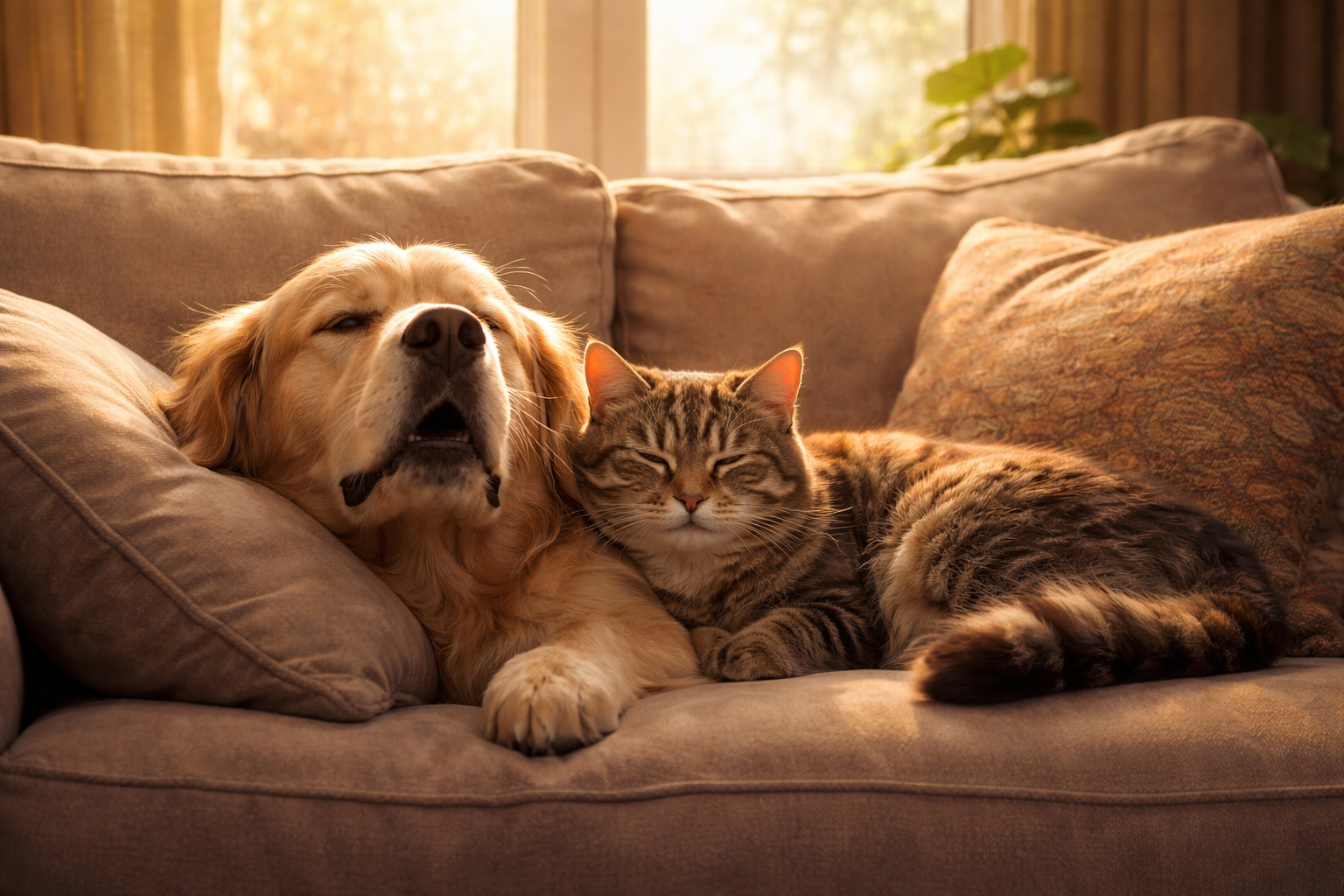
Anyone who lives with a dog or cat knows that silence is rare.
Even the quietest pets produce a steady soundtrack of sounds: soft sighs when settling down, low groans when standing up, tiny huffs of impatience, contented grunts during petting, and dramatic exhalations that seem suspiciously theatrical.
These noises are not random.
They form a subtle, emotional language that helps pets communicate comfort, frustration, affection, and trust—often more clearly than barking or meowing ever could.
Understanding this quiet vocabulary can deepen the bond between people and their animals, transforming everyday sounds into meaningful conversations.
Beyond Barking and Meowing
Most people think of animal communication in terms of obvious signals: barking, whining, growling, or meowing. These are attention-getting sounds designed to be heard from a distance.
But within the home, where pets feel safe and understood, communication becomes more nuanced.
Dogs and cats rarely need to shout.
Instead, they rely on softer vocalizations paired with body language. A long exhale, a sleepy grunt, or a soft chirrup can carry as much emotional information as a bark.
In social species, efficiency matters. When trust is established, subtle signals replace loud ones. Families—human and animal—develop private dialects that outsiders rarely notice.
The Meaning of the Contented Sigh
One of the most common household sounds is the pet sigh.
A dog circles, flops onto the rug, releases a long breath, and goes still. A cat curls into a ball, stretches, and exhales audibly.
This is not boredom.
It is relief.
A sigh signals that the nervous system is shifting into rest mode. The animal feels safe, comfortable, and satisfied with its surroundings. Stress hormones drop. Muscles relax.
In behavioral terms, it is the sound of security.
Owners often misinterpret sighs as annoyance. In reality, they usually mean, “All is well. I’m settled.”
Repeated sighing during cuddling or after meals is especially telling. It reflects contentment and emotional safety.
Groans: Effort, Age, and Trust
Groans are the vocal equivalents of stretching joints.
When a dog rises slowly from the floor with a low “urrgh,” or a cat vocalizes while leaping onto a couch, the sound is usually physical rather than emotional.
It indicates exertion.
As pets age, groans often increase. Joints stiffen. Movements require more effort. Vocalizing during motion helps regulate breathing and releases tension.
But groans also appear in younger animals, especially large dogs. They are part of natural biomechanics.
Importantly, animals tend to groan more freely around people they trust. Vulnerability is safer in familiar company. A pet that groans openly is demonstrating comfort with its environment.
It is not complaining. It is narrating its body.
Grunts and Snorts: Social Signals
Short, low grunts often occur during interaction.
A dog receiving belly rubs may emit rhythmic “hmph” sounds. A cat being scratched under the chin might chirp softly.
These sounds serve as feedback.
They communicate:
“This feels good.” “Continue.” “I’m engaged.”
In wolves and wild cats, similar sounds appear during grooming and play. They function as social glue, reinforcing bonds without escalating energy.
Snorts and huffs, on the other hand, can signal mild irritation or excitement. A quick nasal exhale during play may mean, “You’re being silly,” or “I’m energized.”
Context matters. The same sound during cuddling and during nail trimming will carry very different meanings.
The Drama of the Exaggerated Exhale
Some pets specialize in theatrical breathing.
They flop dramatically. They sigh loudly. They stare at their owners while doing it.
This is communication with flair.
Animals quickly learn that humans respond to sound. An exaggerated sigh can function as a low-level request:
“I’m bored.” “I want attention.” “It’s time for a walk.” “You forgot something.”
It is manipulation in the gentlest sense—a learned behavior shaped by past success.
If sighing once led to petting, treats, or conversation, it becomes part of the pet’s toolkit.
This does not mean it is dishonest. It means it is social.
Pets, like people, adjust their communication to what works.
Cats, Chirps, and Quiet Commentary
Cats are masters of subtle vocalization.
Beyond meows, they produce trills, chirps, murmurs, and breathy sounds that function primarily in close relationships.
Many of these sounds originate from kitten-mother communication. Adult cats repurpose them for human interaction.
A soft trill when approaching often means friendly intent. A quiet chirp during play expresses excitement. A low murmur during rest signals comfort.
Unlike dogs, cats rarely vocalize unnecessarily. When they do, it is deliberate.
Owners who learn to recognize these nuances often report feeling as though their cat “talks” to them personally.
In a sense, it does.
How Humans Learn Pet Language
People rarely receive formal training in animal communication.
Instead, they learn through immersion.
Over time, owners begin to notice patterns:
This sigh happens after dinner. That grunt means he wants to shift positions. That huff means playtime is over.
These observations accumulate into intuitive understanding.
Neuroscientists call this “implicit learning”—absorbing rules without conscious instruction. It is how people learn accents, facial expressions, and emotional cues.
Long-term pet owners become fluent without realizing it.
That fluency is one reason the bond between people and animals can feel so deep. Communication becomes effortless.
The Role of Environment and Personality
Not all pets are equally vocal.
Some dogs are quiet philosophers. Some are noisy commentators. Some cats whisper. Others narrate constantly.
Personality plays a major role, as does early environment. Animals raised in calm households tend to use softer communication. Those from chaotic backgrounds may vocalize more loudly.
Breed also matters. Brachycephalic dogs (with short noses) naturally produce more snorts and snuffles. Herding breeds often use vocal cues. Siamese-type cats are famously talkative.
But even within breeds, individuality dominates.
Each pet develops a personal dialect.
Listening as a Form of Care
Recognizing these sounds is not just interesting. It is practical.
Changes in vocal patterns can signal discomfort, anxiety, or illness. A normally quiet dog that begins groaning frequently may be experiencing pain. A cat that stops chirping may be stressed.
Attentive listening allows early intervention.
More importantly, it communicates respect.
When people respond appropriately to subtle cues—giving space, offering comfort, adjusting routines—pets learn that their signals matter.
That strengthens trust.
And trust is the foundation of every healthy human-animal relationship.
Why This Quiet Language Matters
Modern life is loud. Screens flash. Devices buzz. Schedules compress.
In that environment, it is easy to overlook gentle communication.
But pets live in a different rhythm. They notice small changes. They speak softly. They rely on consistency.
Learning their language requires slowing down.
It requires presence.
When an owner notices a sigh and understands it as contentment, not complaint, something shifts. The relationship deepens. The household becomes more attuned.
The home becomes calmer.
These sounds are not background noise.
They are emotional weather reports.
They tell us how our companions are experiencing their world.
A Conversation Without Words
Sighs, groans, and grunts will never replace speech. They are not symbolic language. They do not form sentences.
But they carry meaning.
They express comfort, effort, pleasure, frustration, and trust.
They are fragments of feeling made audible.
For those who listen, they form a continuous, intimate conversation—one that unfolds quietly in living rooms, bedrooms, and kitchens every day.
And in that conversation, no words are needed.
========
Andrew L. Fairweather is a Virginia-based writer focusing on animal behavior, domestic life, and the psychology of human-pet relationships. His work explores how everyday interactions shape emotional bonds. This article was written, in part, utilizing AI tools.








Comments