How Pets Become Emotional Barometers in Families
Published in Cats & Dogs News
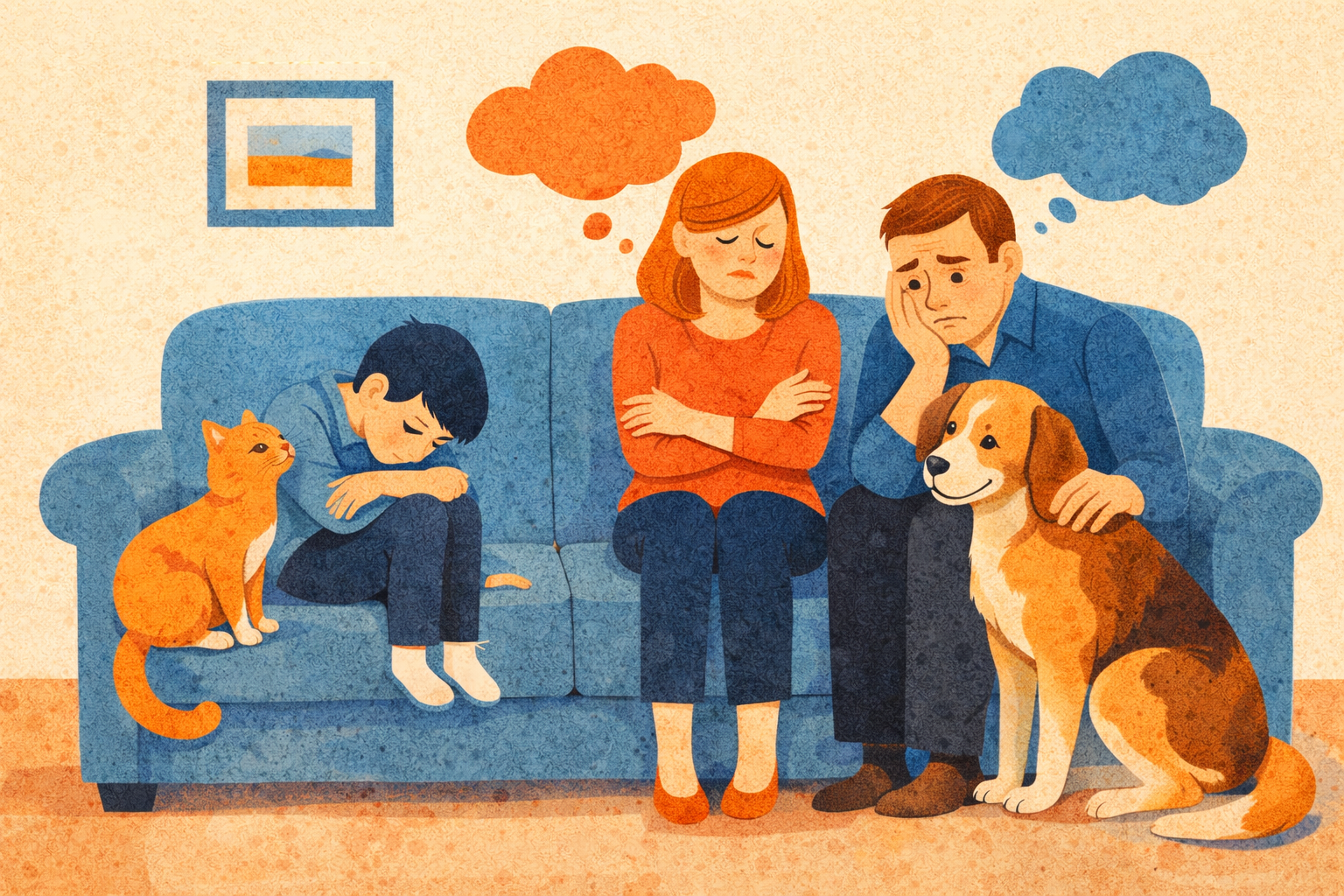
In many households, the first sign that something is wrong does not come from a conversation or a visible argument. It comes from a dog that refuses to leave someone’s side. A cat that suddenly sleeps on a pillow it has ignored for years. A normally playful pet that becomes quiet and watchful. Long before humans articulate distress, animals often register it.
Pets live inside the emotional ecosystems of their families. They observe daily rhythms, voice patterns, movement, and energy levels with remarkable precision. Because their survival once depended on reading subtle cues in social groups, they remain exquisitely sensitive to changes in mood and behavior. What feels invisible to people stands out clearly to animals.
One of the most important mechanisms behind this sensitivity is scent. Human bodies release stress hormones such as cortisol and adrenaline through sweat and breath. Dogs, in particular, can detect these chemical changes. Studies have shown that dogs respond differently to the scent of anxious humans than to neutral samples. Without conscious awareness, they register emotional shifts through smell alone.
Body language reinforces these signals. Slouched posture, slowed movement, tense shoulders, and altered breathing patterns accompany emotional strain. Pets notice these deviations from baseline behavior. Because they rely heavily on nonverbal communication, such changes are meaningful data.
Voice patterns also matter. Even when people attempt to mask emotion verbally, tone and cadence shift under stress. Cats and dogs are highly attuned to vocal rhythm. They recognize when voices become clipped, strained, or subdued. Over time, they associate these changes with emotional states.
Routine disruption further amplifies awareness. Pets structure their days around predictable events: meals, walks, playtime, rest periods. When emotional stress alters these routines, animals recognize instability. Missed walks, delayed feeding, and shortened play sessions become indicators that something is amiss.
In response, many pets modify their behavior. Dogs may become more attentive, following family members closely and increasing physical contact. Cats may seek proximity, sleeping nearby or placing themselves in line of sight. Some animals become quieter, mirroring subdued household energy. Others become more playful, attempting to restore equilibrium.
This phenomenon is sometimes described as emotional contagion. Animals absorb and reflect the emotional tone of their environment. Research suggests that dogs, in particular, synchronize stress levels with their owners. Heart rate patterns and cortisol levels often rise and fall together in bonded pairs.
Attachment plays a central role. Pets form secure relationships similar to those between children and caregivers. When a primary attachment figure experiences distress, animals respond instinctively. Offering proximity and attention is their version of support.
Past experience shapes these responses. Animals who have witnessed illness, grief, or conflict learn to associate certain cues with vulnerability. Over time, they may become more sensitive to early warning signs. This learned empathy enhances their role as emotional monitors.
Not all reactions are comforting. Some pets respond to household tension with anxiety, withdrawal, or behavioral problems. Increased barking, inappropriate elimination, and destructive behavior may reflect internalized stress rather than disobedience. In such cases, the animal is signaling that the emotional climate feels unsafe.
Children often notice this phenomenon first. They observe pets gravitating toward upset family members or behaving differently during difficult periods. These observations can foster early emotional awareness and empathy within families.
Therapy and service animals represent formalized versions of this natural capacity. However, ordinary household pets display many of the same skills without training. Their responsiveness emerges organically through shared life experience.
Importantly, pets do not judge emotional states. They respond without interpretation or expectation. A grieving person receives the same companionship as a joyful one. This consistency creates psychological safety.
For many people, this silent presence becomes a form of grounding. Sitting with an animal during distress can regulate breathing, reduce heart rate, and provide tactile comfort. The animal’s calmness reinforces emotional stability.
The relationship is reciprocal. When families recover from difficult periods, pets often relax simultaneously. Playfulness returns. Sleeping patterns normalize. The emotional ecosystem stabilizes.
In this way, pets become living feedback systems. They reflect emotional weather in real time. They register storms before clouds are visible. They respond not with advice, but with presence.
Their value lies not in problem-solving, but in attunement.
In a world where humans often struggle to articulate inner states, animals quietly listen to what is unspoken.
And they answer with loyalty.
========
Nathaniel Brooks is a behavioral science writer who focuses on companion animal psychology, emotional communication, and human-animal bonding. This article was written, in part, utilizing AI tools.








Comments