The Science of the Walk: Why Daily Walks Matter More Than You Think
Published in Cats & Dogs News
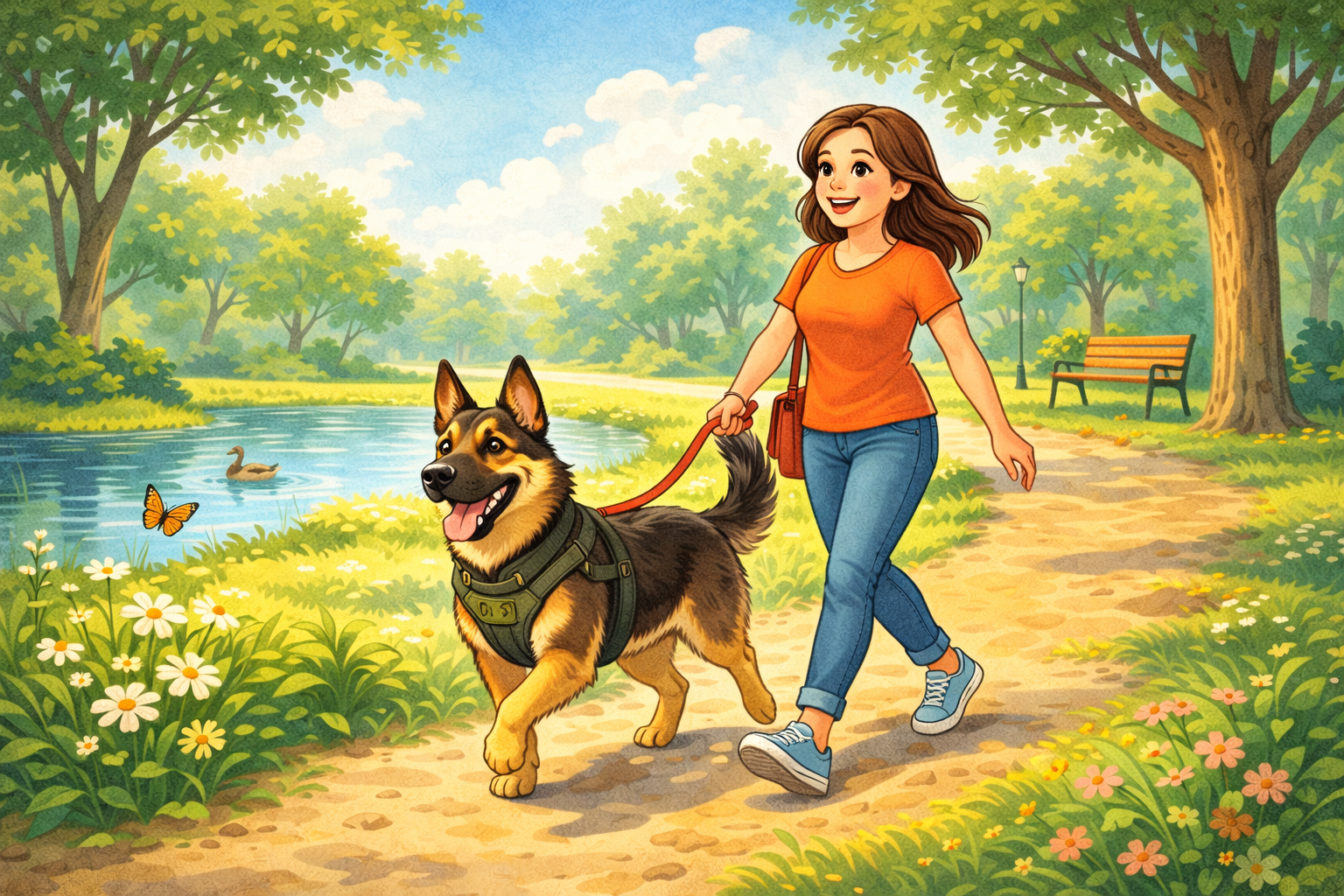
To many dog owners, the daily walk is a practical necessity. It is how dogs relieve themselves, burn excess energy, and stretch their legs. Squeezed between work schedules and household obligations, walks are often treated as errands rather than experiences. Yet behavioral science suggests that this routine activity is one of the most important factors in a dog’s long-term physical and emotional health.
Walking is not merely exercise. It is a form of environmental education. Through scent, movement, and social observation, dogs gather information about their world. Each walk provides cognitive stimulation equivalent to reading a daily newspaper filled with chemical, visual, and auditory headlines.
The canine brain is highly adapted for scent processing. Dogs possess up to 300 million olfactory receptors, compared with about six million in humans. When a dog pauses to sniff a lamppost, tree, or patch of grass, it is reading complex social messages left by other animals. These scent markers convey identity, health, reproductive status, and emotional state. A walk without sniffing is, for a dog, an impoverished experience.
Physical movement during walks supports cardiovascular health, joint mobility, and muscular strength. Regular walking reduces obesity, improves digestion, and slows age-related decline. For senior dogs, gentle daily movement maintains circulation and reduces stiffness, often extending active years.
Equally important are the psychological benefits. Walking lowers stress hormones and increases serotonin and dopamine levels in dogs, mirroring effects seen in humans during moderate exercise. Dogs who walk regularly tend to display fewer anxiety-related behaviors such as excessive barking, destructive chewing, and pacing.
Social exposure is another critical component. Even when dogs do not directly interact with others, observing people, animals, bicycles, and vehicles helps normalize environmental stimuli. This passive socialization reduces fear responses and improves adaptability. Dogs raised without regular walks often become reactive simply because novelty overwhelms them.
Routine also plays a stabilizing role. Predictable walking schedules create temporal anchors in a dog’s day. These anchors reduce uncertainty and support emotional regulation. When dogs know when stimulation and relief will occur, they are less likely to exhibit stress behaviors.
For working breeds and high-energy dogs, walks alone may not fully satisfy activity needs, but they provide an essential baseline. Combined with play and training, walking forms the foundation of behavioral balance. Without it, even well-trained dogs may struggle with frustration.
Human health benefits should not be overlooked. Studies consistently show that dog owners who walk regularly experience lower blood pressure, reduced depression, and improved cardiovascular fitness. The walk becomes a shared wellness ritual, strengthening interspecies bonds.
Modern lifestyles often compress walks into brief bathroom breaks. While convenient, this practice deprives dogs of critical sensory and cognitive input. A ten-minute sniff-rich walk can be more valuable than a rushed twenty-minute loop.
Quality matters as much as duration. Allowing exploration, varying routes, and maintaining relaxed pacing transforms a walk into a meaningful experience rather than a chore. Dogs who feel mentally fulfilled return home calmer and more content.
Weather and seasonality also shape walking experiences. Snow, rain, fallen leaves, and spring growth each introduce new sensory landscapes. These changes refresh cognitive engagement and prevent environmental monotony.
In essence, the daily walk functions as therapy, education, exercise, and social training combined into a single activity. It supports nearly every major system in a dog’s body and mind.
When owners approach walking as an investment rather than an obligation, both species benefit. The leash becomes less a tether and more a bridge between worlds.
In that shared movement through space and time, dogs find not only relief, but meaning.
========
Nathaniel Brooks is a behavioral science writer who focuses on canine cognition, working dog history, and the psychology of human-animal relationships.
This article was written, in part, utilizing AI tools.








Comments