Dogs Who Follow You Everywhere
Published in Cats & Dogs News
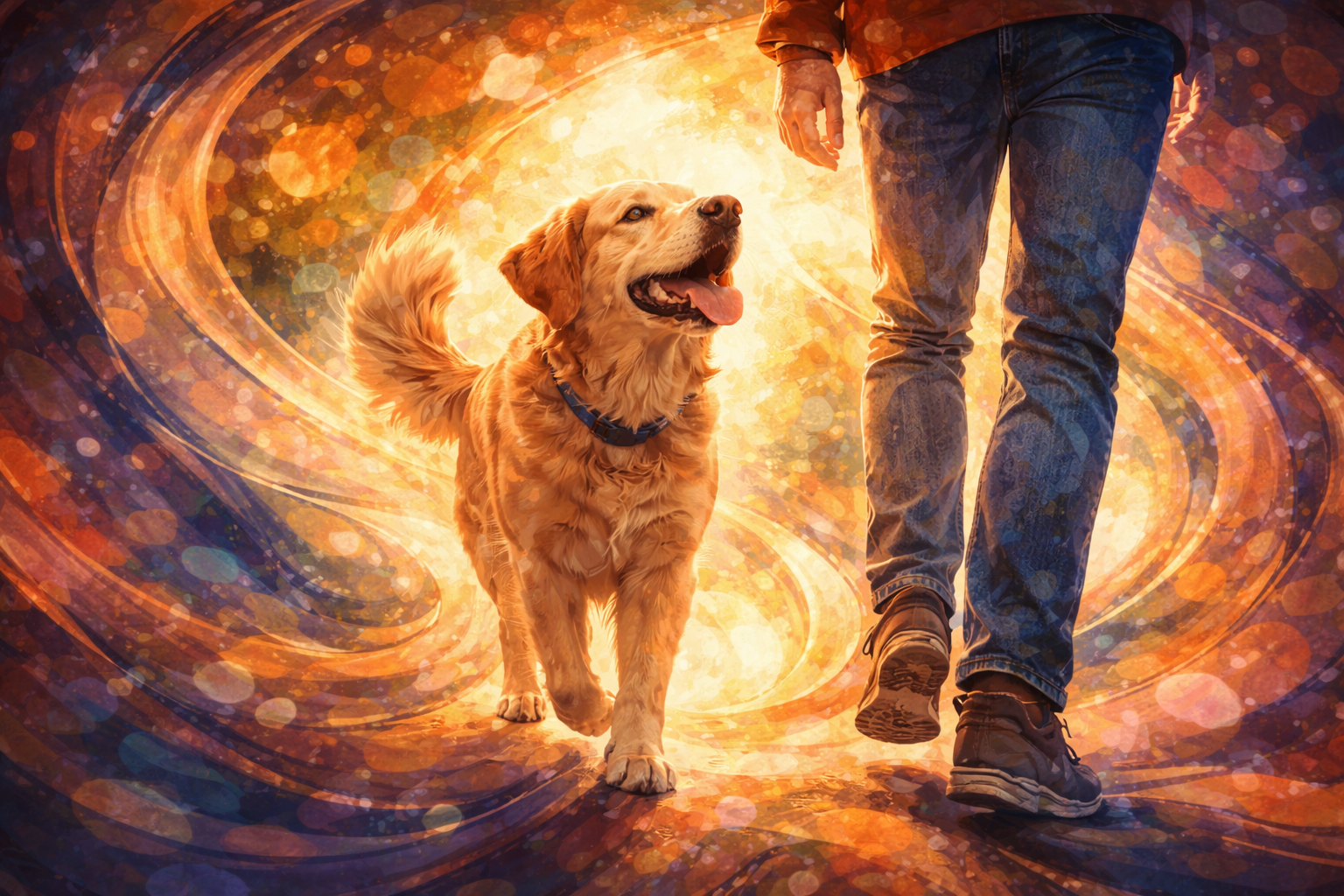
They appear at your heel when you stand. They pause outside the bathroom door. They move rooms with you as if connected by an invisible thread. For many dog owners, the experience is so familiar it fades into background noise: the dog who follows everywhere.
This behavior is often described casually as “clingy,” “needy,” or “over-attached.” In reality, dogs who shadow their humans are engaging in a complex mix of evolutionary instinct, learned behavior, emotional attunement, and environmental logic. Far from being a flaw, the tendency to follow is often a sign that a dog is doing exactly what dogs evolved to do.
The Evolutionary Roots of Following
Dogs are social animals descended from wolves, whose survival depended on group cohesion. In a pack, proximity is safety. Staying near a trusted individual increases access to resources, protection, and shared information.
Early domestication reinforced this instinct. Dogs who stayed close to humans were more likely to receive food, warmth, and shelter. Over generations, attentiveness and proximity became advantageous traits.
Following is not dependence in the human sense. It is adaptive behavior shaped by thousands of years of shared survival.
Attachment, Not Anxiety
One of the most common misunderstandings about dogs who follow everywhere is the assumption that the behavior signals separation anxiety. While anxiety can be a factor in some cases, most shadowing dogs are not distressed. They are calm, observant, and responsive.
Secure attachment in dogs often looks like proximity-seeking. Just as a securely attached child checks in visually or physically with a caregiver, dogs maintain closeness to regulate themselves and monitor their environment.
The key distinction is emotional state. An anxious dog panics when separated. A securely attached dog simply prefers to be near.
Dogs as Environmental Readers
Dogs are exceptionally skilled at reading human behavior. They track posture, tone of voice, movement patterns, and routine changes with precision. Following allows dogs to stay within range of this information.
When you move, you create data. The dog who follows is gathering it.
This attentiveness is practical. Humans initiate most meaningful events in a dog’s life: meals, walks, play, rest, and departure. Staying close increases the likelihood of participation or early warning.
From the dog’s perspective, following is efficient.
The Logic of Movement
Dogs quickly learn household traffic patterns. They know which movements lead to exits, which signal rest, and which predict food. Following allows them to remain positioned for opportunity.
This is not opportunism in a negative sense. It is pattern recognition.
A dog who follows you into the kitchen is responding to probability. A dog who waits outside the bathroom door is responding to routine duration and reappearance.
Dogs are not guessing. They are calculating.
Emotional Attunement and Mirroring
Dogs often follow more closely during times of emotional change. Stress, illness, grief, or fatigue alter human behavior in subtle but detectable ways. Dogs notice shifts in pace, tone, and predictability.
For some dogs, proximity increases during these periods. The behavior is not concern as humans define it, but regulation. Staying close to a familiar individual stabilizes the environment.
In this way, dogs act as emotional mirrors—not reflecting feelings, but responding to altered conditions.
Breed Tendencies Matter
Some breeds are more predisposed to following behavior due to their working histories. Herding breeds, guardian breeds, and companion breeds were developed to maintain constant awareness of human partners.
These dogs were selected for attentiveness, responsiveness, and proximity. A dog that did not track its human closely was less effective at its job.
Expecting such breeds to be indifferent to human movement misunderstands their design.
When Following Becomes Excessive
While following is normal, it can tip into problematic territory when paired with distress signals. A dog that cannot settle when you move, vocalizes excessively, or shows panic at brief separations may be struggling.
In these cases, the issue is not the following itself, but the emotional state underlying it. Addressing anxiety involves building confidence, predictability, and safe independence—not forcing distance.
Punishing or discouraging following behavior without addressing cause can increase insecurity.
The Myth of “Independence”
Modern dog ownership often prizes independence: a dog who entertains itself, rests alone, and does not demand attention. While independence can be healthy, it is not a universal goal.
Dogs are relational animals. Wanting proximity is not a failure of training or personality. It is a form of engagement.
The dog who follows is not refusing independence. It is choosing connection.
Why Dogs Follow Some People More Than Others
In multi-person households, dogs often select one individual to shadow. This choice is based on consistency, predictability, emotional regulation, and reinforcement history.
The chosen person may not be the primary caregiver. They may simply move in ways the dog finds readable or calming.
This preference is not a slight. It is an alignment.
Living With a Shadow Dog
For many people, a dog who follows everywhere becomes a quiet comfort. The constant presence can feel grounding, companionable, even reassuring.
Understanding the behavior helps owners respond with balance. Allowing proximity while also encouraging rest, independence, and enrichment creates a stable relationship.
Dogs who feel secure in their attachment are often the ones most capable of being alone when needed.
What Following Really Means
A dog who follows you everywhere is not demanding entertainment or reassurance. It is engaging with the world through you.
You are the anchor point in its environment, the most reliable source of information, safety, and opportunity. Following is how dogs stay oriented.
Seen through this lens, the behavior is not something to correct, but something to understand.
Dogs do not follow because they are weak. They follow because they are paying attention.
========
Jonathan Hale is a writer focused on canine behavior, human–animal relationships, and the science of companionship. He shares his home with a dog who believes personal space is negotiable. This article was written, in part, utilizing AI tools.






Comments