Cats as Emotional Barometers
Published in Cats & Dogs News
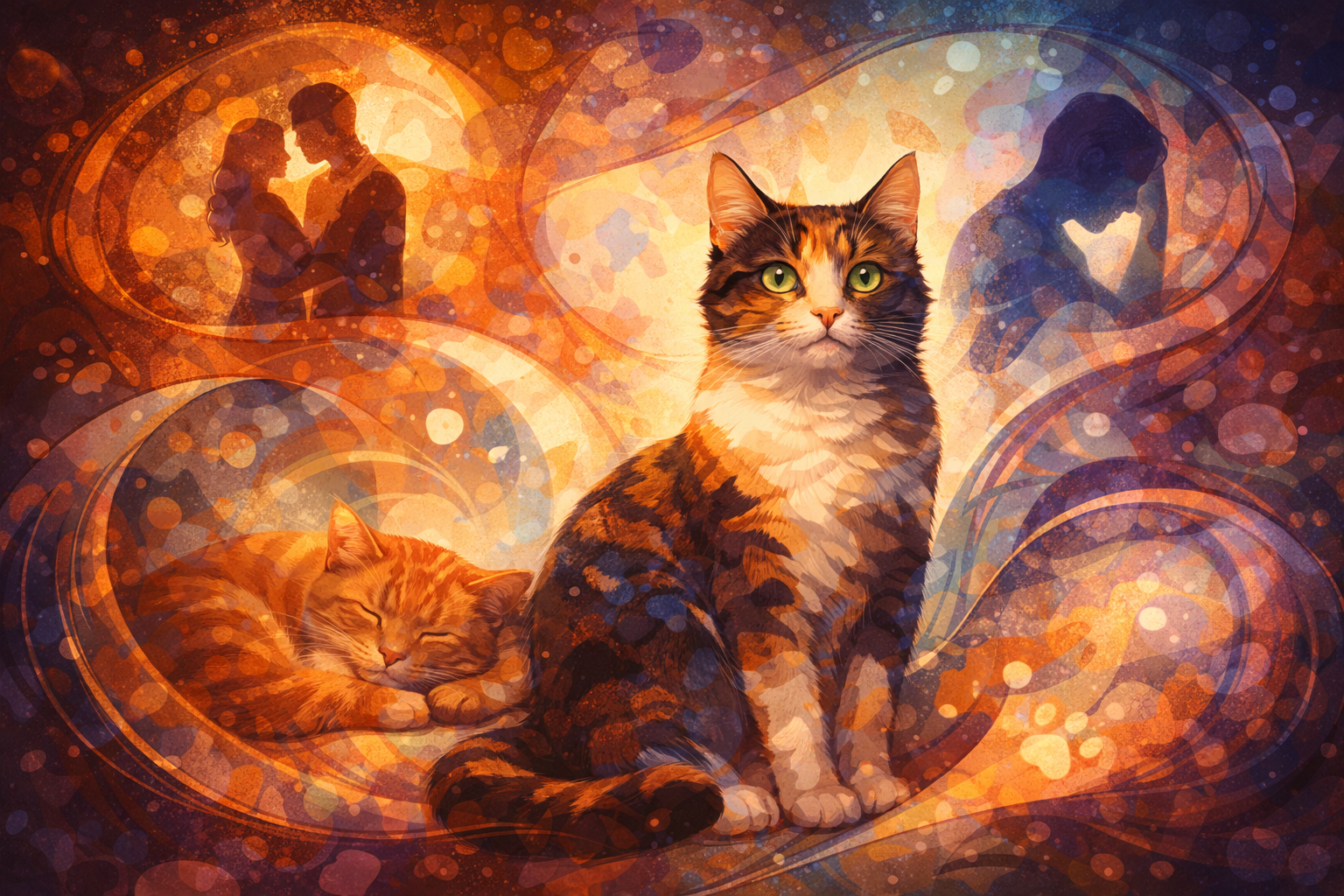
Cats are often described as aloof observers of human life—present but uninvolved, affectionate on their own terms, indifferent to our daily concerns. Yet anyone who has lived closely with a cat during illness, grief, conflict, or stress knows this description falls short. Cats notice. They adjust. Sometimes, they react before we do.
Cats function as emotional barometers, responding to shifts in mood, tension, and atmosphere with a sensitivity that is easy to miss and hard to dismiss. They do not read emotions the way humans do, but they perceive changes in behavior, tone, routine, and physiology with remarkable precision. What they detect, they reflect—often quietly, sometimes inconveniently, and almost always honestly.
How Cats Perceive Emotional Change
Cats do not interpret emotions as abstract concepts. They register changes in the environment and in the bodies moving through it. Subtle differences in voice pitch, walking speed, posture, breathing, and scent all signal shifts in emotional state.
Stress alters human behavior in predictable ways. Movements become sharper or slower. Voices tighten or flatten. Routines drift. Even body chemistry changes, affecting scent in ways animals can detect. Cats, whose survival depends on reading fine-grained environmental cues, notice these deviations immediately.
To a cat, emotion is not something you feel. It is something you do differently.
Why Cats React Before We Acknowledge Stress
Humans are skilled at ignoring their own emotional strain. Cats are not. When stress begins to alter routine or behavior, cats respond even if the person involved insists everything is fine.
This is why cats sometimes change behavior “for no reason.” They hide more. They cling more. They vocalize differently. They may become irritable, withdrawn, or unusually attentive. These reactions often precede a conscious recognition of stress by the humans involved.
Cats are not predicting the future. They are responding to data already present.
Attachment Without Projection
Unlike dogs, cats do not rely on overt emotional feedback loops. They are less likely to mirror excitement or seek reassurance through constant interaction. Their attachment style is quieter and more observational.
Because of this, when a cat alters its behavior in response to human emotion, the change is often significant. A cat that suddenly sits closer, sleeps near a specific person, or follows someone from room to room is responding to a shift it perceives as meaningful.
This behavior is not pity or concern in a human sense. It is attentiveness paired with familiarity.
Cats and Household Tension
Cats are particularly sensitive to interpersonal conflict. Raised voices, abrupt movements, or changes in tone can register as environmental instability. Even when arguments are contained or indirect, cats often react.
Some cats withdraw, seeking high or hidden spaces. Others insert themselves physically between people or remain in the same room, watchful and still. In multi-cat households, tension among humans can sometimes manifest as redirected aggression or increased conflict between cats.
The cause is not moral judgment. It is stress propagation. Cats respond to unstable environments by prioritizing safety.
Illness, Grief, and Quiet Vigilance
Cats often respond to illness or grief with behaviors that appear uncanny. They may sleep closer to a person who is unwell, remain in the same room for extended periods, or change their usual routines to stay nearby.
These responses are grounded in sensory perception. Illness changes movement, scent, and routine. Grief alters posture, speech, and activity levels. Cats register these changes and adjust their proximity accordingly.
This does not require empathy as humans define it. It requires familiarity and pattern recognition.
Why Some Cats Avoid Emotional Intensity
Not all cats move closer during emotional upheaval. Some retreat. Avoidance is also a response.
Cats who withdraw during stress are not indifferent. They are managing their own sensory load. Emotional intensity often brings unpredictability—sudden movement, erratic schedules, unfamiliar visitors, altered energy. For a cat, retreat may be the safest option.
This response is often misinterpreted as coldness. In reality, it reflects a cat prioritizing self-regulation.
The Myth of the “Uncaring” Cat
The belief that cats are emotionally detached persists largely because their responses do not align with human expectations. Cats do not console. They do not reassure. They do not ask questions or offer distraction.
They adjust presence.
A cat that sits quietly in the same room, a few feet away, is participating. A cat that alters sleep locations to remain nearby is responding. These behaviors are easy to overlook because they are subtle and sustained rather than dramatic.
Cats do not perform concern. They inhabit it.
Consistency as Emotional Safety
Cats are most responsive to emotional shifts in environments where routine and trust are already established. In stable homes, deviations stand out sharply. In chaotic ones, emotional noise can become constant, dulling responsiveness.
This is why cats in calm households may react strongly to even mild stress, while cats in high-stress environments appear indifferent. Sensitivity depends on baseline predictability.
Consistency allows cats to notice change.
What Cats Reflect Back to Us
Cats do not diagnose emotional states. They reflect them. A household that grows tense may see more hiding, more vigilance, or more clinginess. A person who becomes withdrawn may find a cat suddenly occupying nearby space.
These reflections can be uncomfortable. They challenge the idea that emotional states are private or contained. Cats respond to what is present, not what is intended.
In this way, they function as mirrors—not of feeling, but of impact.
Learning to Read the Signal
Understanding cats as emotional barometers requires resisting the urge to anthropomorphize. Their responses are not judgments or messages. They are data points.
A sudden behavioral change is information. It invites observation rather than correction. When cats alter their patterns, the most useful response is not discipline or reassurance, but curiosity.
What changed? What feels different? What became unpredictable?
The Quiet Intelligence of Noticing
Cats evolved to survive by detecting subtle shifts in their surroundings. Living with humans has not dulled this capacity. If anything, it has given them more variables to track.
They notice when the house grows heavy. When routines loosen. When energy changes shape. They respond not out of obligation, but out of adaptation.
To live with a cat is to share space with a creature that pays attention, even when we do not.
Listening Without Translation
Cats do not exist to comfort us or to validate our feelings. Their value as emotional barometers lies in their honesty. They react to what is real, not what is said.
When we learn to observe their responses without forcing human meaning onto them, cats become quiet indicators of the emotional weather we live inside.
They are not therapists. They are witnesses.
========
Mara Linwood is a behavioral science writer focusing on the intersection of animal perception and human emotional environments. She lives with two cats who notice everything and comment on nothing. This article was written, in part, utilizing AI tools.







Comments