
I'll Carry Your Sheep for You
Lately, my workout log has been giving me evidence I can feel proud of. I'm inching toward my bench goal with cleaner reps. I'm rowing the weight of a whole grown adult and can deadlift what is likely a fit middle schooler. These numbers mean something to me because I know what it took to get here: showing up, showing up again, and then showing up one more time.
And still, I recently Googled how to lose body fat. My scale is, in fact, too fancy. It told me my body fat percentage, with the numbers in bright red. As Michelle Tanner would say, "How rude."
There's no contradiction in wanting to get stronger and wanting my body to change. But the question sits beside an older one: Where did I learn what I thought a woman's body should look like?
From my teens to my early twenties, I was the stereotype of skinny. I felt lithe; my hip bones showed. I came of age in millennial skinny culture, when visible bones could pass for an accomplishment, and low-rise jeans turned a body's smallest parts into a public measurement. We learned to call thinness discipline, fragility prettiness, and smallness femininity. The ideal could look less like a grown woman and more like a girl who hadn't yet begun to take up space.
Now I'm two kids into the pudge that accumulates with life: some of it from having children, some from good tacos and beer shared with people I love. Those meals have shaped conversations I'm glad I've had, so I don't want to treat every soft inch as a problem to solve when some of it belongs to a life I enjoy.
But I can't pretend I can separate every wish to change my body from the culture that taught me to inspect it. I can want to lose body fat and still wonder whose standards are echoing in that desire. I can also care about what my body can do without declaring that appearance no longer matters to me. I'm not required to settle the question neatly before I'm allowed to work toward a goal.
Strength training has given me a different set of measurements. Sets and repetitions. Increasing the seconds I can hang from a bar. The same pounds that feel different if I'm doing a step-up or lateral raise. They don't tell me everything, but they do give me another way to pay attention. I know the feeling of my arms holding steady, a movement getting less wobbly, and being able to do something I couldn't before.
My body's ancestral echoes may still worry about famine, but I'm also working toward a different genetic goal: becoming the woman who can carry your sheep out of a bog. That's the joke I pitch now. I'll be the one you come to when you hear the bleating. It's raining, and the bog has dangerous spots only I know. I mutter tangy types of curses as I trudge into the field, and I have choice names for the wayward sheep that would make you blush. But, I get it done.
I like that imagery better than the old one of a woman whose virtue was taking up less room.
I still want to lose body fat. I also want to stop treating small as a synonym for beautiful, or fragile as a synonym for feminine. The hip bones I once thought proved something have no authority over the woman I am now. A body can change; it can get stronger. And, taking up space can count as progress, too.
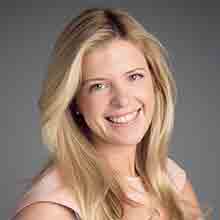
Cassie McClure is a writer, millennial, and unapologetic fan of the Oxford comma. She can be contacted at cassie@mcclurepublications.com. To learn more about Cassie McClure and read features by other Creators Syndicate writers and cartoonists, visit the Creators Syndicate website at www.creators.com.
Copyright 2026 Creators Syndicate Inc.










Comments