On Nutrition: Lessons from Alaska
Published in Nutrition
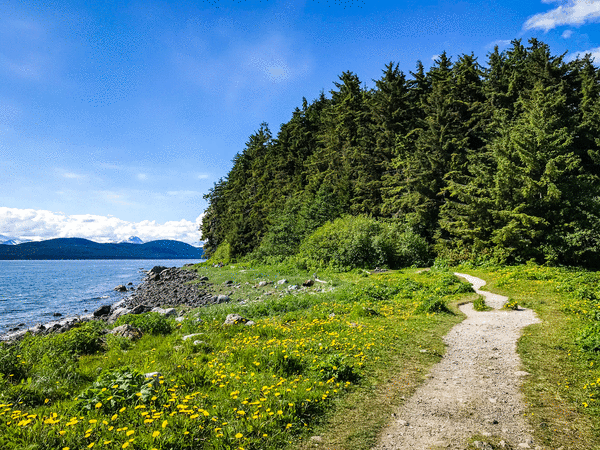
We just returned from a remarkable trip to our country’s 49th state. Alaska did not disappoint. Besides its spectacular display of oceans, mountains, glaciers and wildlife, this land carries a rich history.
One story that caught my attention (because it’s nutrition-related) involves Alaska’s state tree, the Sitka spruce.
Sailors explored the coasts of this large territory in the late 1700s under the command of such notables as Captain William Bligh (of "Mutiny on the Bounty" fame) and Captain James Cook. These adventurers subsisted on food that could survive months (sometimes years) at sea, including such lovely fare as salted beef and pork, hard biscuits and beans.
Drinking water was stored in barrels for the long trips. And even this spoiled and turned slimy after a few weeks. That’s at least one reason why these travelers often got their fluids from beer and other such beverages.
Fresh fruits and vegetables were almost nonexistent on these long voyages across the ocean. Thus, many fell ill to scurvy, a disease caused by a deficiency of vitamin C. In 1778, Bligh accompanied Captain Cook on a quest to map Alaska’s coastline. By this time, Cook had learned that Alaskan natives — who drank a tea brewed with the tips of spruce trees — did not develop joint pain, weakness, bleeding gums and loose teeth associated with scurvy.
Turns out the “tips” of the Sitka spruce trees — the new bright green growth that appears on the branches each spring — is high in vitamin C.
However, there was one problem with this life-saving tea. It turned sour on long voyages … unless it was added to beer. Today, many Alaskan breweries feature vitamin C-infused spruce tip beer … just in case you forget to drink your orange juice.
We also learned about Alaskan sledding dogs (and their owners) when we visited Juneau.
“These dogs are professional athletes,” one trainer explained. As opposed to many of our furry friends at home, he told us these dogs have a “daily caloric intake exactly measured to keep them lean, not skinny.” Note taken.
We met a young trainer who is getting her dogs ready to compete in the Iditarod, the yearly 1,000-plus-mile race that honors the sled dogs that delivered mail and supplies during the days of the Alaskan Gold Rush.
This young woman’s dietary issue? Eating enough calories to endure the grueling night and day trek with her valuable dogs. “I try to gain at least 30 extra pounds before the race to get me through to the finish,” she said.
Then she said her main challenge is to pack enough easy-to-eat, high-calorie, nutrition-packed food to sustain her excessive calorie needs through the strenuous course.
I suggested a high-calorie protein drink? And she politely reminded me of the fact that liquids tend to freeze readily when mushing across 1,000 miles of snow in Alaska.
Right…
©2026 MediaNews Group, Inc. Distributed by Tribune Content Agency, LLC.









Comments