On Nutrition: Chia seeds
Published in Nutrition
I was happy to hear from Sheri, who was my neighbor and friend in a community I moved from several years ago. I was also relieved to hear she is doing well.
At a young age, Sheri was diagnosed with Type 1 diabetes—formerly known as “insulin-dependent” or “juvenile diabetes.” This disease destroys a key hormone called insulin that the body relies on to store energy from food. Without insulin, a person does not survive.
Years before human insulin was available, Sheri learned to give herself multiple daily shots of insulin from pigs or cows. Now, many decades and scientific breakthroughs later, she continues to actively pursue the best ways to keep her disease under control.
“I’ve been hearing that chia seeds might be helpful for my blood sugar levels,” she told me. “So I decided to check it out with you.”
Happy to, Sheri. A 2022 article in the journal Food Science and Nutrition calls chia seeds “a therapeutic weapon in metabolic disorders.” Diabetes is certainly a metabolic disorder since it disrupts how the body uses carbohydrates as well as fats and proteins. And these tiny seeds really do have therapeutic benefits. In fact, they meet the definition of a “functional food” in that they deliver known health advantages in addition to their nutritional value.
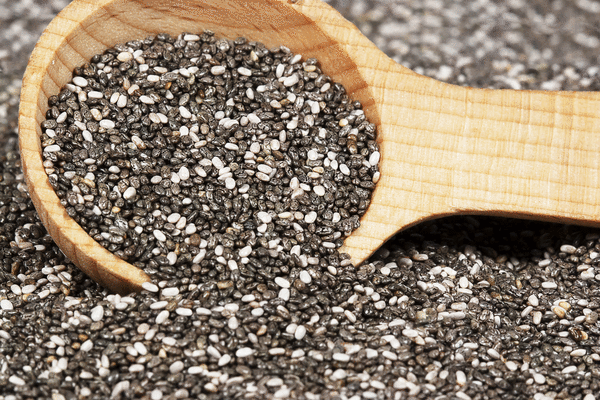
Chia seeds spring from a mint-family plant called Salvia hispanica. They are rich in dietary fiber, which—when added to a meal—helps slow the rise of blood sugar levels. Most of chia’s fiber is the insoluble type that keeps the digestive tract in good working order. Chia also contains soluble fibers that have been found to help lower blood glucose as well as cholesterol levels. Another added benefit: Dietary fiber feeds the good bacteria in the gut, which enhances health in numerous other ways.
Two tablespoons of chia seeds contain 10 grams of dietary fiber, a whopping 30-40% of your day’s total fiber needs.
Chia seeds also provide an essential (meaning your body needs it and cannot make it on its own) omega-3 fat known as alpha-linolenic acid (ALA). Omega-3 fats help keep our hearts happy. This is good news since heart disease is the No. 1 cause of death for people with diabetes.
Never eat chia seeds raw. Soak them in liquid or a moist food for several minutes to allow them to expand and become easier to digest. They need at least a half cup of liquid for every 2 tablespoons of seeds, say experts. Good foods to add them to include smoothies, fruit juice cooked oatmeal and yogurt.
And remember, any time you increase your intake of any form of dietary fiber, do it gradually and drink more water and other fluids as well. To much too soon can result in tummy upsets as well as other discomforts.
____
©2026 MediaNews Group, Inc. Distributed by Tribune Content Agency, LLC.









Comments