In appreciation: That night Stacy Keach had a heart attack on stage. And kept on going.
Published in Entertainment News
CHICAGO — I’ve seen many things reviewing theater all these years. But never before had I seen an actor have a heart attack on stage and keep on performing.
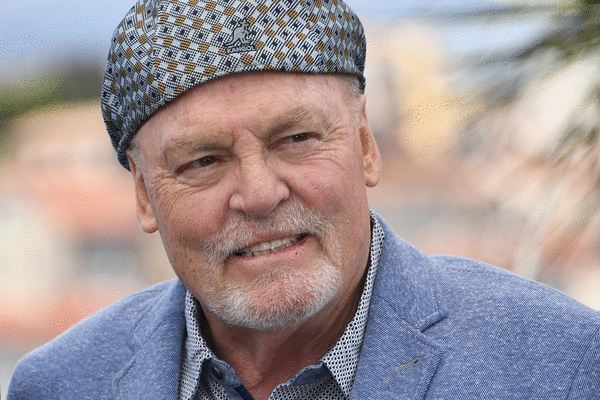
But that’s what happened in May 2017, on the opening night of a new play at the Goodman Theatre called “Pamplona.” Penned by Jim McGarth, the world premiere was a solo show about Earnest Hemingway and it starred the one-and-only Stacy Keach, who died Tuesday at the age of 85.
This was a solo show, set in the titular Spanish town in 1959, and it is important to the story to know that Keach was totally alone on the stage.
Here is what I recall happening.
Keach (in the guise of Hemingway) at first seemed to stop in his tracks and then continue only falteringly. But this did not suggest anything was wrong. Keach, after all, was playing Hemingway, and it would not come as a surprise to the reader to know that he was both immersing and immersed. There were moments of silence, and the actor’s eyes appeared to keep opening and closing. It was as if “Papa” was trying to find his way by centering and recentering himself.
I thought this was all part of what was turning out to be a truly enveloping performance. I took a note on the intensity and veracity of this interpretation; I still have that note. “Incredible,” I wrote.
After all, the whole point of this section of the play was that Hemingway, at a typewriter and struggling against an agonizing writers’ block, was trying to coax out what he wanted to write.
But then I started to realize that I’d heard some of these lines before, as in just a few moments previously. And that finally clued me in that something was wrong. Especially since the big frame of the show’s director, Robert Falls, had just exited the theater, a flurry visible in the corner of my eye.
But Keach just kept on going.
I’ll use his words to tell the rest of this narrative, since I called him a few days later and he described it all for me.
“I felt,” he said, “like this great fog had come over me. It was the most bizarre moment of my entire career.”
I could only imagine, and I must have verbalized some kind of alarm down the phone line.
It had not been lost on me that Hemingway had written in “The Sun Also Rises,” the following words: “A fog had come over the mountains from the sea. You could not see the tops of the mountains. The plateau was dull and gloomy, and the shapes of the trees and the houses were changed.”
I suggested to Keach that the fog might have been artistically appropriate, even if personally catastrophic.
“I was feeling no pain,” he insisted. “The whole time, I was hoping that I was just in the middle of an actor’s nightmare, and that I would soon wake up and find myself back in the position where I knew what I was doing again.”
For those who don’t know, the archetypal actor’s nightmare generally involves either not knowing your line, not knowing when you are supposed to enter or leave the stage, or not knowing what play you are doing. Or, on a particular bad night, all of the above. “I was very much aware that I was in a state of repetition,” Keach said. “I was suddenly, totally lost. Hemingway’s problem of what word to put on the page intersected with mine, which became how to find the next line. It has never happened to me before and, I hope, will never happen to me again.”
Back to that night from my view in the seats. After various attempts to find his way through the fog, what theater people refer to as the Voice of God boomed out over the stage. “Mr. Keach, please leave the stage,” it said.
This was the stage manager, improvising in the moment. It worked and Keach seemed to snap out of whatever had been going on before and he did, indeed, exit the stage.
And, very shortly afterwards, he entered an ambulance bound for Northwestern Memorial Hospital.
I remembered at the time wondering if Keach would have just kept on going until he found his way, such was this great actor’s utter commitment to the adage that the show must go on.
So I asked him. Had you not been told to leave the stage, would you ever have excused yourself and left?
There was a pause.
“No,” he finally said. “I don’t believe I would. I would have kept on going and going, trying to find my way back in the play. But I was relieved to be released from my duties.”
The relief was mutual. But my admiration of what I had just witnessed was boundless. Still, what was supposed to be a review of a new play was replaced in the Tribune by a story headlined “Goodman stops play as star falters.”
That was true in the literal sense. But as I look back now, he didn’t really falter so much as persist.
There is yet more to the story, too. The following year, the Goodman announced that Keach would return to the same theater doing the same role.
I called him again. Are you serious?
“I’m going to get back on the horse,” he said, dryly.
And so there I was again watching Keach become Hemingway. Truly becoming Hemingway.
This time, the Voice of God declined to speak.
But a godly actor was back on the stage he loved, doing his job for Papa. And for all of us.
©2026 Chicago Tribune. Visit chicagotribune.com. Distributed by Tribune Content Agency, LLC.





Comments