Column: Geese plays in Chicago, with no fake fans in sight
Published in Entertainment News
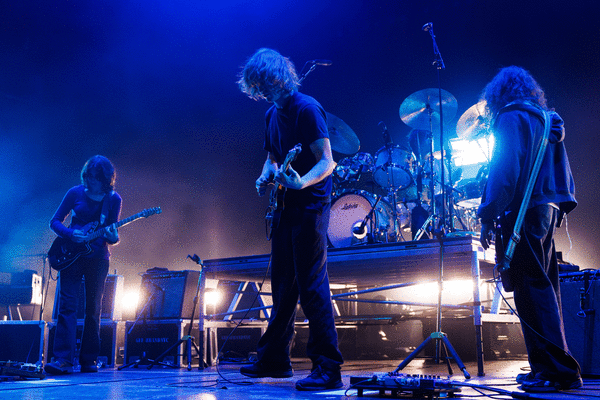
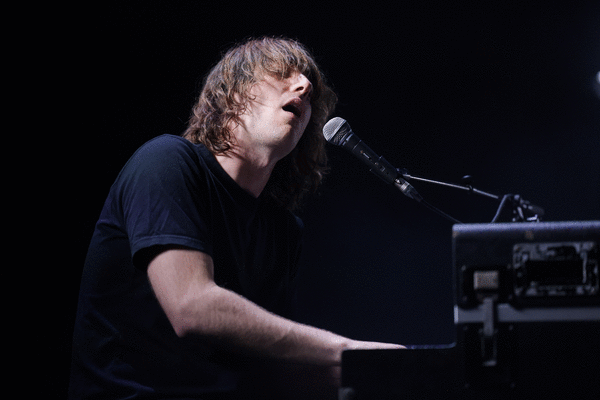
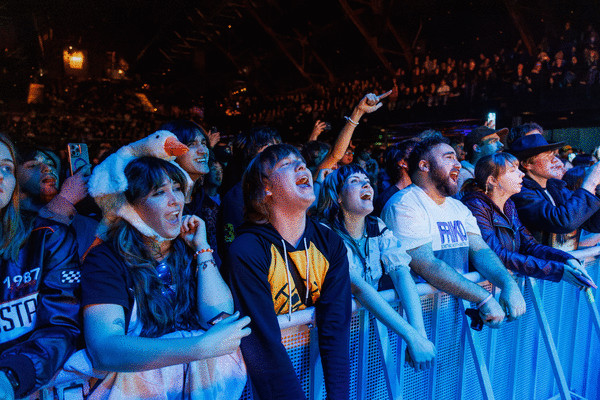
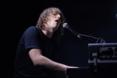

CHICAGO — On Sunday I went to see the rock band Geese at the Salt Shed, but in particular, I wanted to take a look at their fans, because reportedly, according to Wired magazine last spring (“The Fanfare Around the Band Geese Actually Was a Psyop”), Geese fans do not exist.
Not real ones, anyway.
Long misleading story short, the group’s label had hired a digital marketing firm which posted scores of online clips featuring their music, to boost their appearance in social media algorithms, a technique far from unique to Geese, and not so far removed from MTV or Top 40 radio back in the day, saturating playlists with a handful of favored performers, generating hits. (If you believe every beloved musical act of the past 60 years was a grassroots sensation, made popular on talent and pluck alone, well … bless your heart.)
In a Rolling Stone cover story on Geese in September, singer Cameron Winter joked that mind control actually sounded to him like “a reasonable explanation” for the tidal wave of critical acclaim that greeted their fourth album, 2025’s “Getting Killed,” then, immediately after, “Heavy Metal,” Winter’s instant cult classic of a solo record. But bassist Dominic DiGesu, understandably defensive, replied to the interviewer: “Come to the show, man. Just come to the show and (expletive) tell me how many bots you see.”
Indeed, last winter when Winter played a solo show at Rockefeller Chapel in Hyde Park (seated at a piano, swaddled in gothic spires, his back to the audience for most of the night), the line of fans stretched down Woodlawn Avenue, and when it was over, I spotted one or two audience members mopping up tears in their eyes. This is one of THOSE acts. At Salt Shed on Sunday — the second of two Chicago shows Halloween weekend — before Geese went on, I ran into three guys in their 20s wearing matching homemade T-shirts that read “Geese Changed My Life,” scrawled across the fronts in thick black marker. I asked if they were wearing those ironically, a self-conscious joke.
Sort of a knowing joke, said Link Michaels.
And sort of not, said Ian Haas. “Really, Geese kind of brought us together as friends.” They bonded over a love of the band. Haas and Michaels even helped form a Chicago rock band named “mulch.” As for Christiaan Heying, the third friend, a Chicago filmmaker, he said Geese has become nothing less than his catalyst for “getting into music again.”
You know they’re sincere because if you were going to manufacture a hot young rock band, if you were planning for some return on investment, there would be safer bets than fabricating a band like Geese. Drummer Max Bassin, who has a knack for wandering into off-kilter structures, opened Sunday quietly, puncturing the bubble of audience anticipation, just tapping click-clack-click-clack against a wood block, holding a long beat between every strike. Guitarist Emily Green knows how to deliver rampaging riffs but opts for spookier, aching, high-lonesome melancholy. Winter rarely held to his lyrics, wildly fluctuating his weird baritone — think Sylvester Stallone sings Johnny Cash — seeming to mutter to himself like a guy slumped over next to you on a bus: “I’m going to change my life completely,” he sang-spoke, then “Will you know what I mean?” and then “I’ve got half a mind to just pay for the lobotomy and tell ‘em ‘Get rid of the bad times, and get rid of the good times too, I’ve got no more thinking to do.’”
The effect is a kind of compelling, guarded chaos, a band actively sidestepping the pitfalls of their own growing popularity, as well as the clichés and cornball posturing that comes with being prematurely worshipped, and so they huddle, meander, mumble, stumble around atonally at times, avoid anything remotely predictable for long stretches. They sound, frankly, fragile, painfully aware of being painfully aware, and it’s great drama, the refrain of their opening, “Islands of Men,” ringing like an affirmation taped to a bedroom wall: “Will you stop running away, from what is real and what is fake?”
Authenticity is a recurring theme, with a distinct generational uncertainty added.
“I feel like I’m here to prove Geese fans are not fake,” said Sophia Gutierrez, standing with her friend Kira Hughes, both 21, both undergraduates at Northwestern University. “We smoke, we drink blood orange margaritas, and those psyop rumors were just that.”
“I mean, the bigger pop acts are where the real psyops are happening,” said Hughes.
“I think they got a lot of hate out of the gate because they come from a place of privilege,” Gutierrez said. She’s right; Geese was born in Brooklyn, formed not from the strays of a street gang but New York City private schools, COVID-era, Gen Z. But it’s a naive distrust, unaware of how much pop personas are shaped: Joe Strummer of the Clash attended English boarding school and Mick Jagger himself studied at the London School of Economics. Julian Casablancas of the Strokes was literally to the manor born – his father founded Elite Model Management, the hub of the ‘90s supermodel boom. Liz Phair grew up in Winnetka; Grace Slick of Jefferson Airplane is from Highland Park.
“I hear some Dylan in Cameron Winter, but also some Thom Yorke,” Gutierrez said. “And yet he is so definitely in the tradition of the classic rock and roll front man, it’s all kind of exciting.” She took her mother to a Geese concert in New York City recently, she said, “and my mom told me that she hadn’t seen a mosh pit like that since the ‘90s.”
If the Salt Shed shows are a measure, the Geese audience is young and thrilled to finally have a rock band of their own, in the mold of the idiosyncratic heritage acts they only heard about. Laura Magrowski, 24, of Palatine, brought along Holly Roehrborn, 36, her future sister-in-law. Magrowski hears Jim Morrison in Cameron Winter, she said. Roehrborn is less interested, but: “She was watching a clip of them yesterday and crying, and when your future sister-in-law cries over a band, I think I have to hear them.”
The other demographic well represented was Gen X.
Bob Passmore, an insurance industry executive from Arlington Heights, was there with his friend, John Caswell, a retired engineer from Arlington Heights. They prefer to find new bands. “We’re definitely in the upper reaches of age going to this one,” Passmore laughed, “but there’s nothing derivative about them. I hear Joy Division, some Talking Heads in them, but really, it doesn’t sound old.” That’s actually a pretty concise way of explaining Geese live: They remind you of something older, yet there’s no nostalgia.
Geese is soaring at a moment when we’re not supposed to care about rock music, and certainly not new rock music. Yet here we are; no less than Paul Thomas Anderson has a new throwback to the bygone age of concert films, “Cameron Winter at Carnegie Hall,” going all in on a new voice. Even the general anxiety that drives the lyrics and sound of Geese reminds you of a time when pop music was expected to lash out cathartically. Near the end of the band’s Sunday show, during their best song, “Taxes,” the audience latched on and screamed Winter’s great lyric: “If you want me to pay my taxes, you’d better come over with a crucifix, you’re going to have to nail me down.” But it wasn’t the IRS being shouted down. It was authority itself.
Eventually, someday, we are going to exit out the rear end of the Geese hype machine, and when it happens, assuming the band is still there, pushing its creative luck, maybe even willing to tighten its live sound without watering down its nascent unpredictability, the excitement will still be there, too. Because if Geese folded tomorrow, if it really was all a marketing scam perpetrated on digital natives and the elderly, you’d hope that seemingly antiquated feeling of being captivated by a fresh new rock band isn’t lost. Rock is dead, for sure, but not everyone cares to visit the cemetery yet. Long live rock.
©2026 Chicago Tribune. Visit at chicagotribune.com. Distributed by Tribune Content Agency, LLC.







Comments