Soaked Riot Fest forces restoration plans for swampy Douglass Park
Published in Entertainment News
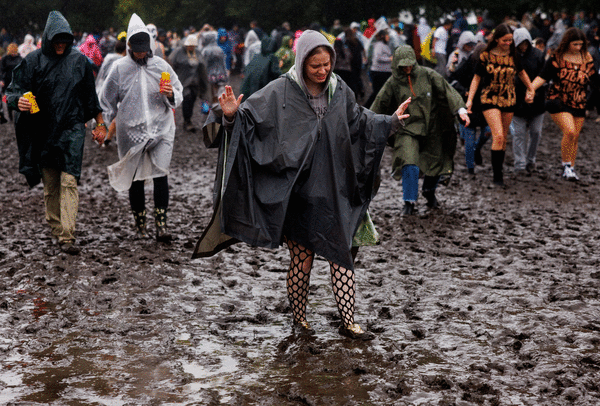
CHICAGO — All the punk rage in the world couldn’t stop a deluge of rain that turned Riot Fest into a mud-pocalypse over the weekend — but organizers say they are already working to repair the damage done to Douglass Park.
The three-day music fest, known for its eclectic mix of punk, metal, rap and, this year, mariachi, was drenched with the most rain to fall on Chicago in a two-day period in September since 2019, weather officials said Monday.
Douglass Park turned into a quagmire, as the grounds were slimed with a gooey layer of mud. Fifty thousand fans a day made the best of it, with some going barefoot and diving through the muck, while others complained about the slippery and swampy conditions. Attendees had to help wheelchair users whose wheels could no longer roll.
The 2 inches of rain forced organizers to cut short the festivities Saturday and Sunday. Riot Fest founder Mike Petryshyn pledged to restore the park to its previous state, which is required by contract.
“Our responsibility does not end when the festival does,” Petryshyn said in a news release. “We are committed to restoring the park, working alongside the Park District and the community, and seeing that work through.”
The Chicago Park District conducts walk-throughs before and after large events to determine if restoration is needed. Riot Fest will be financially responsible for all “reasonable costs,” Park District spokesperson Irene Tostado told the Tribune.
Before the festival, Riot Fest officials said, its landscaping team took preventive measures in the busiest and most sensitive areas, including installing 36,000 square feet of landscape fabric, mulch, temporary ground coverings and additional protection beneath stages and flooring.
As conditions worsened during the weekend, crews reinforced high-traffic areas, pumped and cleared standing water and added ground protection. Saturday’s shows ended early due to the severe weather, and Sunday’s opening was delayed until 2 p.m. to give crews time to prepare the grounds.
Despite those efforts, organizers conceded that the rain left the grounds soaked. By Monday, Douglass Park was left with ponding and patchy grounds, with few remains of grass anywhere.
Now, Riot Fest officials said they are focused on removing festival infrastructure from Douglass Park, and aim to complete the cleanup by Sept. 29. Work on the grounds is expected to include soil preparation, aeration, seeding, grading and sod replacement where appropriate, fest officials said. Initial assessments indicate about 3 acres may require sod.
Organizers also met with North Lawndale Ald. Monique Scott, 24th, to discuss drainage, plumbing and other underlying conditions within Douglass Park. Riot Fest and Scott will meet with the Park District to explore potential longer-term improvements.
Riot Fest was founded by “Riot Mike” Petryshyn and Sean McKeough in 2005. It moved outdoors to Humboldt Park in 2012, then relocated to Douglass Park in 2015, in part because of community backlash over damage to Humboldt Park after heavy rains in 2014.
Criticism of the fest’s use of a city park grew to the point that the festival announced it would decamp to SeatGeek Stadium in Bridgeview for 2024. That year, Scott led a successful campaign to return Riot Fest to Douglass Park. The fest remains Chicago’s largest independently owned music fest and one of the largest in the country.
Last year, Riot Fest’s contract to use Douglass Park was extended through 2027, with an option to extend again through 2029. Also starting in 2025, Riot Fest began contributing 30% of its revenue from the event to capital improvements in the park, up from 10% in previous years. Meanwhile, the Park District scheduled an intensive restoration of Douglass Park that called for topsoil with compost to fill low spots that hold water. The entire area was to be aerated and seeded for long-term durability, while park employees and plumbers were to improve the function of field drains.
Park District officials projected getting $3 million to $4.5 million from Riot Fest through 2029.
Riot Fest’s weather-scrambled schedule over the weekend followed similar conditions at Lollapalooza in early August, when overnight rains muddied grounds and delayed a Saturday opening. Call it a fitting end to a washout of a Chicago summer.
———
(The Tribune’s A.D. Quig and Doug George contributed.)
———
©2026 Chicago Tribune. Visit chicagotribune.com. Distributed by Tribune Content Agency, LLC.









Comments