Movie review: Nolan's 'Odyssey' brings scope, scale and beauty to timeless tale
Published in Entertainment News



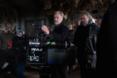


Christopher Nolan has made films about bombs (“Oppenheimer”) and bravery (“Dunkirk”); about heroes (“Batman Begins”), villains (“The Dark Knight”) and the uncomfortable space in between (“The Dark Knight Rises”). He’s made movies about family (“Interstellar”), time (“Tenet”) and dreams (“Inception”); memory (“Memento”), magic (“The Prestige”) and mystery (“Insomnia”). His first film is about a writer (“Following”), while his 13th — “The Odyssey” — is about mythmaking. It all seems to have been leading to this.
Here, Nolan manages to fit his every obsession, every thematic preoccupation, and every bit of jaw-dropping visual and sonic spectacle that he can conjure into every supersized frame of film. To do so, he borrows one of the oldest tales of all time, a cornerstone of human storytelling: Homer’s epic poem, “The Odyssey,” which dates back to the 8th century BCE.
“Oppenheimer” is a film about guilt as much as it is about a bomb, and “The Odyssey” is a film about trauma (and guilt, too) as much as it is about a journey home. That notorious Trojan horse? It’s as bad as the bomb to Nolan. A gift filled with enemy soldiers, it’s a cunning and cruel feat of strategy and a nasty trick, one that will forever haunt its architect, Odysseus (Matt Damon), his name linked with this war crime in every tale sung at every feast.
His story is of returning home, but it’s not a return to himself. After 10 years fighting in the Trojan War, Odysseus and his men spend 10 years trying to get back to the island of Ithaca. They fight off cyclops and witches, evade sirens and Poseidon’s wrath, and Odysseus ultimately finds a kind of peace on a beach with the nymph Calypso (Charlize Theron), eating lotus to forget his past, but nagged by visions of the goddess Athena (Zendaya).
All the while, Odysseus’ queen Penelope (Anne Hathaway), son Telemachus (Tom Holland) and faithful servant Eumaeus (John Leguizamo) anxiously await his return, fending off the rabid suitors partying in their castle, jockeying for a chance to be king. The family yearns to be reunited but are afraid to face each other, and themselves, after all the years lost to war, along with so many lives.
What makes Nolan’s vision of “The Odyssey” so entrancing is the sheer scope, scale and beauty of it. Like a general, he marshals his tremendous resources, talent and an army of artists in service of conveying his message to a rapt audience. It’s the first film to be shot entirely in IMAX (by his longtime collaborator, cinematographer Hoyte van Hoytema), in locations spanning the globe from Morocco to Iceland, with the best cinematic craftspeople lending their skill to making the myth real. It’s the immediacy and tactility that makes this adaptation arresting; the sweat, size and sound of it.
Percussed and concussed by Ludwig Göransson’s pounding score, battle sequences crafted by editor Jennifer Lame build to a frenzy of unrelenting momentum and chaos that never allow us to drop into a satisfying rhythm, offering a disquieting sensation of cinematic violence — as it should be. The narrative structure nests flashbacks within recollections as Odysseus recounts his tale, to Calypso, then Penelope. From his fog of hazy memory, something like the truth emerges.
We assumed Odysseus was the hero. As it unfolds, he might not be. He confesses that they broke Zeus’ law with the horse trick, ushering in centuries of darkness with this crime against humanity. As Odysseus laments in ancient Greece, on a giant silver screen, the “centuries of darkness omen” feels all too real, because “The Odyssey” isn’t about any other time period but right now, of course.
The thrum of modernism reverberates throughout, in little anachronisms like Telemachus calling him “Dad,” and the free use of contemporary vulgarities. Jon Bernthal delivers a performance as Menelaus that’s executed with the swagger of a New York mobster. These are Nolan’s little hints that “The Odyssey” isn’t about anyone other than us, about the violence we continue to enact on each other in the name of what, exactly? Damon’s everyman performance captures this universality beautifully. He can embody so many things — he’s both a bro and a brute, a masculine paragon emotionally open enough to express Odysseus’ grief and shame; a good soldier who had to make bad choices.
The most heart-stopping sequence is a brief stop in Hades, where fallen soldiers emerge from black sand and demand honor and accountability for their deaths, for their lives. The dead were mostly absent from Nolan’s other war films, “Oppenheimer” and “Dunkirk,” but here, they’re inescapable. On his grandest scale yet, Nolan reckons with the dead, face to face, and asks us to do the same, like Odysseus. Putting all of that spectacle behind this simple but powerful message — it’s nothing less than glorious.
———
'THE ODYSSEY'
4 stars (out of 4)
MPA rating: R (for violence and some language)
Running time: 2:52
How to watch: In theaters July 17
———
©2026 Tribune Content Agency, LLC










Comments