Entertainment
/ArcaMax

JADE teases 'brave and bold' second solo album
JADE has promised that her second solo album will be "brave and bold".
The former Little Mix singer's acclaimed debut effort That's Showbiz Baby! was shortlisted for the Mercury Prize - missing out to Raye's record This Music May Contain Hope - and has vowed that the follow-up will be a "pop punch to the face".
Speaking to NME, JADE said: "I ...Read more

Slayyyter pulls plug on remaining UK and European tour dates due to laryngitis and vocal cord tears
Slayyyter has cancelled the remainder of her UK and European tour dates due to laryngitis and vocal cord tears.
The 30-year-old singer axed gigs in Copenhagen and Hamburg on her WOR$T GIRL IN THE WORLD TOUR earlier this week but has now pulled the plug on all of the shows as she has been "ordered" to rest her vocal cords "for at least two weeks...Read more

Meghan, Duchess of Sussex 'relieved' that child sexual abuse image allegations against her father are being 'properly investigated'
Meghan, Duchess of Sussex feels a sense of "relief" that allegations against her father Thomas Markle Sr over child sexual abuse images are being "properly investigated".
It was reported this week that Meghan's estranged father - who she has had no contact with since before her wedding to Prince Harry in 2018 - is facing a police investigation ...Read more

Stevie Wonder files lawsuit to evict former fiancee living rent-free at his Los Angeles home
Stevie Wonder has filed a lawsuit to evict his former fiancee who has lived rent-free in his Los Angeles home since 1988.
The I Just Called to Say I Love You singer has taken legal action against Carmen Efferson to demand that she moves out of the three-bedroom property that he owns in the Hollywood Hills neighbourhood.
Court papers state that...Read more

Dolly Parton's niece going through her 'own cancer battle'
Dolly Parton's niece has revealed she's currently going through her "own cancer battle", two months after her aunt's passing.
Danielle, 50, was named brand ambassador of her late relative's estate on Thursday (22.10.26), saying in a video on her Instagram Reels: "Like so many of you, losing her has changed something for me. It made me think of ...Read more

Selma Blair 'doing great' after airport arrest, pal says
Selma Blair is "doing great" following a medical emergency which led to her airport arrest earlier this month.
The 54-year-old actress was arrested at John F. Kennedy International Airport in New York City on October 11, before being taken to a hospital following an alleged altercation with cabin crew members.
Her spokesperson later confirmed ...Read more

Chris Pratt: 'I'll always be a man of faith'
Chris Pratt considers his faith the "most important thing" he'll pass down to his kids.
The Terminal List star is dad to 14-year-old son Jack with ex-wife Anna Faris, and Lyla, six, Eloise, four, and 23-month-old Ford with wife Katherine Schwarzenegger.
And in a new interview with Fox News Digital, Chris opened up about the importance of ...Read more

Billy Corgan defends decades-long friendship with Marilyn Manson
Billy Corgan haș defended his friendship with Marilyn Manson, insisting that just because he stood by the rocker amid sexual abuse allegations, it doesn't mean that he doesn't have "an opinion".
Manson - whose real name is Brian Warner - has had a number of lawsuits brought against him over allegations of sexual abuse, but none have made it to...Read more
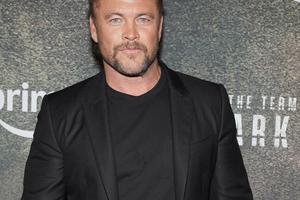
Luke Hemsworth relished playing a 'fundamentally terrible person' in The Terminal List
Luke Hemsworth had "so much fun" trying to make The Terminal List viewers like his "fundamentally terrible" character.
The Australian actor plays self-obsessed CIA agent turned mercenary Jules Landry in the second series of the Prime Video series, which also stars Chris Pratt, Riley Keough and Tom Hopper, and relished the opportunity to take on...Read more

Hollywood dad Sylvester Stallone happy for people to accuse him of nepotism
Sylvester Stallone has no problem with people thinking his daughter's involvement in Tulsa King is "nepotism", insisting "of course it is".
The actor's 24-year-old daughter Scarlet Rose plays a stablehand in her dad's Paramount+ series, with the role expanded for the fourth season, and the legendary star told USA Today that he has no issue with...Read more

Michael Gray, former teen idol and 'Shazam!' series star, dies at 75
LOS ANGELES — Michael Gray, who played the teenager who could turn into a superhero in the 1970s live-action Saturday morning children's TV series "Shazam!," has died. He was 75.
Gray died Oct. 16 from natural causes in Palm Desert, a representative for the actor announced Thursday. No other details were provided.
Based on the comic book ...Read more

Eddie Gillis, brother of Jack White, dies at 60 after cancer battle
DETROIT — Edward Gillis, brother of Detroit rocker Jack White, died Oct. 23 after a battle with cancer, White shared on social media on Friday. He was 60.
Gillis, who was the eighth of 10 kids, was the plant manager at White's Third Man Pressing plant in Detroit, which opened in 2017. He was married to his wife, Angie, and he had two children...Read more

Alexander Skarsgård loved 'tactile real experience' of becoming a Wicker man
Alexander Skarsgård loved having the "tactile real experience" of getting made up for Wicker.
The Swedish actor stars opposite Olivia Colman in the new movie, as a wicker husband constructed by a basket maker for a local spinster fisherwoman.
The role required an extensive amount of special effect prosthetics to be applied to Alexander before...Read more
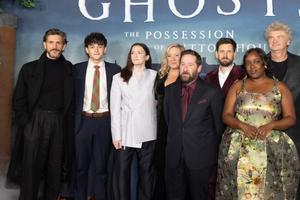
Ghosts co-creator can't rule out further Button House outings after movie spinoff
Ghosts: The Possession of Button House star Mathew Baynton has insisted he "genuinely believed" it when he said the franchise was done back in 2023.
Mathew co-created the British sitcom, which tells the story of a woman who can see the dead former residents of the home she inherited from her distant aunt, and also starred in it as late poet ...Read more

'H3 Podcast' cuts ties with co-host Ethan Klein amid wife's claims
LOS ANGELES — The "H3 Podcast" is cutting ties with host Ethan Klein after his wife and co-host, Hila Klein, accused him of having an affair for the past six months.
The crew agreed to not continue working with Ethan or profiting in any way, sharing, "We stand with Hila and will support her every step of the way," an "H3 Podcast" Instagram ...Read more

Noel Gallagher credits 'compromising' with brother Liam for making Oasis' reunion work
Noel Gallagher believes his willingness to "compromise" with brother Liam is one of the reasons Oasis' comeback ended up making the band "better than" they ever were.
A backstage fall out between the siblings led to the band's split back in 2009, with the brothers not speaking until they reconciled in 2025 for their Oasis Live '25 tour.
They'...Read more

Aimee Lou Wood loves 'intimacy' of voice acting
Aimee Lou Wood loves voice acting, because it feels like she's "walking around inside (her) own imagination".
The Sex Education star plays Lucy Westenra in Audible's new adaptation of Bram Stoker's Dracula, alongside a star-studded cast including Jonathan Bailey and Maggie Gyllenhaal.
Aimee opened up about the process of recording her lines ...Read more

Duchess of Sussex's dad calls child abuse image allegations a 'bunch of lies'
Thomas Markle Sr, the father of Meghan, Duchess of Sussex, has strenuously denied child sexual abuse image allegations against him, calling the claims a "bunch of lies".
It was reported earlier this week that Thomas, 82, is facing a police investigation in the Philippines after his son Thomas Markle Jr - Meghan's half-brother - alleged he had ...Read more

Salma Hayek's daughter doesn't want people to be able to 'keep track' of her on social media
Salma Hayek's daughter Valentina says growing up with parents in the limelight made her realize the importance of having rules around her own social media presence.
The 19-year-old is Salma's daughter with husband François-Henri Pinault, and has started making more appearances at high profile events herself, such as attending the McQueen show ...Read more

Neal Justin: 5 reasons everyone is gaga about 'You Can See Everything'
MINNEAPOLIS — Three-hour documentaries are usually restricted to art-house theaters attended by patrons who wouldn’t be caught dead at a “Fast and the Furious” flick.
So how in the world has “You Can See Everything,” an intimate profile of imprisoned businesswoman Elizabeth Holmes, become the most buzzed-about film of the season?
...Read more
Inside Entertainment News
Popular Stories
- Duchess of Sussex 'deeply distressed' by child abuse image allegations against her dad
- James Bond casting 'down to final screen tests for three actors'
- Shazam! star Michael Gray dies
- Sylvester Stallone discusses his role in 'Frisco King'
- Eric Dane thought ALS symptoms were result of 'texting too much'
Related Channels

Chess Puzzles
By Pete Tamburro

Horoscopes
By Holiday Mathis

Kurt Loder
By Kurt Loder

Stephanie Hayes
By Stephanie Hayes

Tracy Beckerman
By Tracy Beckerman
Comics