Entertainment
/ArcaMax
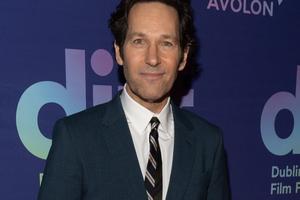
Paul Rudd and Nick Jonas share thoughts on what makes perfect wedding song
Paul Rudd and Nick Jonas have shared their thoughts on what makes the perfect wedding song while promoting their new musical comedy Power Ballad.
The actor, 56, and singer Nick, 33, spoke about their musical tastes during an interview with Entertainment Weekly at the premiere of their film Power Ballad at the SXSW Conference and Festivals, as ...Read more

Lady Gaga depicted having meltdown at 2010 Met Gala in new novel from ex-Vogue editor
Lady Gaga is depicted having a dramatic backstage moment at the 2010 Met Gala in a new novel written by a former Vogue editor.
Filipa Fino has written a book titled Best Dressed inspired by her time working at the fashion magazine Vogue, and even though the book includes fictionalised characters it is said to draw on real events and experiences...Read more
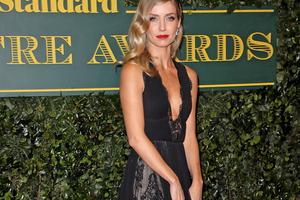
Annabelle Wallis 'expecting her first child with actor Sebastian Stan'
Annabelle Wallis is reportedly expecting her first child with actor Sebastian Stan.
The actress, 41, best known for her role as Grace Burgess in television drama Peaky Blinders, is said to be preparing to welcome her first child with Sebastian Stan, 43.
According to TMZ, the pair and the Peaky Blinders star are having their first baby together...Read more
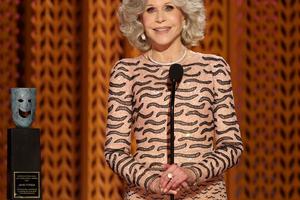
Jane Fonda wishes she had been the one to pay tribute to Robert Redford during the Oscars In Memoriam segment
Jane Fonda wishes she had been the one to pay tribute to Robert Redford during the In Memoriam segment at the 98th Academy Awards.
The actress, 88, spoke after the ceremony about the moment when Barbra Streisand appeared on stage to honour Robert Redford, who died on 16 September 2025 aged 89.
The tribute formed part of the annual In Memoriam ...Read more
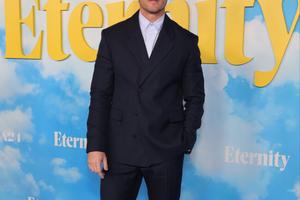
Miles Teller praises Michael B. Jordan after his Best Actor Oscar win
Miles Teller has praised Michael B. Jordan after the actor won the Best Actor award at the 2026 Academy Awards.
The actor, 39, shared a message of support for Michael B. Jordan, also 39, following the actor's win for Best Actor at the Oscars on Sunday (15.03.26) for his work in Sinners - marking his first nomination at the Academy Awards and ...Read more

Lewis Hamilton gushes over rumoured girlfriend Kim Kardashian after 2026 Vanity Fair Oscar Party
Lewis Hamilton has gushed over his rumoured girlfriend Kim Kardashian after she appeared at the 2026 Vanity Fair Oscar Party.
The Formula One racer, 41, commented on a series of photographs shared by reality TV star Kim, 45, following the annual bash held after the Academy Awards on Sunday (15,03.26) night.
Kim posted images showing her ...Read more
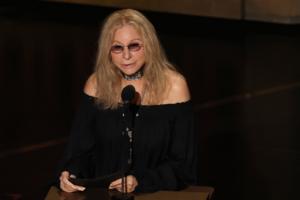
Jane Fonda challenges Streisand over Redford Oscars tribute
Barbra Streisand was tapped to honor stars including Robert Redford during the 98 Academy Awards’ In Memoriam segment, but Jane Fonda seems to feel she should’ve landed that role.
“I want to know how come Streisand was up there doing that for Redford?” she sportlingly asked Entertainment Tonight at an event held after the ceremony.
...Read more
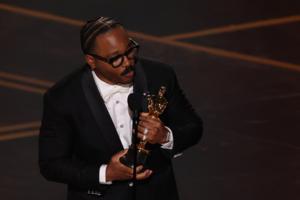
'Sinners' and Ryan Coogler won something deeper
LOS ANGELES — Put a cold-blooded spin on it and “Sinners” is now the biggest loser in Oscars history, ceding 12 of its 16 record-breaking nominations to other films. But Ryan Coogler still won the night.
In another year, I might have said “Sinners” lost to “rivals” or “competitors.” But on Sunday, anyone with an ego got ...Read more
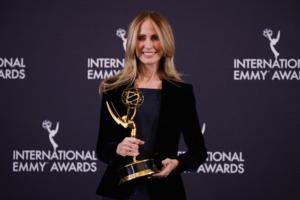
Disney's Dana Walden sets leadership team; Bergman remains film studios chief
LOS ANGELES — Walt Disney Co.’ incoming president and chief creative officer, Dana Walden, has unveiled her leadership team, which includes several familiar faces from the company’s film, television and marketing units.
Walden will become Disney’s first woman president on Wednesday. She will report to Josh D’Amaro, who will succeed ...Read more

Wendi McLendon-Covey was absent from Bridesmaids Oscars reunion due to plastic surgery recovery
Wendi McLendon-Covey was absent from the Bridesmaids reunion at the 98th Academy Awards as she was recovering from plastic surgery.
The actress, 56, appeared in the 2011 comedy as irritated wife Rita, did not attend Sunday (15.03.26) night's ceremony when several of her former co-stars reunited on stage to present awards during the Oscars ...Read more
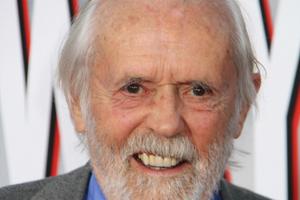
Back to the Future III actor Matt Clark dead aged 89
Matt Clark, the veteran Hollywood character actor who appeared in Back to the Future: Part III and worked alongside some of the biggest stars of the western genre, has died at the age of 89.
The actor built a career across film and television spanning several decades, appearing in numerous westerns and character roles alongside actors including...Read more

Model blasts Timothée Chalamet after their 'three-year romance'
A model who says she had a three-year romance with Timothée Chalamet has said him starting a relationship with Kylie Jenner shortly after their alleged relationship was "disrespectful".
Sarah Tena, 32, said she had a relationship with actor Timothée, 30, between 2020 and 2023.
Timothée has been in a relationship with Kylie, 28, the ...Read more
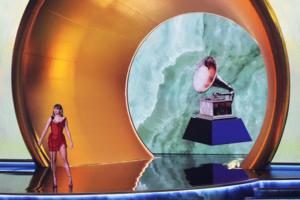
Music industry earned a record $11.5 billion in the US last year, helped by vinyl and Taylor Swift
LOS ANGELES — The recording industry reached a milestone of $11.5 billion in U.S. sales last year, propelled by the continued surge in vinyl records and the enduring appeal of Taylor Swift.
Vinyl record sales accounted for more than a billion in U.S. sales in 2025, up more than 9%, according to the Recording Industry Association of America’...Read more
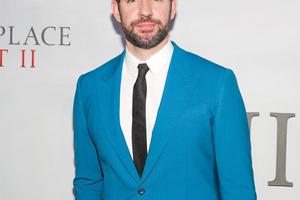
John Krasinski confirms cast for A Quiet Place: Part III
John Krasinski has confirmed the cast for A Quiet Place: Part III.
The director revealed Jack O'Connell, Jason Clarke and Katy O'Brian will join returning stars Emily Blunt, Cillian Murphy, Millicent Simmonds and Noah Jupe in the next instalment of his hit horror franchise.
John, 46, who directed and co-wrote the first two films in the A Quiet...Read more
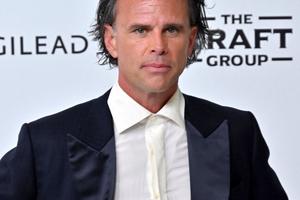
Walton Goggins cast alongside Marion Cotillard in Biblical movie Job
Walton Goggins has been cast to star alongside Marion Cotillard in the Biblical movie Job.
The 54-year-old Emmy and Golden Globe nominee known for roles in The White Lotus and Fallout, 54, will lead the film opposite Marion Cotillard, 50, the Academy Award-winning actress recognised for La Vie en Rose and The Morning Show. In the film ...Read more

Paramount's Jeff Shell strikes back against Vegas gambler
LOS ANGELES — Paramount President Jeff Shell has fired back in his ugly feud with a Las Vegas gambler and FBI informant, contending that Robert "R.J." Cipriani has fictionalized the two men's dealings, then spread "false and salacious lies to extract a massive payday."
Shell filed a lawsuit one week after the high-roller had sued Shell in Los...Read more
REVIEW: 'Born to Bowl' follows the pursuit of glory as bowling struggles to survive
LOS ANGELES — I don't have statistics, but just from the disappearance of bowling alleys from the local landscape, most recently Santa Monica's midcentury Pico Bowl, with its fine coffee shop, I'd guess that the sport is not the ubiquitous American pastime it once was. Still, many if not most of us will have gone bowling at least once in our ...Read more

Why Wendi McLendon-Covey missed Oscars 'Bridesmaids' reunion
Fans were concerned when Wendi McLendon-Covey was the only “bridesmaid” missing from the 2011 comedy’s onstage reunion at the Oscars on Sunday, but she explained later that her appearance wouldn’t have been pretty.
“In response to some of the dms I’m getting: I had a neck lift last week because I’m tired of looking like a melting ...Read more
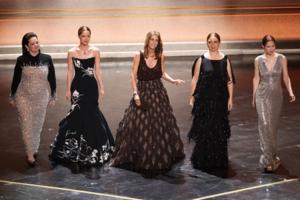
Wendi McLendon-Covey on why she missed the 'Bridesmaids' reunion: 'No drama. Everything is fine'
LOS ANGELES — Wendi McLendon-Covey shared a message to everybody wondering why she missed the “Bridesmaids” reunion at the 2026 Oscars: Don’t worry, she’s fine.
“I had a neck lift last week because I’m tired of looking like a melting candle,” McLendon-Covey wrote in an Instagram post Sunday. “So I had to skip the Academy ...Read more
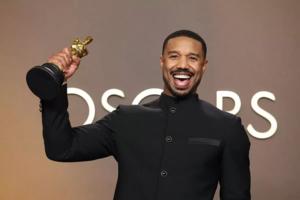
Michael B. Jordan pops in and then out of an In-N-Out after lead actor Oscars win
LOS ANGELES — Michael B. Jordan was all about sharing the love Sunday night, giving unsuspecting fans a thrill when he swung by an In-N-Out Burger with his lead actor Oscar after the Academy Awards.
And we’re not talking the In-N-Out typically served to the beautiful people at the Vanity Fair Oscar Party. Nope. Jordan showed up at an actual...Read more
Inside Entertainment News
Popular Stories
- Oscars 2026: Best Picture victor One Battle After Another leads winners list
- KPop Demon Hunters team react after getting 'cut off' during Oscars speech
- 2026 Academy Awards highs and lows
- Nathan Fillion makes plea to Firefly fans to help revival land 'a home'
- Princess Catherine subtly marks Mother's Day via foundation's Instagram after 2024 Photoshop incident
Related Channels
Chess Puzzles
By Pete Tamburro

Horoscopes
By Holiday Mathis
Kurt Loder
By Kurt Loder
Stephanie Hayes
By Stephanie Hayes

Tracy Beckerman
By Tracy Beckerman
Comics