Econometer: Did San Diego go too far with Comic-Con advertising fines this year?
Published in Business News
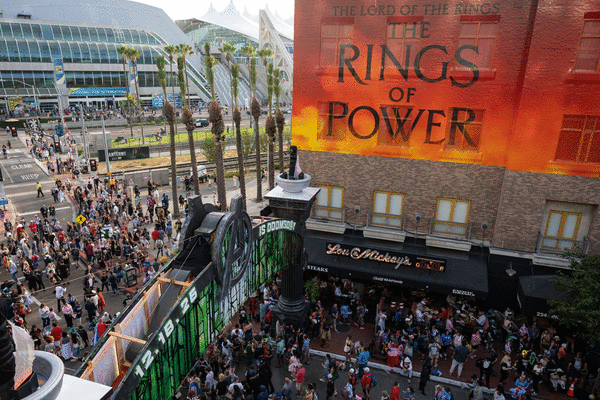
San Diego fined advertisers more than $200,000 during this year’s Comic-Con, the most in its history of code enforcement during the event.
The majority of fines, $160,000, were directed at Marvel Studios for covering the Gaslamp Quarter archway. Yet the city also fined hotels and businesses $48,500 for building wraps, more than double last year’s Comic-Con.
No one at the city has offered an explanation for why building wrap fines were more heavily enforced. While the wraps are illegal, the city typically maintains a type of status quo: Small enough fines to keep anti-advertising groups happy while not causing much of a fuss with advertisers and studios.
San Diego officials have cited safety concerns as to why Marvel was fined. However, there was an advertisement placed on the archway, albeit smaller, last year that did not get a fine.
Social media discourse over the fines was mainly critical of the city, with some suggesting this would leave a bad taste in the mouths of studios that spent thousands of dollars at the event. However, some felt it made sense for the city to get more money to fund things.
Question: Did San Diego go too far with Comic-Con advertising fines this year?
Economists
Ray Major, economist
YES: Comic-Con is a San Diego institution and advertising and wrapping buildings is part of the fun and should be encouraged and supported by the city council. This is just another money grab from the same people who collected millions in fines for not cramping your wheels on 3% grades and for parking too close to a street corner. That’s while closing bathrooms at Mission Bay park to save money. Free money — Go figure.
Alan Gin, University of San Diego
NO: The covering of the Gaslamp arch by Marvel was more serious and dangerous than what DreamWorks did last year because it was a lot bigger. They were given a warning against doing it ahead of time, but they did it anyway. If the law is not enforced, it encourages people to keep violating it. As for the hotel fines, they are in line with what the law indicates. If more hotels were fined, that is good as it eliminates any questions about selective enforcement.
James Hamilton, University of California-San Diego
NO: At least, not for the biggest fine, which was for an ad on the Gaslamp Archway. The archway is city property, and the advertisers were specifically told that this was not allowed and that it raised a safety hazard. But for the other fines, I would counsel the city to lighten up. Advertisements that are displayed only during the week of Comic-Con add to the festive atmosphere and ultimately benefit the city.
Norm Miller, University of San Diego
YES: If the Union‑Tribune can report that Comic-Con once again transformed downtown into a swirling vortex of capes, crowds and questionable decision‑making, then surely the city can survive a few buildings dressing up for the occasion. We let adults wander the streets in costumes that look like they were assembled from a drunken raid on Michaels, but apparently a neighborhood business hanging a banner an inch too big is where we draw the line.
David Ely, San Diego State University
NO: When an advertiser ignores warnings by officials not to proceed with a display because of safety concerns, the city needs to protect its credibility by charging a substantial fine. Failing to take meaningful enforcement action would likely lead to higher rates of violations in the future. Moreover, an unobstructed Gaslamp Quarter archway would have appeared in photos and videos shared by attendees and served to promote the city. This opportunity was lost because of the wrap.
Caroline Freund, UC San Diego School of Global Policy and Strategy
NO: The fines are the price of advertising, and companies willing to pay were fairly warned. A better system would set the price transparently through a fixed permit fee or an auction of prime downtown space during Comic-Con. But in its absence, charging what the market will bear is not overreach. If advertisers are lining up to pay, San Diego is right to collect and put the funds to public use.
Kelly Cunningham, San Diego Institute for Economic Research
NO: The amount of the fines seems commensurate with the costs the city could charge for licensing or allowing the advertising. Studios spend considerable amounts to advertise and promote films, so the amount for paying fines is an expense within their budgets of promoting their films. There may be a certain prestige or notoriety in the advertising being “outside the law.” Whether sanctioned, or not, the value of the advertising seems well worth the costs for studios
Executives
Austin Neudecker, Weave Growth
NO: Rules should be enforced. Either create advertising rules that accommodate building wraps and similar displays, or consistently enforce the existing restrictions. Enforcement must be predictable and evenhanded. If advertising creates legitimate safety or aesthetic concerns, establish clear limits and penalties in advance rather than selectively escalating fines. Comic-Con generates enormous economic value for San Diego, but that does not exempt advertisers from rules everyone else is expected to follow.
Jamie Moraga, Franklin Revere
YES: This is short-term thinking with long-term consequences. Building wraps enhance Comic-Con’s creative atmosphere, and the annual event attracts more than 135,000 attendees and generates over $160 million in positive economic impact. As San Diego faces a budget shortfall, city leaders should make internal cuts rather than seek quick revenue that could harm this major economic event. Excessive fines could discourage studios and advertisers, diminish the experience, and give Comic-Con another reason to consider a more welcoming city after its agreement expires in 2030.
Chris Van Gorder, Scripps Health
NO: The law is the law. Infractions and some violations can be managed at the discretion of the officer, agency, or city in this case, and the city apparently decided to enforce it strictly this year. It’s no surprise the city would want to maximize fines and penalties, given its financial challenges. But I would urge caution — Comic-Con is good for the city financially and some leniency might be appropriate, given safety is not an issue.
Phil Blair, Manpower
NO: The city followed the law. However, the rules need to be changed. As San Diego competes for more large-scale events (thank you, Tourism Authority), like Comic-Con and other conventions, we need to be more flexible in short event signage. There is an income source for the city to charge hefty fees to allow a variety of banners before and during large events.
Gary London, London Group Realty Advisors
NO: While the temporary wraps are visually fun and add to the Comic-Con experience, the city should charge so citizens may benefit from the income generated, especially now in fiscally strapped times. But the city should reframe the revenue from “fines” to a permitting “fee” so that advertisers feel welcomed, albeit at a cost. Also, increase the fee levels, as these fees are a rounding error for the city, and the advertisers should pay more.
Bob Rauch, R.A. Rauch & Associates
NO: While San Diego is aggressively seeking revenue, this case is straightforward: the city enforced a strengthened ordinance against a Marvel contractor that knowingly ignored documented safety instructions. The fines were high because the law allowed them to be high and because the violation continued for six days. If anything, this year’s Comic‑Con shows San Diego signaling that large‑scale guerrilla advertising stunts are no longer worth the risk. The hotel fines should be adjusted down.
Mark Kersey, San Diego County Taxpayers Association
NO: However, what the city needs is a permit system for Comic-Con building and sign wraps that would provide a degree of certainty to both advertisers and San Diegans. Until that happens, these fines will effectively serve as de facto permit payments, which is less than ideal from the standpoint of implementation and enforcement.
©2026 The San Diego Union-Tribune. Visit sandiegouniontribune.com. Distributed by Tribune Content Agency, LLC.










Comments