Chicago Mayor Johnson pressured by anti-data center activists at rally
Published in Business News
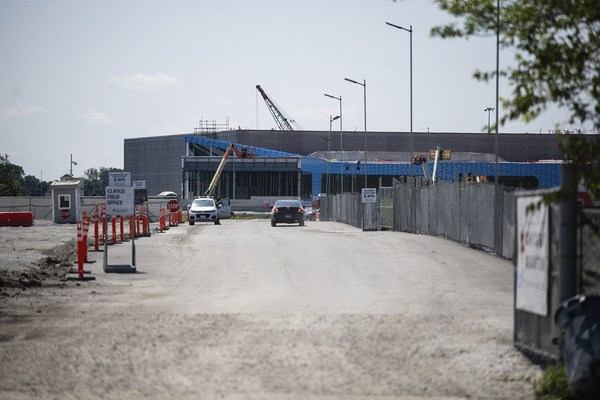
CHICAGO — Mayor Brandon Johnson faced boos from a crowd of anti-data center activists on the South Side Saturday after not disavowing the massive “Quantum Shore” development, even as he said it will not include a data center.
Fresh off an executive order more strictly regulating the construction of data centers in Chicago, Johnson appeared at the “Community Over Quantum” event at a Southeast Side school. Asked whether he would oppose the Quantum Shore, which he has repeatedly claimed credit for sparking, Johnson said his “values have not changed,” but “the information is stronger.”
“I’m prepared to commit all of my resources… to work with this coalition to do what is legally possible to make sure that the development that is happening is not happening at the expense of working people,” he said.
Johnson’s decision to not condemn the project inflamed the crowd, illustrating the thorny politics surrounding increasingly unpopular data centers and advanced computing technology — and the rising pressure Johnson is set to face as the major development at the U.S. Steel South Works site moves forward.
“Was that a satisfactory answer?” Lia Terrell, the Southside Together member who served as emcee, asked the crowd as Johnson finished.
“No!” the crowd shouted back.
“Not at all,” Terrell agreed. “He made his opinion very clear. The reality is that we don’t have the mayor’s support. The data center executive order is not the same thing as stopping the quantum facility.”
The tense exchange was just the latest incident in an ongoing push by South Side activists to secure environmental protections and other key concessions as construction moves forward on the 440-acre Quantum Shore site’s first phase, the Illinois Quantum & Microelectric Park.
That portion of the potentially massive project includes anchor tenants IBM and PsiQuantum, a company seeking to build the world’s first commercially viable quantum computer. The state has pledged around $500 million in public funding for the development of the site.
Developer Related Digital announced in March 2025 the project would include a one-gigawatt “hyperscale” data center on the site’s north end. But after Johnson told the crowd there would be no data center at the site, Related Digital did not respond Monday to questions about its fate.
The broader project, championed foremost by Gov. JB Pritzker, won high praise from Johnson when it was first announced in July 2024. The mayor said then that it would solidify the city as “a global hub for technological advancement.”
“This monumental project will revolutionize entire industries from medicine to clean energy technology, creating countless jobs and driving economic growth in the process,” Johnson said at the time.
Officials estimated the project could bring in $20 billion in economic impact and thousands of jobs. Pritzker, who was slammed by activists on stage for his role facilitating the project, did not attend the Saturday “Community Over Quantum” event, and a spokesperson for the governor did not respond to a request for comment Monday morning.
As Johnson took the stage Saturday, the crowd chanted for him to shut down the Quantum Center development and “do it now.” In response, the mayor pointed to the executive order setting new data center regulations that he signed last Tuesday.
The order directs his administration to toughen air pollution evaluations, add noise restrictions and expand city bureaucrats’ authority to review water and electricity usage at data center facilities. He also called on the City Council to pass a moratorium on all new data center construction.
The mayor mentioned his moratorium call to the crowd and said he received a letter from the project’s developers that they will not proceed with a data center at the campus.
That letter, sent Friday to the mayor by Illinois Quantum & Microelectrics Parks CEO Harley Johnson, shared with the Tribune by the mayor’s administration, thanked the mayor for his support of the project and sought to mark the differences between quantum computers and data centers.
Quantum computer systems are more energy efficient and less water intensive than data centers, the CEO wrote. “The IQMP is not a data center, and it will not house one on its campus,” the letter said.
Johnson spokesperson Allison Novelo said in a statement Monday the mayor had been invited to the event and led the effort to secure a commitment from developers that a data center not be built. Novelo acknowledged that residents still have concerns about gentrification and environmental harms.
“Those concerns deserve to be heard and considered, and the intensity with which residents expressed them underscores why the Mayor believed it was important to be in the room, listening directly to the people who will live with the consequences of this development,” she wrote.
Southside Together organizer Dixon Romeo said Monday the event was hosted alongside a coalition of activist groups and called it “positive” that Johnson said the development would not include a data center.
“Which isn’t fully our demand and what we want, but is progress towards it as we see it,” Romeo said.
Romeo said there was “bottled up” anger from attendees and “a lot of tension,” but argued the exchange was a healthy interaction between the progressive mayor and activists. In a perfect world, the meeting would have been smoother, “but we don’t live in a perfect world,” he said.
“A lot of folks in the neighborhood are really, really, really pissed off about year after year developments coming in and they don’t have a say in it,” he said. “How it came off in the meeting I think doesn’t reflect the nuance of that, but I think the reality is today the community has more protections in place than it did last week.”
_____
©2026 Chicago Tribune. Visit at chicagotribune.com. Distributed by Tribune Content Agency, LLC.







Comments