Amazon is closing its Fresh grocery, Go convenience stores
Published in Business News
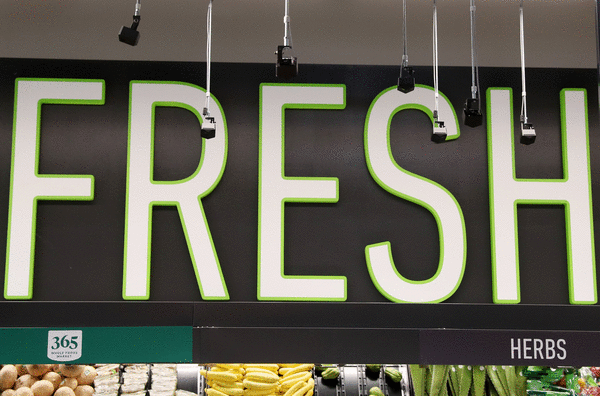
Amazon.com Inc. is shuttering its Amazon-branded grocery stores and automated grab-and-go markets, eliminating two centerpieces of its push into physical retail.
Amazon Fresh and Amazon Go stores will close, the company said in a blog post on Tuesday, with some locations converted into Whole Foods Market stores.
“While we’ve seen encouraging signals in our Amazon-branded physical grocery stores, we haven’t yet created a truly distinctive customer experience with the right economic model needed for large-scale expansion,” Amazon said.
The moves mark the e-commerce giant’s latest retreat from its brick-and-mortar retail efforts. Since the surprise opening of a physical bookstore in 2015, Amazon has tried and failed to establish a foothold under its own brand in categories from groceries to fashion, often with technological flourishes such as digital price tags or novel checkout methods.
Over the last few years, the company has backed away from the bookstores, an eclectic kitchen goods, toys and electronics store called Amazon 4-Star, electronics kiosks in shopping malls and a short-lived clothing storefront.
Amazon on Tuesday said it would continue to invest in groceries sold both online and offline. That includes an ongoing effort to stock more produce and perishables in Amazon’s same-day delivery warehouses and at more Whole Foods stores, which comprise more than 550 locations.
Amazon currently operates 14 Go stores, which use cameras to track what people grab off the shelves, and 58 Amazon Fresh grocery stores, according to its website. The last day of operation for most of those stores will be Sunday, a spokesperson said, except in California, where they’ll stay open longer to comply with state requirements for advance notice of closures.
The moves mean thousands of hourly workers in the stores will lose their jobs. Cuts to Amazon’s corporate workforce will likely involve dozens of people, according to a person familiar with the matter, who asked for anonymity because the information was confidential. The company says it will work to help employees find other jobs at Amazon, including at Whole Foods stores or in its logistics network. Amazon’s corporate ranks were already bracing for a round of layoffs expected as soon as this week.
“The main reason behind the decision is that neither Fresh nor Go stores were delivering the sales needed to make them fully economic,” Neil Saunders, a retail analyst with GlobalData, said in emailed comments. “Nor were they producing growth trajectories that might convincingly reverse that position.”
Still, the company says it’s a top-three grocer in the U.S., with more than $150 billion in gross sales. Much of that volume is shelf-stable items and consumables. After buying Whole Foods in 2017, Amazon quickly added home delivery from the organic grocer’s stores, but the company has struggled to find the right formula for stocking and delivering perishable goods from its massive network of warehouses.
Sales of perishables for same-day delivery through that network grew by 40 times in the last yeara s the company stored groceries in more locations and nudged shoppers to tack apples or bananas onto their orders, Amazon said.
Amazon Go, equipped with the cashierless Just Walk Out system, was heralded as a marvel when the first location opened to the public at Amazon’s Seattle headquarters building in 2018. Efforts to deploy the expensive array of ceiling-mounted cameras and sophisticated software to full-sized Fresh and Whole Foods stores were a bust.
While the Amazon Go convenience store chain never came close to its creators’ hopes for a Starbucks-like ubiquity, it proved a testing ground for technology that Amazon primarily sells as a service, including to sports and entertainment venues. The cashierless technology is now running in more than 360 third-party locations, Amazon said.
The company also signaled that it would continue to test new store configurations. That includes locations that combine Amazon pickup counters with Whole Foods stores, an effort to sell items forbidden from the chain by ingredient standards. Amazon will also continue to pursue a big-box format, including a 229,000-square-foot supercenter in development near Chicago.
“In our view, in one way or another, Amazon’s physical grocery mantra is: ‘We’ll be back,’” Saunders said.
(With assistance from Spencer Soper and Natalie Lung.)
©2026 Bloomberg L.P. Visit bloomberg.com. Distributed by Tribune Content Agency, LLC.










Comments