
Environmental Nutrition: The heart of the artichoke
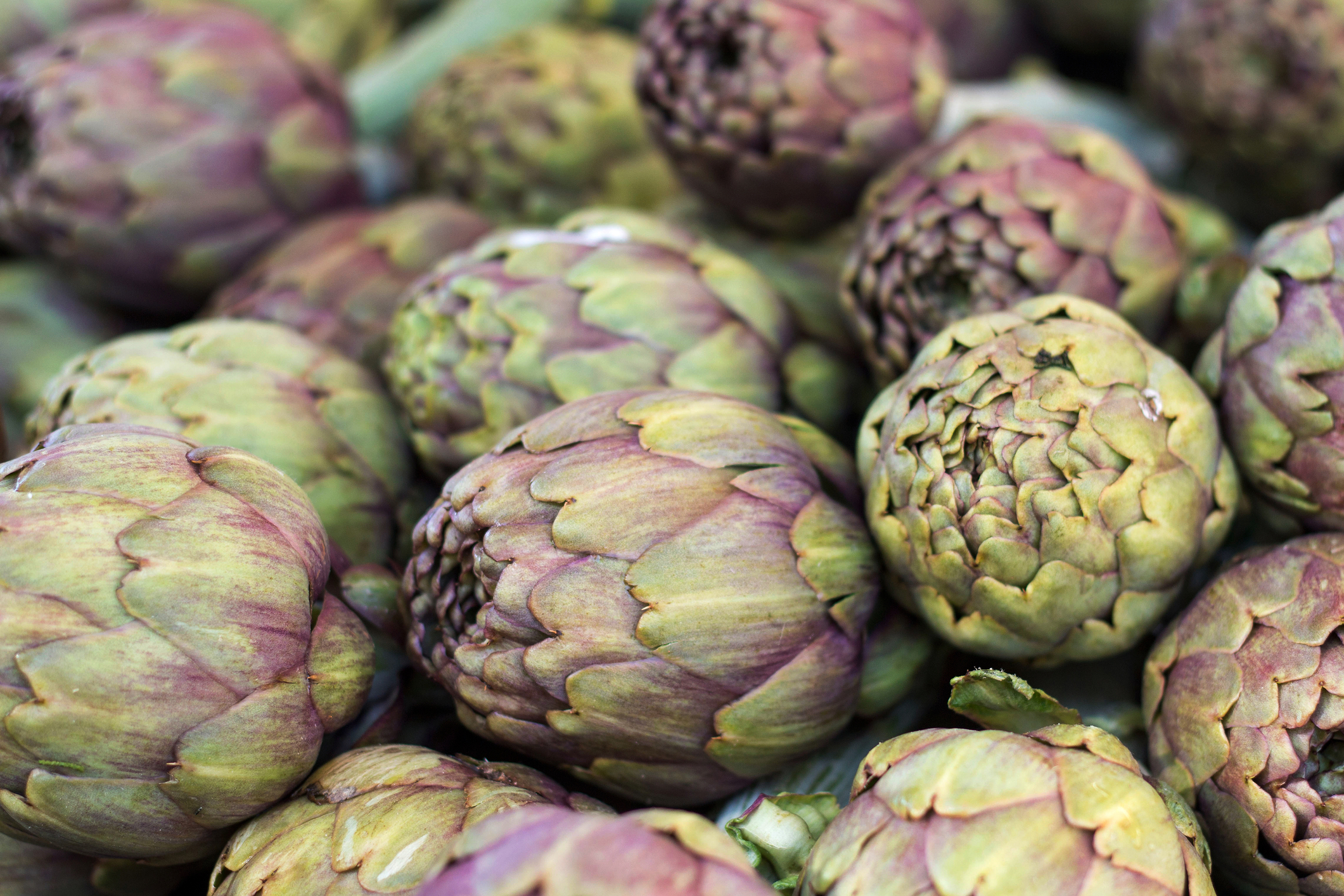
True to its appearance, the artichoke has a bit of a prickly lore.
The folklore
The Ancient Greeks credit Zeus with the creation of the artichoke. As punishment for the deception of his mortal seductress-turned-goddess, he transformed her into the artichoke plant, with spiky petals guarding her resilient heart. The artichoke dates back to the Mediterranean, where Greeks and Romans began cultivating it more than 5,000 years ago. Considered a delicacy, the artichoke was used as a diuretic, a breath freshener, and a deodorant!
The facts
The globe artichoke, cynara scolymus, also known as the French artichoke and the green artichoke, is a member of the thistle group in the sunflower family, not to be confused with the Jerusalem artichoke, a form of daisy whose root (a tuber) is eaten. Grown mostly along California’s coast, the silver-green plant produces flower buds which we recognize as artichokes.
At the base of each pointed “leaf” or bract is the edible flesh, along with the soft center known as the heart. Buds left on the plant open into purple-blue flowers. Artichokes are heavy in nutrients, but not in calories. One medium artichoke packs 16 nutrients in just 60 calories and is a good source of fiber, vitamin C, folate, magnesium, and potassium.
The findings
A rich source of polyphenols, plant compounds known for antioxidant and anti-inflammatory properties, artichokes have been studied for their potential role in health benefits. Their antioxidant activity has been associated with protecting heart health, liver health, and digestive health (Nutrients, 2024). According to a study in Complementary Therapies in Medicine (2021), artichokes may reduce blood pressure in patients with hypertension.
The finer points
Choose artichokes that are heavy and firm with healthy green, closed center leaves. Avoid those with brown or black leaf tips. After rinsing, cut an inch off the top of the artichoke and a quarter inch from the stem. Using scissors to trim the points off the leaves is optional before you gently spread them apart to prepare for seasoning and cooking. Artichokes are easily steamed, boiled, baked, or microwaved. Lemon juice, garlic, and herbs are typically used as seasoning during cooking. They are done when leaves pull off easily.
(Environmental Nutrition is the award-winning independent newsletter written by nutrition experts dedicated to providing readers up-to-date, accurate information about health and nutrition in clear, concise English. For more information, visit www.environmentalnutrition.com.)
©2026 Belvoir Media Group, LLC. Distributed by Tribune Content Agency, LLC.








Comments