
My Pet World: Cats on counters and dogs home alone — When pet owners worry
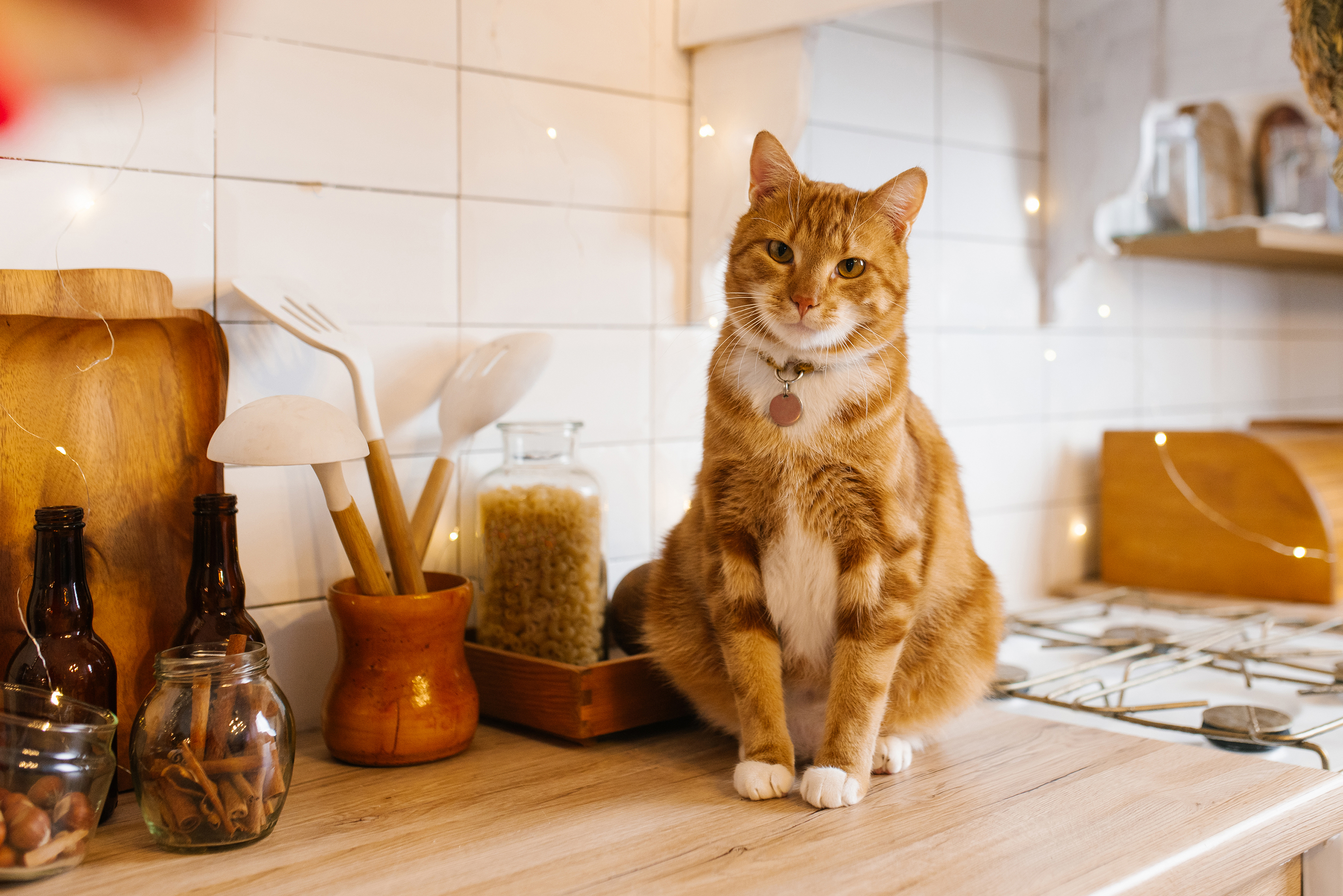


Dear Cathy, We adopted an orange tabby, Wyatt, seven years ago and have been fighting all that time to keep him off our counters and tables. Initially, we tried things like spraying water at him when he jumped on counters and tables, but it had no effect, and nothing else we've tried has worked. I find it very unsanitary and upsetting to have a cat walking on our food prep/serving surfaces. Can you offer any advice to stop this behavior?
— Eileen, Wheaton, Illinois
Dear Eileen,
From Wyatt’s perspective, the counter is a pretty wonderful place to be. It's high, offers a great view of the household, and occasionally rewards him with food, crumbs, or interesting smells.
Since spraying water didn't work – and I'm not surprised: Many quickly learn that they can stay off the counter when you're watching and hop right back up when you're not. So, I would focus on making the counters less rewarding while giving Wyatt better alternatives.
First, make sure he has access to acceptable high places such as a tall cat tree, window perch, or shelving designed for cats. Cats naturally like to observe their territory from above, so providing an approved lookout spot can reduce their interest in the counters. Leave some high-value treats or rub catnip on his furniture to encourage Wyatt to use it.
Second, consider using humane deterrents that work even when you're not in the room. Double-sided pet training tape designed for household surfaces or a motion-activated air sprayer can make the counter less appealing without requiring you to constantly police the behavior. (A motion-activated spray cat deterrent, such as the “PetSafe SSSCAT” or similar battery-operated systems, uses a movement sensor to automatically emit a quick, odorless burst of air when a cat approaches. The goal is for Wyatt to decide the counter isn't worth the effort, not for him to associate the correction with you.
Finally, after seven years, this behavior is probably part of Wyatt's daily routine. While you may be able to reduce it significantly, many cats continue to visit counters when no one is around. For that reason, I encourage you to focus on management as well: keep food put away, wipe down surfaces before meal preparation, and remember that cats are going to be cats.
Counter surfing is usually more frustrating than dangerous, although cats can be injured by jumping onto a hot stove or encountering other kitchen hazards, such as knives left on the counter. From the beginning, cats should learn that kitchen counters are not a fun place to be. For young cats, a simple interruption, like a hand clap – can sometimes discourage those first attempts.
Just as important, however, is providing acceptable alternatives. When cats have appropriate places to climb and explore, you can often reduce counter surfing, even if you never eliminate it entirely.
Dear Cathy,
I have a seven-year-old Golden Retriever who has rarely spent a night alone. Since I retired, she has been with me most of the time. When I travel, I typically hire a pet sitter who stays with her during the day and overnight. I am planning a two-night trip in August, but this time my pet sitter has a prior commitment and cannot stay overnight. She will still visit several times throughout the day, take my dog for her final walk around 10 p.m., and return around 8 a.m. the next morning.
My concern is that my dog has never been left alone overnight before. People tell me I am being neurotic and she will be fine, but I'm still nervous about it.
Do you think she'll adjust, or is there anything I should do to prepare her for the change?
— Jeff, Holtsville, New York
Dear Jeff,
I don't think you're being neurotic at all. I think you're being thoughtful.
The good news is that your dog will still have a familiar sitter visiting throughout the day, a late-night walk, and a morning visit. While she may be a little confused by the change in routine at first, most dogs, if they don’t suffer from separation anxiety, adjust surprisingly well when they're in their own homes surrounded by familiar sights, sounds, and smells. So, I think she will be fine.
Leave her with her usual bedding, water, and perhaps some soft music or a television for background noise. If she's comfortable being alone during the day and doesn't struggle with separation anxiety, she'll likely spend most of the night doing exactly what dogs do best – sleeping.
My guess? You'll spend more time worrying about her than she will spend worrying about you. But that’s OK. That’s what great pet parents do.
_____
_____
========
(Cathy M. Rosenthal is a longtime animal advocate, author, columnist and pet expert who has more than 25 years in the animal welfare field. Send your pet questions, stories and tips to cathy@petpundit.com. Please include your name, city, and state. You can follow her @cathymrosenthal.)
©2026 Tribune Content Agency, LLC.
(c) 2026 DISTRIBUTED BY TRIBUNE MEDIA SERVICES, INC.






Comments