
My Pet World: When pets send mixed signals — Cat biting and submissive peeing explained
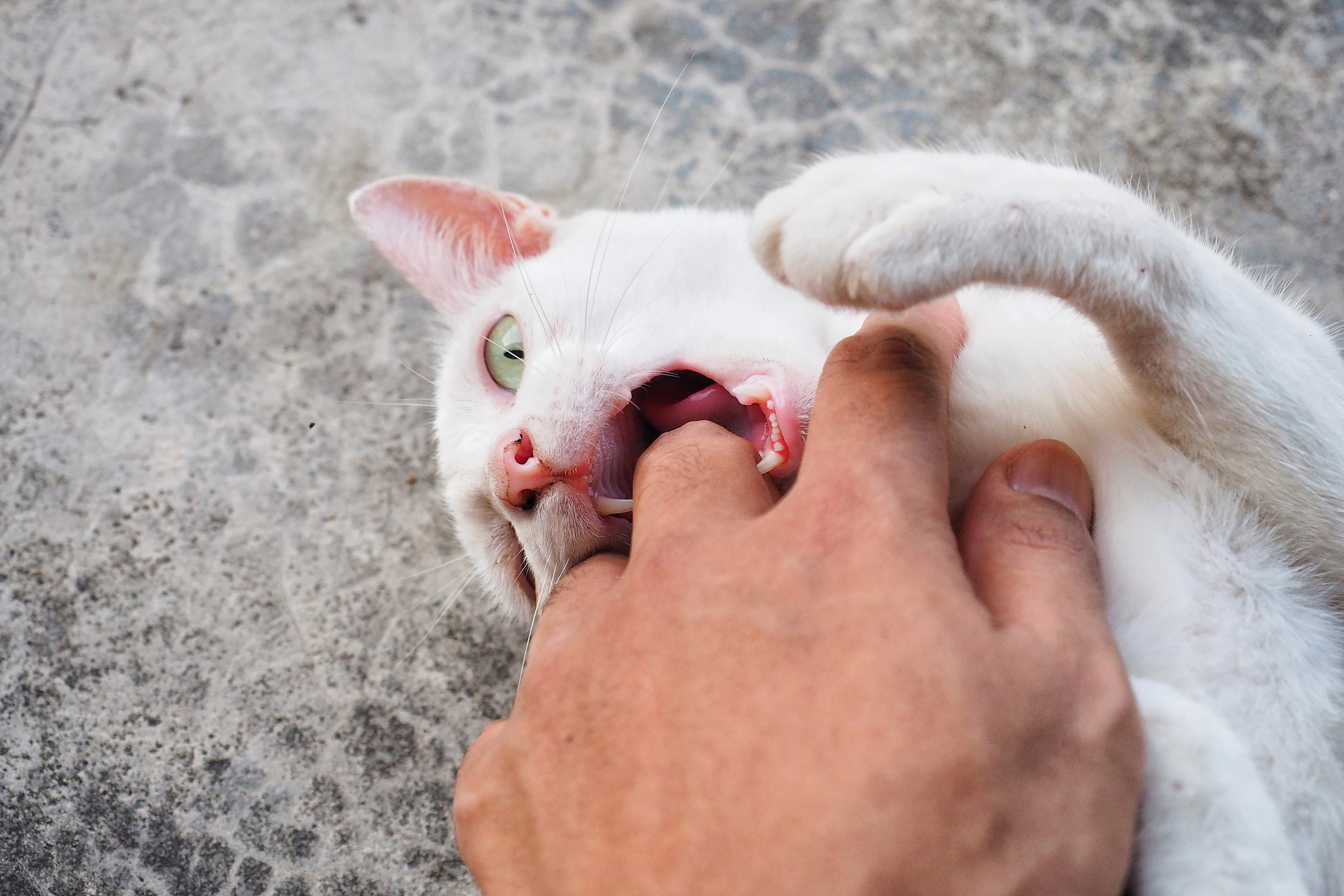



Dear Cathy, I just read your article in the Chicago Tribune, and I hope that you can help me. My male cat is two years old, and I have had him since he was six weeks old. I am a longtime volunteer at an animal shelter and have owned cats all my life, so I have a good understanding of cats, up until this guy.
I know my cat Dudley loves me. He follows me around all day, sleeps with me every night, and always wants to play. I try to play with him throughout the day to keep him from getting bored. My issue is that he attacks me and bites. Sometimes out of nowhere. I can be petting him one minute, and then his ears go back, and he attacks. His bites are very intentional and deep. I love this boy and am very committed to figuring this out. Any suggestions?
– Marilyn, Orland Park, Illinois.
Dear Marilyn,
Since you are the only one Dudley bites, the behavior is likely connected to how the two of you are interacting. Some cats become overstimulated very quickly, especially highly social or energetic cats that crave interaction but struggle with regulating it. What often looks like an “out of nowhere” bite is usually a cat escalating after subtle warning signs have been missed.
Watch closely for cues such as tail twitching, skin rippling, dilated pupils, or ears turning slightly back or flat. Those are signs Dudley is reaching his limit, and it’s time to stop petting before he escalates to a bite. Many cats have a surprisingly low tolerance threshold, and once you learn Dudley’s “sweet spot,” you can keep interactions well within it.
Try keeping petting sessions short and predictable and always let Dudley initiate further contact. It also helps to focus on slower, gentler strokes in areas many cats prefer, such as under the chin or along the cheeks, rather than prolonged full-body petting. If he begins to look overstimulated, calmly pause and give him space rather than continuing the interaction.
I would also encourage you to engage Dudley more with interactive toys instead of using your hands during play. Wand toys, toss toys, puzzle feeders, and short, active play sessions help direct that energy appropriately and teach him that hands are for gentle affection, not grabbing or biting. Sometimes cats that are highly stimulated or playful begin treating human hands as part of the game.
Over time, most cats improve significantly. But as owners, we also have to respect their limits. I once had a cat I could not stroke more than 10 times without her biting, so she only got nine strokes when sitting in my lap. It’s simply a matter of learning and respecting that threshold. So, start experimenting and see where Dudley’s limit may be.
Dear Cathy,
My son brought home a rescue pup from a shelter almost two years ago. She is a large dog and extremely smart, but when excited meeting new people, she pees. She also pees when we groom, play with, or even talk to her in her crate. It seems like a mix of nerves and excitement. Any suggestions?
– Audrey, Richmond, Virginia
Dear Audrey,
If you have ruled out a health problem, what you are describing is submissive or excitement urination. Given that your dog does this when meeting people, during grooming, play, and even when being spoken to in her crate, it sounds like she has a lower threshold for stimulation. In other words, she gets overwhelmed more easily, whether by excitement, attention, or a bit of nervousness. It’s not uncommon, especially in sensitive dogs. Submissive urination is often a way of saying, “I mean no harm.”
When greeting her, whether it’s you, family, or friends, keep things low-key. Avoid leaning over her, making direct eye contact, or using an excited voice. Approach from the side, stay relaxed, and let her come to you. Then offer calm attention. Ask visitors to do the same. And one practical tip: Take her outside before situations where you know she may get excited, such as before guests arrive or before playtime.
For grooming or handling, keep sessions short and pair them with small treats. The goal is to help her associate these moments with feeling safe and steady, not overstimulated.
Since she also urinates in her crate when spoken to, avoid engaging with her while she’s inside it. Wait until she’s out and relaxed – and let her come to you as much as possible.
Some dogs outgrow this behavior as their confidence improves.
========
(Cathy M. Rosenthal is a longtime animal advocate, author, columnist and pet expert who has more than 25 years in the animal welfare field. Send your pet questions, stories and tips to cathy@petpundit.com. Please include your name, city, and state. You can follow her @cathymrosenthal.)
©2026 Tribune Content Agency, LLC.
(c) 2026 DISTRIBUTED BY TRIBUNE MEDIA SERVICES, INC.







Comments