
My Pet World: Cleaning carpets, solving behavior problems, and retraining husbands
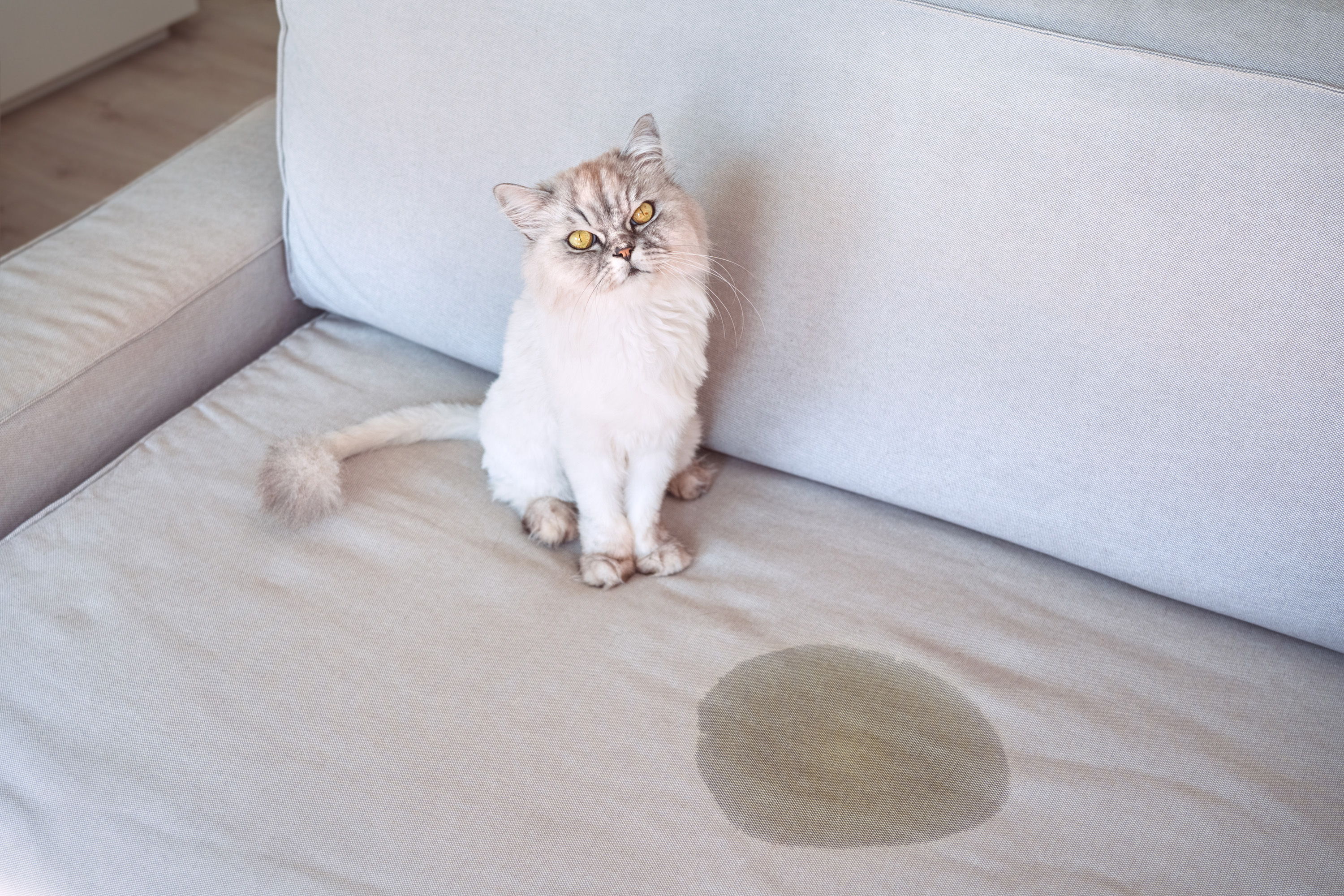



Dear Cathy, I just got two little kittens. One ended up with diarrhea and did not make it to the litter box. He has been to the vet and received meds for dehydration and a sinus infection. I have cleaned the carpet and hardwood floor with bleach and purchased the enzyme cleaner, however, they both keep sniffing around these areas and I am afraid they will pee on them. Any suggestions for deterring them from the smell?
— Cindy, St. Louis, Missouri
Dear Cindy,
You did the right thing by using an enzymatic cleaner made specifically for pet stains. Skip bleach or general household cleaners, as they do not remove the proteins in urine and feces that a cat’s sensitive nose can still detect. Enzymatic products break down these odors, but they must be used correctly. Soak the area, let the solution sit for the full recommended time, and blot rather than scrub so the cleaner can reach deep into carpet fibers or cracks in hardwood floors.
For hardwood, you can also use a hard-surface pet odor neutralizer made for wood or tile to be sure the smell does not linger beneath the finish. Once the area is dry, lightly mist it with a cat-safe deterrent spray (as long as it’s not too close to the litter box) to discourage repeat visits. You can also sprinkle a litter-box attractant in the box for a few weeks to help guide the kittens back to the right place.
Dear Cathy,
Years ago, I wrote to you concerning one of my cats. You were a great help, and I look forward to reading your column each week. Recently, I was very upset though after reading about the woman who mentioned euthanizing her declawed cat for house soiling. I was looking for a more adamant response from you about the declawing. It’s so hard to believe that someone would consider euthanasia for something like this.
— Janice, Eastport, New York
Dear Janie,
I understand why that letter upset you. The idea that someone would consider euthanasia for a behavior problem is heartbreaking, especially when the problem sounds solvable.
Working in the animal welfare field for more than 35 years, I have heard this kind of comment many times. When people are overwhelmed by a problem with their pet — house-soiling, barking, aggression, or destructive behavior — they sometimes say, “Maybe I should just put him down,” even when they don’t truly mean it. Often it isn’t cruelty talking, but frustration, exhaustion, and not knowing what else to do.
Over the years, I’ve learned that the most helpful response isn’t always to react with judgment, but to focus on the problem itself. When people realize there are options — medical checks, behavior changes, environmental changes, or training — the talk of euthanasia often fades. What sounded like a final decision was a sign that the person felt stuck. My goal is to help them find a way forward. I also remind myself that if they didn’t care, they wouldn’t ask.
As for declawing, I am completely against it. Declawing is not a simple procedure but an amputation of the last bone of each toe, and it can lead to pain, behavior problems, and litter box issues – often the very problems people are trying to solve. In this case, the cat had already been declawed before she adopted her, so some of the issues she described may have resulted from that procedure.
Behavior problems often have underlying causes, and solving them requires patience, not drastic decisions. Except in cases of severe aggression or suffering, euthanasia should never be the solution for issues that can be understood, treated, or managed.
Dear Cathy,
I may be the only one who feels this way, but I sometimes want to re-home my husband, never my sweet Maltese, Quinn.
— Loy, Lincoln, Nebraska
Dear Loy,
Before making any final decisions about your husband, you might try a little retraining. With dogs, I recommend consistency, clear expectations, and positive reinforcement. According to behavioral psychologists, that approach works on spouses, too. Reward the behavior you want to see, and it’s more likely to happen again.
Start with simple commands like “pick up your socks,” “close the cabinet door,” and the always-useful phrase “yes dear,” and reward all successful attempts immediately. A favorite dessert or control of the TV remote can be surprisingly effective.
If that doesn’t work, fall back on the same advice I give owners of challenging pets: have patience, keep your sense of humor, and remember why you fell in love with him in the first place. Even the best companions need a little retraining now and then.
_____
_____
========
(Cathy M. Rosenthal is a longtime animal advocate, author, columnist and pet expert who has more than 25 years in the animal welfare field. Send your pet questions, stories and tips to cathy@petpundit.com. Please include your name, city, and state. You can follow her @cathymrosenthal.)
©2026 Tribune Content Agency, LLC.
(c) 2026 DISTRIBUTED BY TRIBUNE MEDIA SERVICES, INC.







Comments