Who Needs Shoes? Five Reasons Your Pets Want You to Go Barefoot
Published in Cats & Dogs News
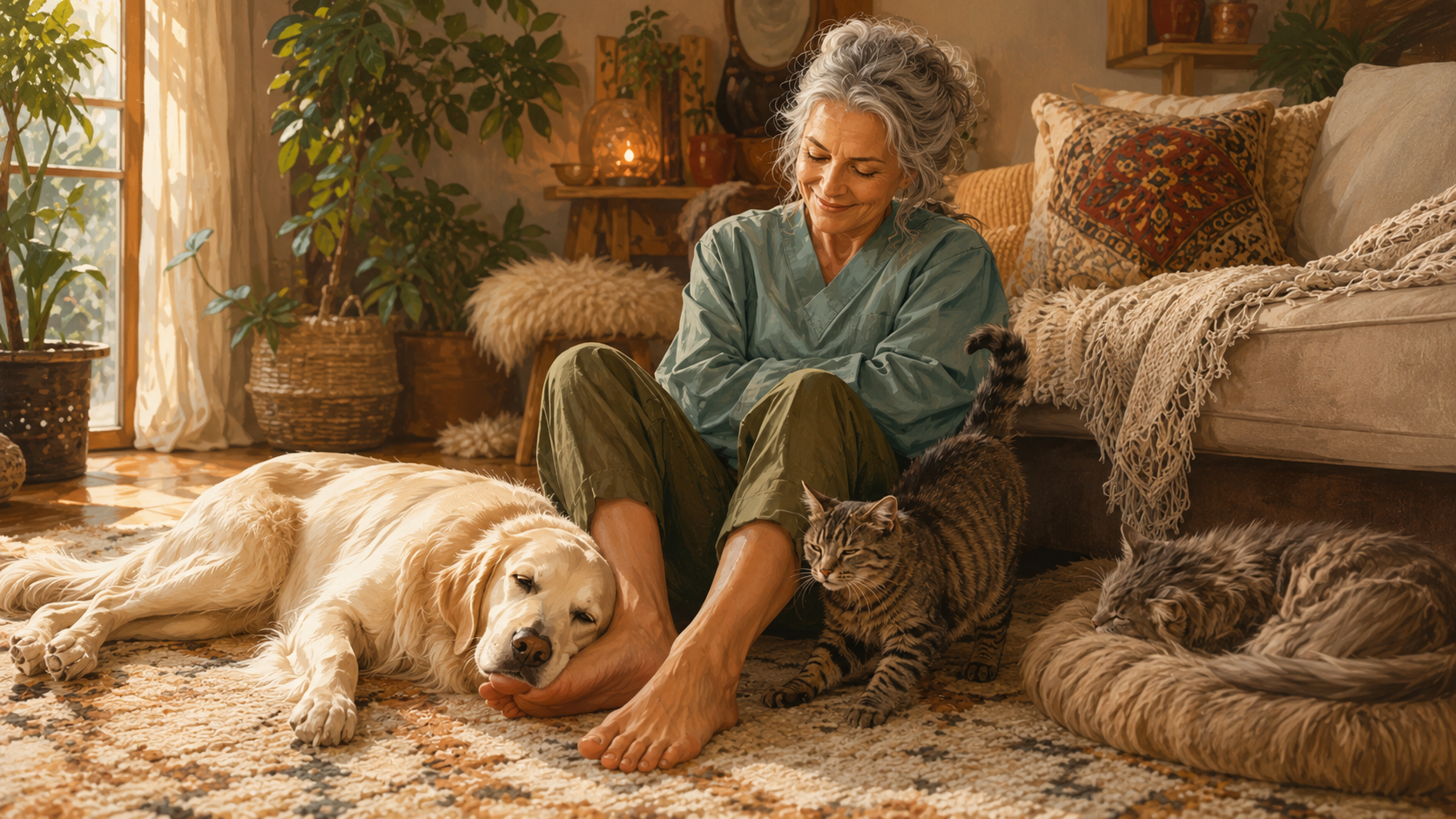
Your pets may not understand fashion, but they understand patterns.
They notice the sound of your footsteps, the way you move through the house and whether you are preparing to leave. Shoes can mean a walk, a car ride or a long day away from home. Bare feet often mean something simpler: You are staying close.
For dogs and cats, that relaxed presence can be reassuring. Going barefoot does not make someone a better pet owner, and shoes are still necessary for hot pavement, rough ground, cold weather and unsafe surfaces. Indoors, however, bare feet can help create a quieter, more connected environment for the animals who share your home.
Here are five reasons your pets may prefer the barefoot version of you.
You sound less alarming
Shoes can transform ordinary movement into a series of bangs, taps and squeaks. Hard soles strike wood floors. Boots thump down hallways. Sandals slap against heels. To a human, those sounds may be barely noticeable. To a dog or cat with sensitive hearing, they can be much more significant.
Bare feet generally move more quietly. That can matter to an older dog trying to sleep, a nervous rescue learning to relax or a cat who is naturally suspicious of sudden movement.
Quiet footsteps also make a home feel less chaotic. Pets often pay attention to the emotional rhythm of a household. Loud, hurried movement can signal excitement or disruption, while soft movement suggests that nothing urgent is happening.
This does not mean you should sneak up on animals. Speak gently when approaching a sleeping or hearing-impaired pet so you do not startle it. The advantage is simply that bare feet tend to reduce unnecessary household noise.
You move more naturally around them
Bare feet encourage people to pay attention to the floor.
Without thick soles, you notice toys, tails, paws and sleeping animals more quickly. You may step more carefully around a small dog stretched across the hallway or a cat who has chosen the least convenient possible place to sit.
That awareness can be especially useful in homes with senior pets. Older animals may move slowly, change direction unexpectedly or fail to get out of the way in time. A person wearing heavy shoes may not feel a light brush against a paw or tail until too much weight has already shifted.
Barefoot movement is not automatically safer. Clutter, spilled food, broken objects and pet accidents can all create hazards. Still, in a clean home, bare feet can encourage a lighter step and greater awareness of what is happening at floor level.
Your pets live close to the ground. Barefoot humans meet them a little closer to their world.
You are more likely to stay and relax
Pets are excellent students of human rituals.
They know the difference between house clothes and work clothes. They recognize the sound of keys, bags and jackets. Many dogs can identify the exact pair of shoes associated with a walk, while cats may understand that certain footwear means their person is leaving for several hours.
Bare feet often send the opposite message.
They suggest that you are settled in for the evening. You may be preparing to sit on the sofa, stretch out on the floor or spend time in the yard. To a companion animal, that can mean access to attention, warmth and predictable company.
A dog may bring over a favorite toy. A cat may claim your lap before someone else does. An older animal may simply settle nearby, content that the household has reached its quiet phase.
Pets do not need constant entertainment. They often want companionship without demands. Barefoot time tends to overlap with the moments when humans stop rushing and become available.
Feet are part of your familiar scent
This may not be the most glamorous argument for going barefoot, but your pets are unlikely to care.
Dogs and cats experience the world largely through scent. Your natural smell helps them identify you and understand where you have been. Socks and shoes contain scent, too, which explains why pets sometimes steal them, sleep beside them or carry them around the house.
Bare feet provide a direct, familiar signal. A dog resting against your ankles is surrounded by your scent. A cat rubbing around your legs is leaving its own scent while collecting yours.
This behavior is not necessarily about dirty feet or unusual fascination. It is often about familiarity and social connection.
Good hygiene still matters. Wash your feet after walking outdoors, check for cuts and avoid allowing pets to lick medicated creams or other topical products. The goal is not to create a biological experiment. It is simply to recognize that your natural scent is part of what makes home feel like home to your animals.
You become easier to cuddle
Shoes create a physical barrier.
A dog cannot comfortably rest its head across a hard boot. A cat may hesitate to curl against an unfamiliar sole. Bare feet and ankles, by contrast, are warm, flexible and conveniently located near the floor.
Many pets naturally use their humans as furniture. A dog may lean against a calf while sleeping. A cat may settle across someone’s feet or press against an ankle. These small points of contact help animals feel secure without requiring a full lap or constant petting.
Bare feet also make floor time easier. Sitting on a rug to play with a dog, brush a cat or spend time with a nervous animal can feel more relaxed when you are not dressed as though you might leave at any moment.
That closeness should always remain voluntary. Do not trap an animal with your legs or insist on physical contact when it wants space. The best cuddling happens when the pet chooses it.
Barefoot does not mean careless
Your pets may enjoy the quieter, softer and more relaxed version of you that appears when the shoes come off. That does not mean footwear should disappear in every situation.
Wear shoes when walking dogs on hot pavement, rocky trails, icy sidewalks or areas with broken glass and sharp debris. Check outdoor spaces before going barefoot, especially if children, wildlife or construction activity may have introduced hazards.
Indoors, keep floors clean and trim pets’ nails to reduce accidental scratches. People with diabetes, circulation problems, reduced sensation or healing wounds should follow medical advice about foot protection.
The real benefit is not bare skin by itself. It is the shift in pace that often comes with it.
When the shoes come off, the day may be ending. The house becomes quieter. You sit down. Your pets gather near you.
From their perspective, that may be the best part.
========
Delia Moss writes about companion animals, relaxed homes and the everyday rituals that strengthen human-pet relationships. She shares her house with two dogs, three cats and an impressive collection of abandoned slippers. This article was written, in part, utilizing AI tools.







Comments