Is My Dog Aggressive or Simply Confused?
Published in Cats & Dogs News
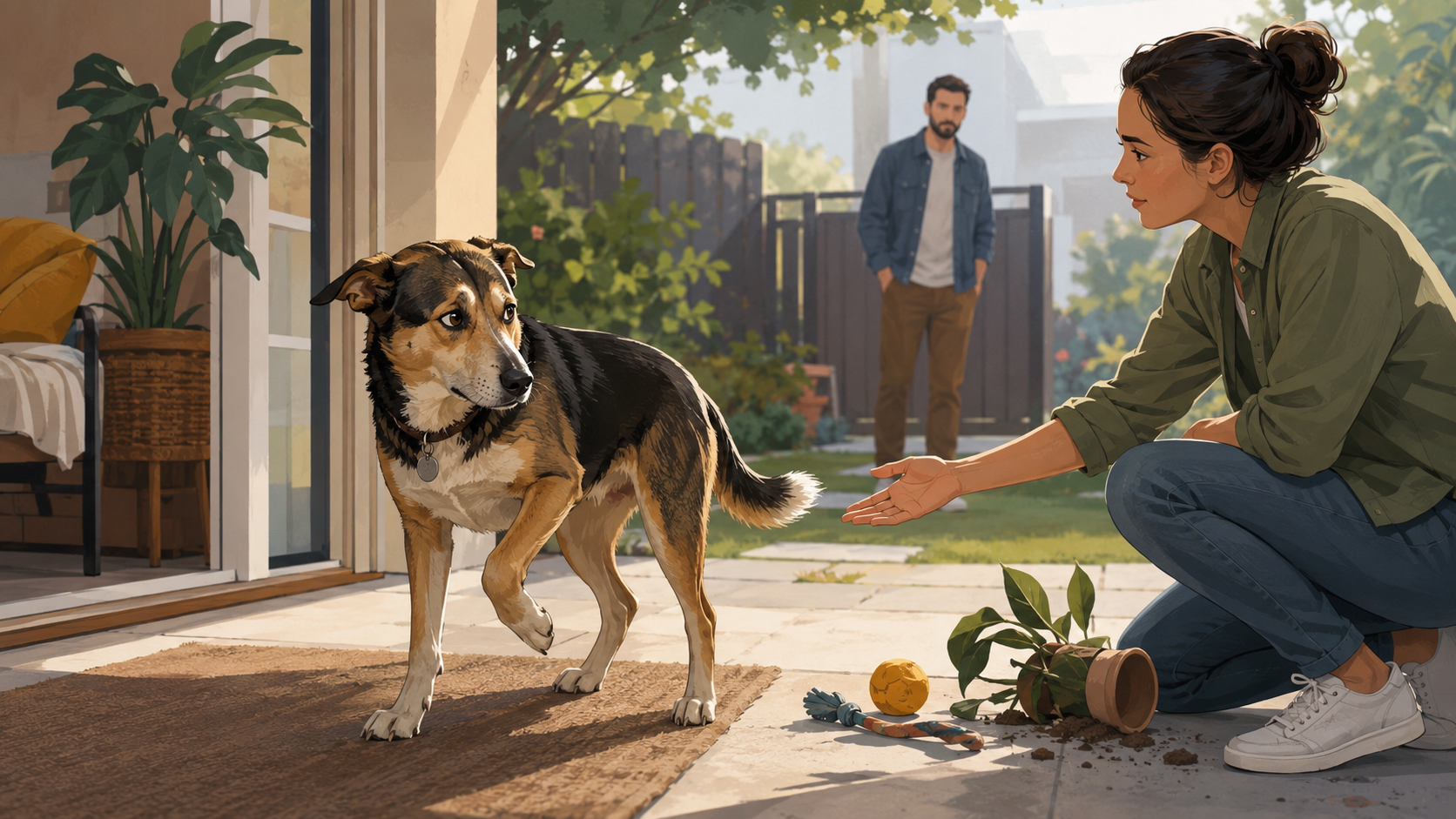
A dog growls when a visitor reaches toward him. Another snaps when awakened from a nap. A third barks and lunges at unfamiliar dogs during walks but plays peacefully with dogs she knows.
To a worried owner, these behaviors may look like aggression. But aggression is not a personality type or a moral failing. It is behavior, and that behavior usually serves a purpose. A dog may be frightened, startled, frustrated, injured, overstimulated or unsure of what is expected.
Understanding the difference between a dog seeking conflict and one reacting to confusion can help owners respond safely and compassionately.
Aggression is communication
Dogs cannot explain that a situation makes them uncomfortable. They communicate through posture, movement, facial expression and sound.
Growling, barking, showing teeth, snapping and biting are among the most noticeable signals, but they often occur after subtler warnings have been missed. A dog may first turn his head away, lick his lips, yawn, freeze, lower his body, pin back his ears or attempt to leave.
When those signals do not make the uncomfortable situation stop, the dog may escalate.
A growl should not automatically be punished. Punishing the warning may teach the dog that growling is unsafe while doing nothing to change the fear or discomfort underneath it. The result can be a dog who bites with less visible warning.
The immediate goal should be to create distance, reduce pressure and determine what caused the reaction.
Confusion can look threatening
Dogs often become confused when human expectations are inconsistent.
One family member may allow the dog on the couch while another scolds him for climbing onto it. A child may hug the dog tightly because the dog has tolerated hugs before, even though he is now tired or sore. A visitor may lean over the dog, stare directly at him and reach toward his head, believing these gestures are friendly.
The dog may not understand what is happening or how to make it stop.
Confusion can also arise during training. If cues are repeated, changed or delivered in an angry tone, the dog may freeze, bark, jump, mouth at clothing or run away. Those actions can be mistaken for defiance or aggression when the dog is actually overwhelmed.
Clear routines, predictable rules and reward-based training can reduce this uncertainty. Owners should use the same cues, reward the behavior they want and avoid placing the dog in situations he is not prepared to handle.
Fear is a common cause
Many aggressive displays are attempts to increase distance from something frightening.
A fearful dog may bark at strangers, react to unfamiliar dogs, resist grooming or snap when cornered. Some dogs have learned that barking or lunging makes the frightening person or animal move away. Because the behavior appears to work, the dog is likely to repeat it.
Fear can be influenced by genetics, inadequate early socialization, traumatic experiences or limited exposure to unfamiliar environments. A dog who spent most of his early life in a quiet home may become overwhelmed by crowded sidewalks, noisy children or busy veterinary offices.
Fearful dogs need controlled, gradual exposure rather than forced interaction. Flooding a frightened dog with the thing he fears can make the reaction worse.
Owners should allow the dog to observe from a safe distance and pair the experience with food, play or another reward. Progress may be slow, but the dog should remain relaxed enough to learn.
Pain can change behavior
A sudden behavioral change should prompt a veterinary examination.
Arthritis, dental disease, ear infections, skin irritation, vision loss and neurological problems can make an otherwise gentle dog defensive. A dog may growl when lifted because his back hurts or snap when a child touches a painful ear.
Older dogs may become disoriented because of hearing loss, poor vision or canine cognitive decline. A dog who no longer hears someone approaching may react sharply when touched. A dog who becomes confused at night may pace, bark or appear unusually defensive.
Owners should not assume a new aggressive response is simply a training problem. Treating pain or illness may significantly improve the behavior.
Watch the whole dog
Context matters when evaluating a dog’s reaction.
A playful dog may growl, chase and wrestle while keeping a loose, wiggly body. The dogs involved may pause, switch roles and return voluntarily to the game. By contrast, a tense dog may become stiff, stare intensely, close his mouth and shift his weight forward.
A wagging tail does not always indicate friendliness. Dogs also wag when aroused, uncertain or preparing to react. A high, rigid wag carries a different meaning than a broad, relaxed wag involving the entire body.
Owners should note what happened before, during and after an incident. Useful details include the dog’s location, the people or animals present, the distance between them, any physical contact and whether food, toys, furniture or resting areas were involved.
A written record can reveal patterns that are difficult to see in the moment.
Management comes before training
Until the cause is understood, owners should prevent the dog from rehearsing dangerous behavior.
That may mean using baby gates, leashes, closed doors or a properly introduced basket muzzle. Children and dogs should be actively supervised, and a dog should always have a quiet place where he can rest without being followed or touched.
Management is not a failure. It protects people while reducing the dog’s stress.
Owners should avoid testing the dog by repeatedly exposing him to a trigger to see whether he reacts. Each incident can strengthen the behavior and increase the risk of injury.
Punishment-based methods, including intimidation, leash corrections and physical force, may suppress behavior temporarily but can increase fear and make warning signals less predictable.
When to seek professional help
Professional guidance is warranted when a dog has bitten, attempted to bite, guarded food or objects, reacted unpredictably or shown behavior that is becoming more frequent or intense.
A veterinarian should first evaluate the dog for medical causes. The veterinarian may then recommend a veterinary behaviorist or a qualified trainer who uses humane, evidence-based methods.
Owners should describe incidents honestly. The professional needs accurate information about bite severity, targets, triggers and frequency to design an effective safety and behavior plan.
Not every dog displaying aggression is dangerous in every situation. Some dogs react only under specific circumstances that can be managed successfully. Others require lifelong precautions.
The important question is not whether the dog is “good” or “bad.” It is what the dog is communicating, what conditions are producing the behavior and what steps will keep everyone safe.
A confused or frightened dog still has the ability to cause serious injury. Compassion should never replace caution. But caution does not require blame.
By listening to early warning signals, ruling out pain and helping the dog understand what is expected, owners can often replace conflict with clarity.
========
Maris Holloway is a Virginia-based writer covering companion-animal behavior, humane training and life with senior pets. Her work focuses on helping families understand the communication behind challenging behavior. This article was written, in part, utilizing AI tools.





Comments