Seven things to know about Dalmatians
Published in Cats & Dogs News
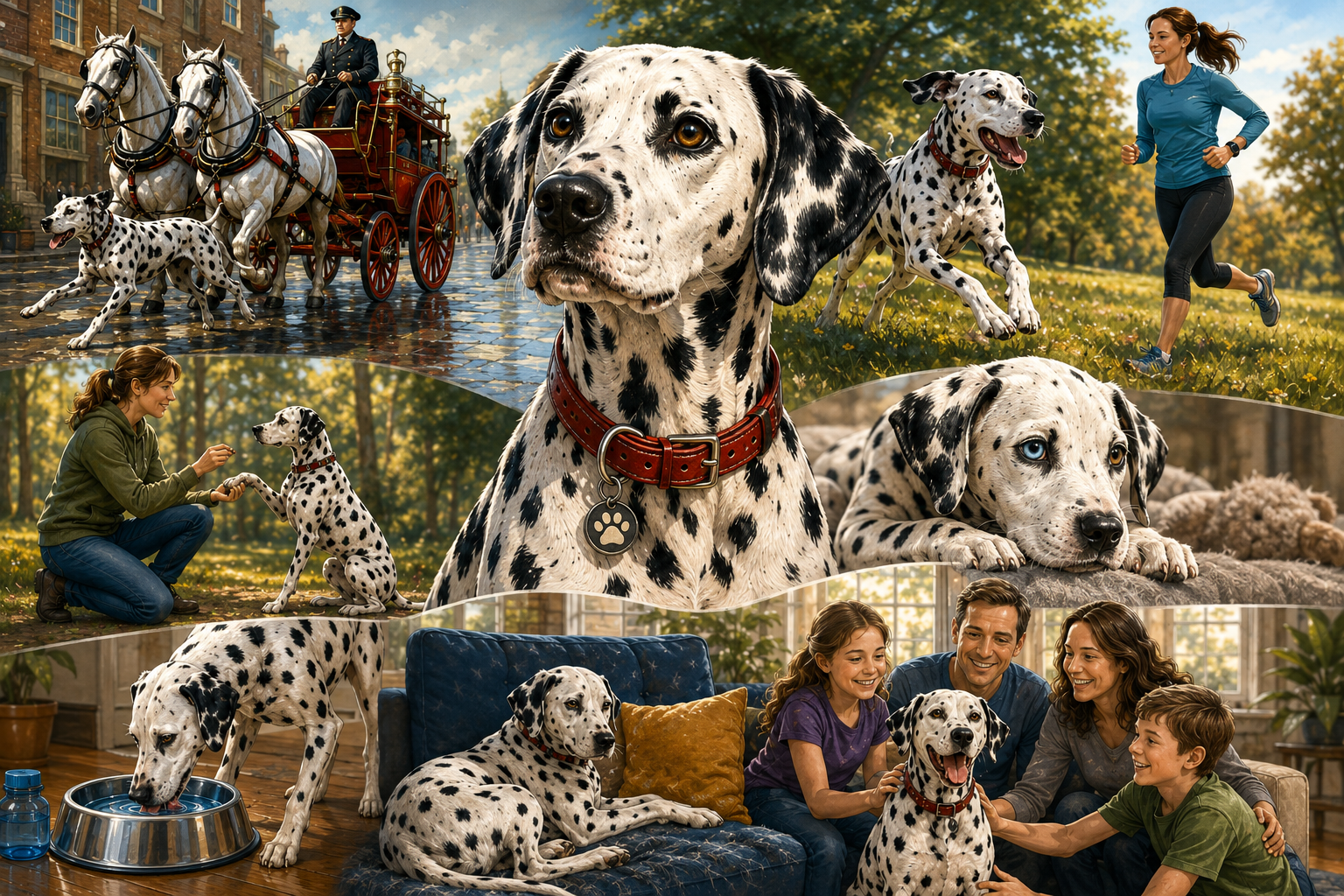
Dalmatians are among the most recognizable dogs in the world, but the spotted coat can distract from the realities of living with one. They are athletic, clever, sensitive dogs with a long working history and a few breed-specific health concerns that prospective owners should understand before bringing one home.
Here are seven things to know about Dalmatians.
1. They are more than a spotted coat
The Dalmatian’s look is famous, but the breed’s history is just as distinctive. The American Kennel Club describes Dalmatians as “coach dogs” that once accompanied horse-drawn rigs used by nobles, travelers and firefighters. ([American Kennel Club][1])
That background helps explain the breed’s combination of stamina, alertness and loyalty. A Dalmatian was not developed to lounge all day with nothing to do. It was meant to move, keep up and stay aware of its surroundings.
For modern families, that means a Dalmatian can be a striking companion, but not a decorative one. The dog behind the spots usually needs structure, exercise and regular human engagement.
2. They have serious energy
Dalmatians are typically high-energy dogs, and the AKC notes they can get into mischief when they do not receive enough physical and mental exercise. ([American Kennel Club][2])
A short walk around the block may not be enough for many adult Dalmatians. They often do best with active owners who can provide long walks, hiking, running, dog sports, training games or other outlets that combine movement with attention.
That does not mean every Dalmatian is frantic. Mature dogs, well-trained dogs and properly exercised dogs can be calm indoors. But the calm usually has to be earned through routine, not wished into existence.
A bored Dalmatian may invent its own entertainment. That can mean chewing, digging, barking, counter surfing or pestering other pets. Owners who enjoy active dogs may find that energy delightful. Owners who want a low-maintenance couch companion may find it overwhelming.
3. Training should start early
Dalmatians are smart, but smart is not the same as automatically obedient. They can learn quickly, especially when training is consistent, fair and interesting. They also can learn bad habits quickly if boundaries are unclear.
Early socialization matters. A young Dalmatian should be calmly introduced to visitors, children, traffic, grooming, veterinary handling, different surfaces and common household routines. The goal is not to overwhelm the puppy, but to build confidence.
Positive reinforcement, short sessions and clear expectations are usually better than harsh corrections. Dalmatians are often people-oriented and sensitive. Heavy-handed handling can make some dogs anxious, defensive or stubborn.
Because of their athleticism, owners also should teach impulse-control basics: waiting at doors, walking politely on leash, coming when called and settling on cue. Those skills are useful for any dog, but they are especially helpful when the dog is fast, strong and curious.
4. Deafness is a known concern
Deafness is not rare in Dalmatians. The Dalmatian Club of America has estimated that 10% to 12% of the breed is deaf, and says buyers should seek information about a puppy’s hearing status. ([Dalmatian Club of America][3])
This does not mean Dalmatians should be avoided. It means responsible breeding and informed ownership matter. Prospective buyers should ask breeders about hearing testing, the hearing status of the parents and the hearing status of the puppy.
A deaf dog can live a good life with the right owner, but training and safety need adjustments. Visual cues, fenced areas, careful management around roads and consistent routines become especially important. A dog that cannot hear a recall cannot be given the same off-leash freedom as a dog that can.
For families considering a Dalmatian, hearing is not a detail to gloss over. It is one of the first questions to ask.
5. Their urinary health needs attention
Dalmatians have a breed-specific tendency toward urate urinary stones. The Dalmatian Club of America Foundation says classically bred Dalmatians have a metabolic difference that can allow high levels of urate to accumulate in the urinary tract, potentially leading to crystals, stones or life-threatening blockage, especially in males. ([Dalmatian Club of America Foundation][4])
This is not a reason to panic, but it is a reason to be informed. Many Dalmatians never develop stones, especially when owners pay attention to diet, hydration, exercise and regular opportunities to urinate. The foundation notes that prevention strategies largely involve proper diet, proper hydration and regular chances to urinate. ([Dalmatian Club of America Foundation][4])
Owners should talk with a veterinarian familiar with the breed. Diet choices, water intake and bathroom routines are not minor details for Dalmatians. They can be part of long-term health management.
Warning signs such as straining to urinate, frequent attempts to urinate, blood in the urine or inability to pass urine should be treated as urgent, especially in males.
6. They shed more than some people expect
The short coat may look easy, and in many ways it is. Dalmatians do not need elaborate clipping or styling. But short hair still sheds, and Dalmatian hair has a way of showing up on clothing, furniture and car seats.
Regular brushing can help, as can routine bathing, nail trimming, ear checks and dental care. Grooming also gives owners a chance to notice skin changes, lumps, sore spots or irritation.
The Dalmatian Club of America Foundation notes that allergies are not uncommon in the breed and says some owners encounter skin and allergy issues. ([Dalmatian Club of America Foundation][5])
A healthy coat starts with overall health. Good food, veterinary care, parasite prevention and attention to skin problems all matter.
7. They are best for committed owners
A Dalmatian can be a wonderful family dog in the right home. The right home is usually active, patient and realistic. It includes people who want to train, walk, supervise and include the dog in daily life.
The wrong match often starts with appearance. Someone falls in love with the spots, underestimates the exercise needs and ends up frustrated when the dog behaves like a high-drive athlete rather than a stuffed animal.
Before getting a Dalmatian, prospective owners should meet adult dogs, talk with reputable breeders or rescue groups, ask about health testing and consider whether their schedule truly fits the breed.
Dalmatians are not impossible dogs. They are not beginner-proof dogs, either. They are lively, historic, eye-catching companions that tend to reward owners who do their homework.
For the right person, a Dalmatian is not just a pretty dog. It is a partner with speed, humor, endurance and personality to spare. For the wrong person, those same traits can become a daily challenge.
The spots may draw people in. The commitment is what makes the relationship work.
========
Mariel Keene is a Virginia-based pet and lifestyle writer who focuses on companion animals, practical home care and family routines. She writes about everyday decisions that help people live better with the animals they love. This article was written, in part, utilizing AI tools.








Comments