How Pets Experience Time When You’re Gone
Published in Cats & Dogs News
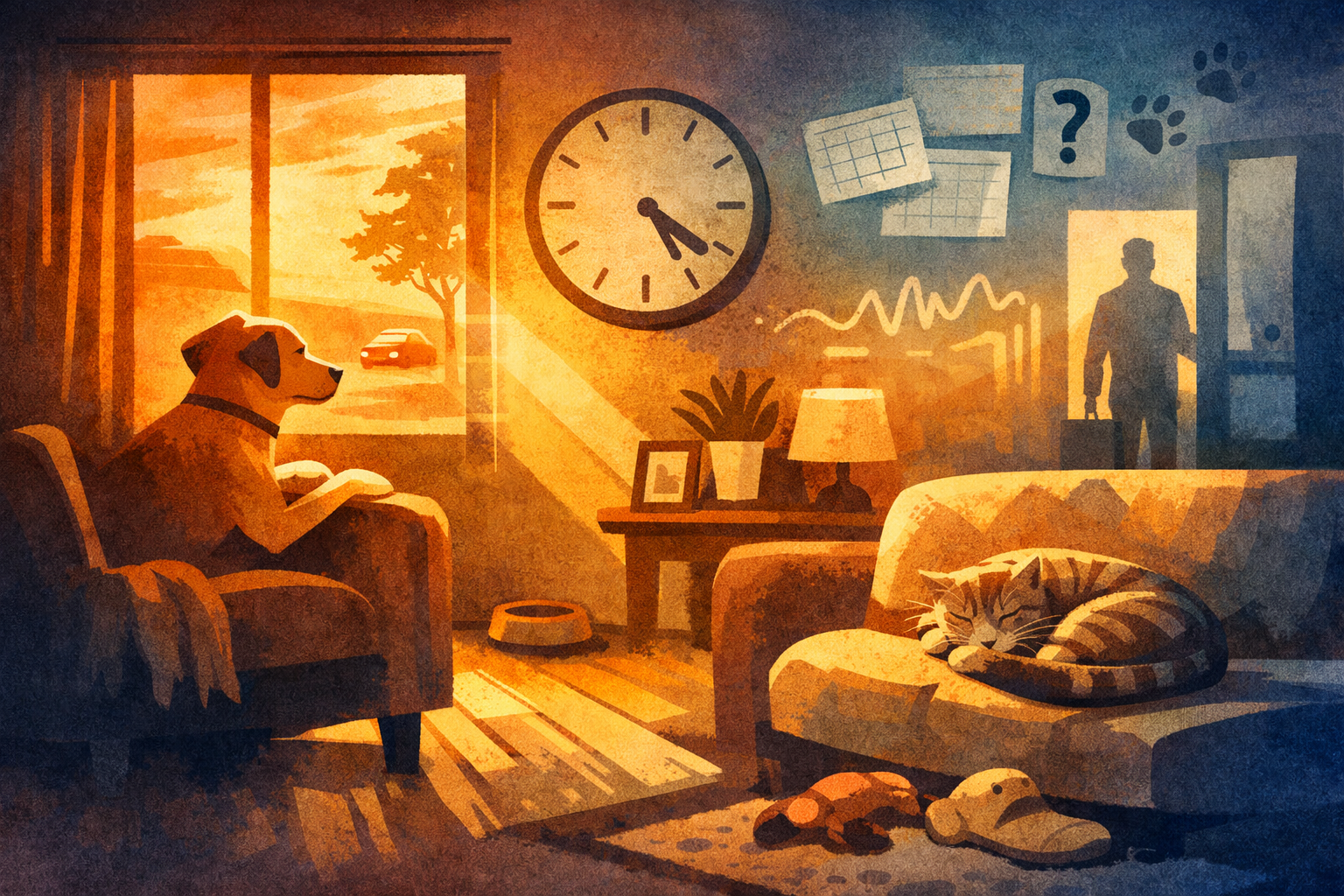
By now, most pet owners have asked some version of the same quiet question while locking the door behind them: *Do they know how long I’ll be gone?* The answer, like most things involving animals, is stranger and more interesting than a simple yes or no.
Pets do not experience time the way humans do. They don’t count minutes, anticipate calendar events, or think in terms of “three hours until dinner.” But that does not mean time disappears for them. Instead, animals experience absence and duration through rhythm, sensation, memory, and expectation. What feels like a long workday to a human may feel like a short nap or an eternity to a pet—depending on the animal, the household, and the emotional context of the separation.
Time Without Clocks
Animals do not possess abstract timekeeping in the human sense. They don’t conceptualize past and future as linear stories. Instead, they live in a present that is shaped by patterns. Light changes. Sounds arrive. Smells fade. Hunger rises. Familiar footsteps appear—or don’t.
For pets, time is not measured; it’s *felt*. A dog left alone is not thinking, “My person has been gone for six hours.” The dog is experiencing a sequence of internal states: rest, alertness, boredom, hunger, anticipation. A cat is not waiting for a clock to strike five; she is noticing the quiet settling into the house, the angle of sunlight on the floor, the lengthening interval since the last interaction.
This is why two absences of equal length can feel entirely different to the same animal. A quiet, predictable workday may pass unnoticed. A shorter absence following a disrupted routine can feel unsettling.
Routine Is the Real Clock
For pets, routine replaces chronology. Feeding times, walks, play sessions, and sleep cycles form the scaffolding of their experience. These repeated events create expectation, and expectation is how animals “know” when something should happen.
Dogs, in particular, are masters of pattern recognition. They notice subtle cues: the sound of keys, the time the house grows quiet, the length of daylight. Over time, they learn sequences rather than schedules. When one event occurs, another is expected to follow.
Cats are equally attuned to routine, though often more subtle about it. Many cats anticipate their person’s return not because they understand hours, but because they recognize environmental signals: a certain car sound, the change in evening light, the neighborhood quieting.
When routines are consistent, time compresses. When routines are disrupted, time stretches.
The Role of Smell and Memory
Smell is one of the most important—and most misunderstood—ways pets experience absence. A home is saturated with the scent of its people. That scent does not disappear when the door closes; it fades gradually.
For dogs especially, smell acts like a memory loop. As long as a person’s scent remains strong, the absence feels temporary. As it weakens, the sense of separation grows. This may help explain why some dogs become restless or anxious hours into an absence rather than immediately.
Memory, too, functions differently in animals. Pets do not replay the past as a narrative, but they do retain emotional impressions. If departures are consistently followed by safe returns, food, and affection, absence becomes a neutral or even restful state. If departures are unpredictable or linked to stress, absence can feel threatening.
Sleep as Time Travel
One of the reasons many pets seem unaffected by long absences is simple: they sleep through them. Dogs and cats sleep far more than humans, especially when there is little stimulation.
Sleep collapses time. A four-hour nap does not feel like four hours; it feels like nothing at all. For a well-adjusted pet, much of an owner’s absence may simply vanish into sleep cycles.
This does not mean pets are indifferent. It means they conserve energy until something meaningful happens. A returning human is meaningful. A sound at the door is meaningful. The rest is background.
Older pets, in particular, often experience time this way. As energy levels decrease, the world slows. Absence becomes a gentle pause rather than a void.
When Time Feels Too Long
Not all pets experience absence calmly. For animals with separation anxiety, time does not pass quietly—it stretches.
In these cases, the problem is not the duration of absence but the emotional weight of uncertainty. An anxious pet may remain hyper-alert, unable to settle into sleep. Every sound becomes a possible signal of return. Every minute without confirmation increases stress.
This is why enrichment and predictability matter more than shortening absences by small amounts. A ten-minute difference means nothing if the animal cannot relax. What helps is teaching the nervous system that absence is safe and finite.
Boredom Versus Distress
It’s important to distinguish boredom from suffering. A bored pet may feel time dragging, but boredom is not inherently harmful. In fact, mild boredom encourages rest, observation, and self-regulation.
Distress, by contrast, involves fear or panic. Chewed furniture, excessive vocalization, and destructive behavior are not signs that a pet “misses you too much” in an emotional sense. They are signs that the animal cannot predict what happens next.
Understanding this difference helps owners respond with empathy rather than guilt.
Why Returns Matter More Than Departures
For pets, the emotional meaning of time is shaped less by leaving than by returning. A calm, predictable return teaches the animal that absence resolves safely.
Exaggerated reunions can actually distort this learning. If every return is an emotional explosion, absence becomes more significant, not less. Many behaviorists recommend calm, low-key arrivals—not because affection is bad, but because emotional spikes stretch the perceived gap.
Consistency shrinks time. Drama expands it.
The Quiet Truth
Your pet does not count the minutes you are gone. But they do feel patterns, safety, and expectation. They live in a world where time is not a line but a rhythm—a breathing in and out of presence and absence.
When routines are steady, needs are met, and departures are predictable, absence becomes simply another phase of the day. Not lonely. Not endless. Just quiet.
For a pet, the best gift is not shorter time away, but time that makes sense.
========
This article was written, in part, utilizing AI tools.







Comments