On Nutrition: Readers are hungry for some answers
Published in Nutrition
I’m sitting in the Denver airport between flights. Good time to read mail.
Rita L. from Omaha writes: “I just read your article in the Omaha World-Herald. Thank you for helping us improve our diets, and telling us WHY things work. I was told that to lower blood pressure, I should do the following: Cut eggplant into 1-inch cubes. Soak them in water (can’t remember if it was for a few days or a few hours). Drink the juice. Any truth? Any evidence this works?”
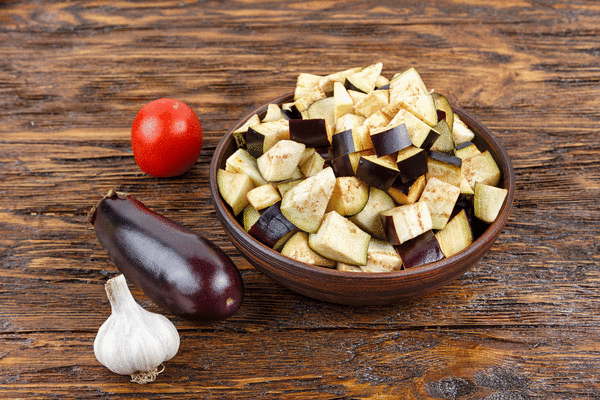
I wasn’t able to find much proof on this particular approach, Rita. But there is some evidence that juice extracted from eggplant may lower blood pressure … if you’re a rat with hypertension. In humans, home-brewed eggplant water has yielded mixed results, meaning it helped some people but not others.
In 2019, a small study in the journal Nutrients tested concentrated eggplant powder in people who had normal to high blood pressure. The authors of this randomized, double-blind, placebo-controlled research reported that the consumption of eggplant powder “significantly decreased blood pressure” after participants consumed it for 2 to 3 months.
Most experts attribute this effect to a substance in eggplant called acetylcholine — a chemical messenger in the nervous system that, among other functions, can help widen blood vessels and thereby lower blood pressure. By the way, acetylcholine is also found in bamboo shoots and shiitake mushrooms.
Here’s my take: In addition to its juice, eggplant is a storehouse of essential nutrients, including dietary fiber, which aids in weight control, and potassium, which helps control blood pressure. All this plus the benefit of acetylcholine for just 21 calories per cup. Instead of just the juice, why not add eggplant to your meals and get all its benefits?
A quick question from Brian D. in Buffalo:
“I read your article, ’How things work’ (that discussed dietary fiber). I’m trying to reduce a constipation issue I have due to a side effect from medication. If I understand correctly, there are two different options; one based on soluble fiber and the other based on husk. If this is correct, which one do you think would be best? If I did mix it up what should I try?”
Try both options, Brian. Most natural forms of dietary fiber (fruits and vegetables) are a mixture of soluble and insoluble fibers. Insoluble fibers add bulk to the stool (to keep things moving) and help prevent constipation. These are primarily found in whole grains, nuts, seeds and the skins of fruit (don’t peel your apple).
Soluble fiber (think beans, lentils, oats) aid digestion and may help lower cholesterol and blood sugar levels.
Psyllium husk fiber — found in supplements such as Metamucil — is mostly (70%) soluble fiber but also contains insoluble fiber. Check with your medical provider for more guidance. And always drink more fluids when you increase your fiber intake.
©2026 MediaNews Group, Inc. Distributed by Tribune Content Agency, LLC.









Comments