Feds, California AG Rob Bonta clash over credit for cases alleging billions of dollars in healthcare fraud
Published in Health & Fitness
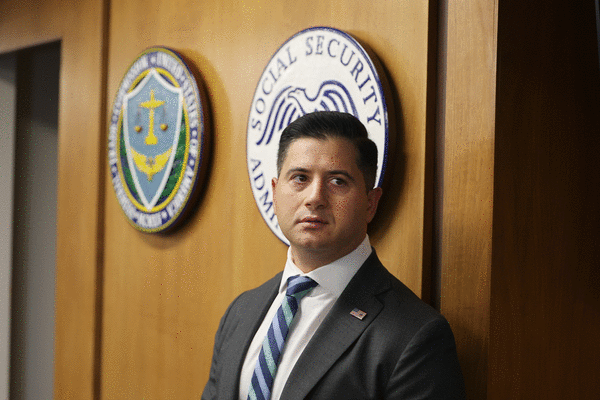
LOS ANGELES — California Attorney General Rob Bonta and First Assistant U.S. Attorney Bill Essayli traded barbs at dueling healthcare fraud news conferences in downtown Los Angeles on Thursday morning, sniping at each other over billions lost to benefits schemes and the increasingly politicized efforts to stop them.
“California has a fraud problem,” Essayli said at the 9:30 a.m. news conference, where he and a phalanx of federal investigators announced a sweeping takedown of doctors and others they say lured vulnerable patients into needless surgical procedures, sham treatment programs and bogus hospice care, bilking taxpayers for nearly $2 billion.
“Whether it’s hospice fraud, or healthcare fraud or election fraud, California does fraud best,” the prosecutor added, seeming to connect the cases with his office’s simultaneous attempt to sequester midterm ballots it says were issued to noncitizens.
Bonta struck back at his own news conference across the street an hour later, saying Essayli had deliberately elided his team’s contribution to the raid — including the arrest of a surgeon accused of performing unnecessary and invasive procedures for profit — part of what he termed a pattern of “improper politicization and weaponization” of medical fraud investigations.
“This isn’t a political game for us,” Bonta said. “This is about protecting taxpayer dollars, protecting the programs that sick and vulnerable Californians rely on, and protecting our state.”
Among the most chilling allegations revealed Thursday, two Angelenos were charged with paying so-called “body brokers” in Texas to recruit homeless residents from out of state and those in 12-step programs into sham sober living homes in California, where they were allegedly signed up for pricey insurance policies and frequently left to languish in decrepit squats.
“This was not treatment, it was not recovery. It was exploitation,” said Colin McDonald, assistant U.S. attorney general for the National Fraud Enforcement Division.
Sober living homes have repeatedly come under fire across Southern California, most recently after the death of Cindy Crawford’s son Presley Gerber at a sober living home in Santa Monica in September.
In another case, an Anaheim cardiothoracic surgeon and a Tarzana chiropractor allegedly teamed up to steer patients into needless and sometimes repeated X-ray-guided procedures to score plaque from their arteries in what McDonald called “an assembly line of fraud.”
Bonta said state investigators were responsible for the arrest of the Anaheim surgeon, Dr. Harold Tabie, who stands accused of collecting more than $100 million in Medicare claims.
Three more Angelenos were charged with strong-arming local seniors into hospice care when none of them were dying — a form of fraud for which “Los Angeles has become ground zero,” McDonald said.
Prosecutors called it “one of the top dollar takedowns in the state of California.”
The Justice Department said in a news release that 15 defendants had been charged, including six medical professionals. Federal authorities said eight people had been arrested, with five of them expected to make their initial appearances this afternoon in United States District Court in downtown Los Angeles. Two others were scheduled to appear in the Northern District of Texas, and one in the Northern District of Illinois. It’s unclear whether they are represented by attorneys; they have not yet entered pleas in response to the charges.
The Trump administration has cast public benefits fraud among its arch-villains, blaming bad actors in blue states — and often the states themselves — for the sharply rising cost of care.
Rates of Medicaid and Medicare fraud exploded in the wake of the COVID-19 pandemic, when many rules were loosened and oversight strained by efforts to expand care.
Last fall, the Department of Justice went after Medicaid-funded autism treatment schemes concentrated in Minnesota’s Somali community, while seeking to paint the state’s governor, Tim Walz, as complicit in their operation.
Essayli has similarly hammered California Gov. Gavin Newsom and the state’s other Democratic leaders over hospice fraud and other schemes exploiting public benefits, frequently calling the governor the “king of fraud.”
Benefits fraud has become something of a political football as looming funding cuts from last year’s tax and spending package threaten to strip food aid and healthcare coverage from millions of Americans and leave millions more in limbo amid stringent new work rules.
Prosecutors now routinely trade barbs over whether California fraudsters or D.C. austerity politics are to blame for the growing inaccessibility of care for average voters.
“I think the AG’s holding a press conference to talk about what he’s done — getting fraudsters after they’ve stolen hundreds of millions of dollars is not good enough,” Essayli said. “The fraud should never have happened in the first place.”
Bonta fumed that state investigators had been stripped of credit for their work in the federal government’s enforcement actions, noting that Essayli had thanked local and state partners, but did not identify teams.
“We are one of the state partners. That was a joint investigation that we were a part of,” Bonta said. “We engaged in the arrest of one of the key defendants — my team on the ground doing the work — and I don’t expect it, but it would have been appropriate for anyone, including the first assistant, to acknowledge the team that was working on that case that they announced today.”
While he claimed the omission was political, he also credited rank-and-file federal investigators with a shared interest in “(enforcing) the law and making life better for Californians.”
“When we’re at our best, we’re putting politics aside,” he said. “We’re not using fraud as a bludgeon, as a cudgel.”
Bonta had taken the podium to tout his own sweeping fraud charges against more than 100 people who allegedly double-dipped on a publicly funded in-home care program, taking cash for caring for a family member whom Medicaid was simultaneously paying to treat in a hospital or nursing home.
In-Home Support Services, also known as IHSS, is a state program that can help pay for care for low-income disabled children, dependent adults and the elderly, and has been hailed as a way to keep more people in their homes and out of costly and sometimes dangerous congregate care.
Many beneficiaries of the program are relatives, Bonta said.
“While the alleged fraud represents a small fraction of California’s $30 billion IHSS budget, any abuse of Medi-Cal jeopardizes funding for our most vulnerable residents,” Bonta said.
_____
©2026 Los Angeles Times. Visit at latimes.com. Distributed by Tribune Content Agency, LLC.





Comments