Quartz countertops are driving a public health crisis in the US – 2 occupational health experts explain the surge of lung transplants and lawsuits
Published in Health & Fitness

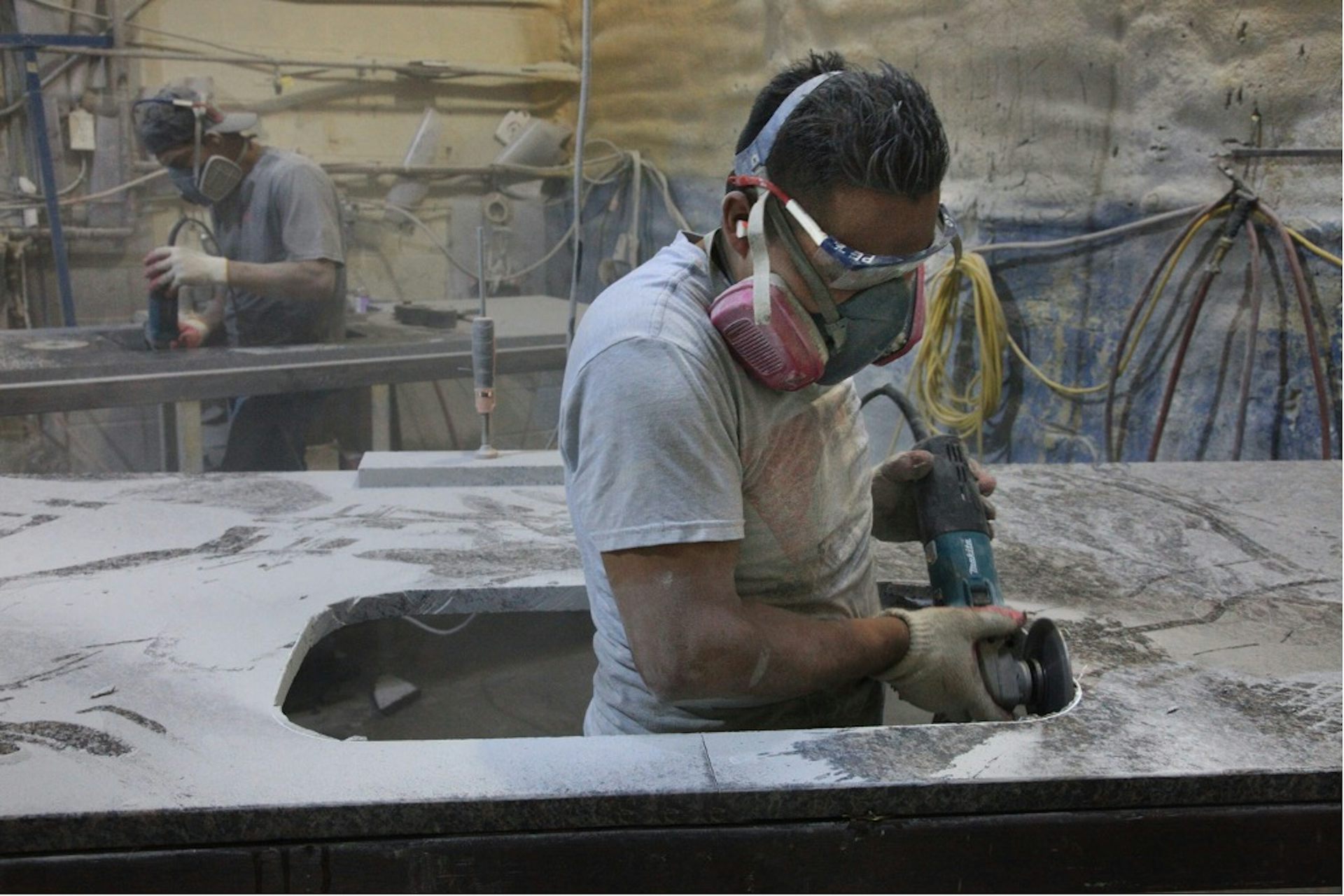

If you walk into a Costco, Home Depot or Lowe’s and order a countertop for your kitchen renovation, the store will likely contract with a local fabrication shop, instructing them to make one from a material called engineered stone.
Often marketed as “quartz,” engineered stone is a synthetic product that contains up to 95% finely ground quartz mixed with polyester resins and pigments. The ease with which consumers can order it obscures the fact that workers who cut, grind and polish these kitchen countertops risk developing a terrible disease that destroys their lungs.
In California alone, more than 550 workers have been diagnosed with silicosis caused by this engineered stone – a deadly disease that is totally preventable and for which there is no cure. At least 100 of these California workers have undergone or are awaiting a lung transplant, a complicated procedure that extends life but does not provide a long-term cure. At least 30 have died between 2019 and 2026.
We are an epidemiologist and a physician, both specializing in work-related diseases, who have studied the dangers of working with this material. We believe that the surge in silicosis cases is a public health emergency. But the trend is almost invisible outside of California because most states don’t yet track the incidence of the disease.
Engineered stone, introduced just a few decades ago, has become the most popular choice for kitchen countertops. It is more durable but often less expensive than marble.
When workers cut, grind and polish these engineered stone countertops for a home, billions of very small crystalline silica particles coated with resins and pigments are released. The workers inhale these particles, and many develop a severe and rapidly progressive form of silicosis.
Like asbestos, silica causes both respiratory disease and lung cancer. The fabrication workers affected are young – the median age of the California workers is 46 and the median age at death is 52. If they stop working with silica and manage to live a few additional decades, they are more likely to develop lung cancer, kidney disease and various autoimmune diseases than people with no exposure.
An estimated 100,000 workers are employed in countertop fabrication shops in the U.S., and studies suggest that 20% or more of exposed workers develop silicosis. Treating it can cost millions of dollars per person. Most of the medical costs are paid by Medicaid and other public assistance programs funded by American taxpayers.
Unfortunately, many fabrication workers don’t have access to healthcare – let alone specialists trained to diagnose and treat silicosis.
Many big-box stores promote quartz over similar but much safer countertops manufactured from crushed glass; these are made from amorphous silica, which is much less toxic than crystalline silica. Consumers are generally not aware of the availability of this alternative.
Ikea stopped selling engineered stone countertops in 2025. Home Depot, Lowe’s and Costco are still selling crystalline silica products as of June 2026.
In 2016, during the period one of us (David Michaels) served as the assistant secretary of labor for the Occupational Safety and Health Administration, or OSHA, the agency reduced the allowable level of workplace exposure to airborne silica dust.
Complying with the federal OSHA standard is not enough to protect workers from the extreme toxic effects of engineered stone.
In 2019, after the Centers for Disease Control and Prevention reported 18 cases of silicosis from working with engineered stone across California, Colorado, Texas and Washington, epidemiologists in California began tracking the disease among fabrication shopworkers. Each year since, the number of cases was higher than the last. It is clear that as long as crystalline silica-containing engineered stone is used to fabricate kitchen countertops, hundreds of young workers will be diagnosed with silicosis every year.
In the U.S., cases of silicosis have been reported in several other states, including Massachusetts, Illinois, New York, Florida, Utah, Washington, New Mexico and Colorado. But since most fabrication workers are not tested for silicosis in the U.S., thousands more undiagnosed workers are undoubtedly suffering with it.
Now, hundreds of sick workers across the U.S. are suing manufacturers and distributors of these deadly countertops, as well as the big-box stores that sell them. Some of the early cases were settled out of court. In 2024, in the first case that went to trial, a 36-year-old worker with silicosis who underwent double lung transplantation while on life support was awarded US$52 million.
Outbreaks of silicosis have followed the introduction of engineered stone countertop production across the globe.
Caesarstone, an Israeli company, was one of the first to market it. Between 1997 and 2010, 25 Israeli workers who had worked with its products were referred for lung transplants.
Engineered stone silicosis was next diagnosed in Spain, with 5,900 cases reported between 2007 and 2024. In 2023, the owner of a Spanish company called Cosentino admitted to covering up the dangers from working with the material and received a six-month suspended prison sentence for five counts of serious injury due to gross negligence, according to press reports.
As sales of the new product grew globally, cases of silicosis among countertop fabrication workers appeared in the United States in 2014, Australia in 2015, and more recently in Great Britain, China and Taiwan.
In May 2026, responding to the silicosis deaths of young workers, Britain issued new guidance banning dry cutting of engineered stone products, and announced plans to inspect 1,000 fabrication shops.
In Australia, public health officials began strengthening workplace protection requirements in 2021. When those steps were found to be inadequately effective in controlling exposure to the deadly dust, the national government banned the importation and use of engineered stone products containing more than 1% crystalline silica.
To continue to sell their product in Australia, many manufacturers, including Caesarstone and Cosentino, now market slabs that are made from crushed glass rather than quartz.
In 2024, California’s OSHA adopted a workplace standard stronger than the existing federal rules. However, enforcement – both statewide and nationally – is disastrously underresourced. Federal OSHA has enough inspectors to visit every workplace only once every 191 years.
Further, since employers claim that many of these countertop workers are independent contractors, their workplaces are not under OSHA’s jurisdiction.
Following Australia’s example, California’s OSHA has started emergency rulemaking to prohibit the fabrication and installation of engineered stone products that contain more than 1% crystalline silica. The countertop manufacturers are pushing back by promoting national legislation that would ban all lawsuits, allowing them to market engineered stone without incurring any liability.
Until manufacturers stop manufacturing and retailers follow Ikea’s lead and stop selling engineered stone countertops containing crystalline silica in the U.S., thousands of workers will continue to be exposed to deadly dust, and far too many will develop preventable silicosis or cancer.
This article is republished from The Conversation, a nonprofit, independent news organization bringing you facts and trustworthy analysis to help you make sense of our complex world. It was written by: David Michaels, George Washington University and Robert Harrison, University of California, San Francisco
Read more:
Wildland firefighters face a big pay cut if Congress doesn’t act − that’s taking a toll on a workforce already under stress
How vinyl chloride, the chemical in the Ohio train derailment and used to make PVC plastics, can damage your liver
Meet phosphine, a gas commonly used for industrial fumigation that can damage your lungs, heart and liver
David Michaels receives funding from the McElhattan Foundation
Robert Harrison does not work for, consult, own shares in or receive funding from any company or organization that would benefit from this article, and has disclosed no relevant affiliations beyond their academic appointment.









Comments