Ask the Pediatrician: Water park safety
Published in Health & Fitness
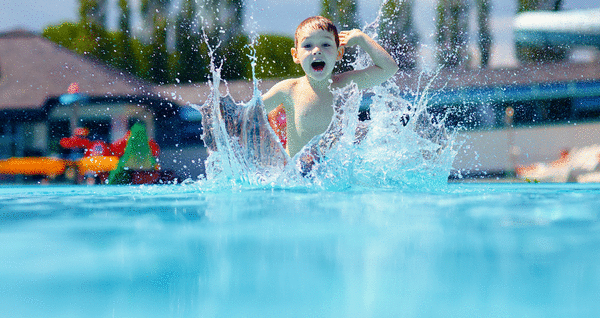
There are 1,300 water parks in the United States and 85 million people visit them each year. As a parent, it's important to know what to look for if you are planning a trip to an indoor or outdoor water park.
First and foremost, know the rules of the park you plan on attending. Water slides are the No. 1 cause of injuries at water parks. It’s important to follow ride directions. Rules like "feet first" are there for a reason―to keep riders safe. And always pay attention to the size and weight restrictions on water park rides. Riders who are too small can be thrown from the ride, and riders who exceed the maximum weight restriction can get stuck in chutes or build excessive speed and exit the ride too fast. Also, watch for the maximum number of riders allowed. If signs say limited to two riders per ride, don't pile four on trying to break a record. Make sure your children understand the need to follow the rules.
Additionally, it's important to understand your child’s swimming ability and to take that into account when planning your water park family trip. National data shows fatal and nonfatal drownings have occurred at U.S. water parks. It can happen to anyone.
Statistically, wave pools carry the biggest drowning risk as they can be dangerous for smaller children or weak swimmers and can be chaotic with large numbers of people bobbing in the water. This can also make it very difficult to spot a swimmer in trouble, who could look like just another swimmer enjoying the waves. Close parental supervision is all the more important. Parents should stay within arm's reach of young or weak swimmers. Keep your eyes on your children and strongly consider putting your swimmer in a life jacket.
With all the patrons attending water parks each year, it’s important to know what can be in the water besides other swimmers and chlorine. According to the Centers for Disease Control and Prevention, most people have about 0.14 grams of feces on their bottoms that can rinse off and contaminate water. The CDC also reports that in one year, 58% of public pools tested positive for E. coli, a marker of fecal contamination. Cryptosporidium, a parasite that can cause stomach illness, has a high tolerance to chlorine that enables it to survive for long periods in chlorinated swimming pool water. Both E. coli and crypto can make swimmers very ill, sometimes leading to hospitalization.
There are many ways to prevent water-borne illness such as teaching children not to drink pool water, taking frequent bathroom breaks, checking water diapers frequently, avoiding the water park if your child is sick, and showering before swimming AND after getting out but before heading home.
Families should know that all regulations of water and amusement parks fall upon the state and local government. Federal safety officials are not allowed to address safety problems at these parks, so a patchwork of local and state authorities bear the responsibility of safety oversight for amusement park rides. This means there is no consistent standard of regulation, and regulations vary state to state. Some states are strict, but other states elect for minimum involvement, making some parks self-regulated.
The AAP suggests looking into how the water park of your choice is monitored and regulated. SaferParks.org has a list of how amusement parks are regulated by each state. There is also a chart showing how injuries are to be reported and whether there are public records of reported injuries.
Safety extends beyond the pool, too. As always, it's important to bring and use sunscreen if you will be outdoors. You should also bring water to keep everyone hydrated.
Whether it's an indoor or outdoor park, water shoes can be a good investment. Pool deck surfaces can get slippery from a mix of water and sunscreen. Water shoes can give little feet extra traction and protect them from surfaces that can be rough, such as pool bottoms. Be sure to teach children to walk, not run, along the many slippery surfaces even if they have water shoes.
Scheduling activity breaks throughout the day can help kids take time to recharge, get a snack and have a bathroom break. Kids burn about 288 calories an hour playing in the pool. That kind of activity level can tire young swimmers, so it's important to exit the water periodically and rest.
Children and others who lack strong swimming skills should also wear life jackets when at a pool or water park. Some parks require swimmers to wear these, and staff can help you ensure the device is the right size and fits correctly for your child. Even when they wear life jackets, young children and those who cannot swim well need an adult who can swim within their arms’ reach, providing touch supervision.
Remember that lifeguards are just one layer of prevention against drowning. Close, attentive, capable supervision when your child is in or around water is essential.
____
Andrew Bernstein, MD, FAAP is a general pediatrician in the Chicago area.
©2026 Tribune Content Agency, LLC.









Comments